



Indonesia Approves 25 Specialist Programs to Tackle Doctor Shortage
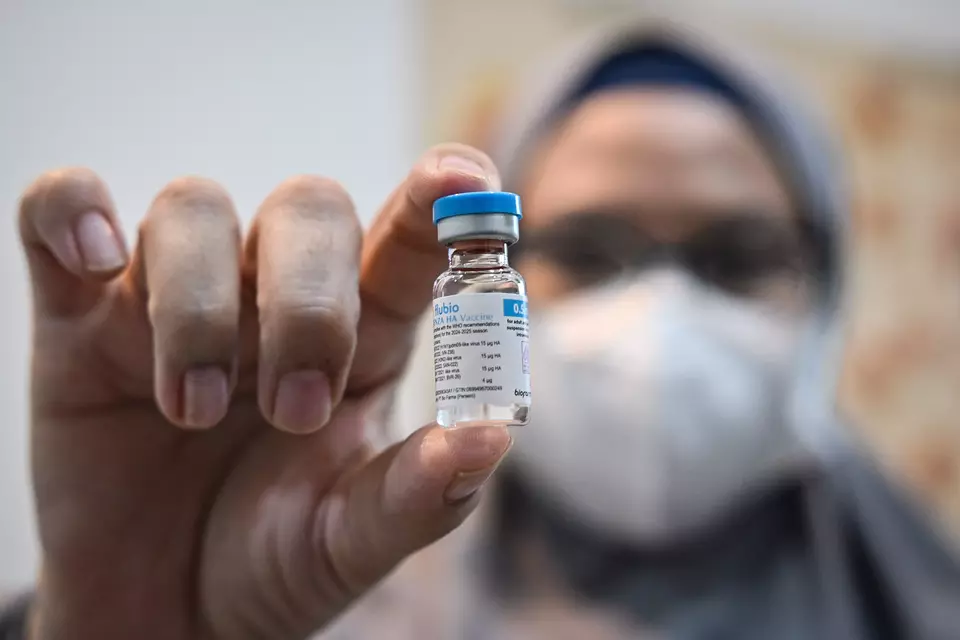
Jakarta. The Indonesian government has approved operational permits for 25 hospital-based Specialist Medical Education Programs (PPDS) as it seeks to address the country’s shortage of medical specialists.
Presidential Chief of Staff Dudung Abdurachman said the permits were approved and handed over following a ministerial-level meeting on Monday. The meeting was attended by Health Minister Budi Gunadi Sadikin, Deputy Higher Education, Science and Technology Minister Fauzan, and Sukadiono, deputy for health quality improvement coordination at the Coordinating Ministry for Human Development and Cultural Affairs.
“The President has reminded us of the crisis caused by the shortage of 268,073 medical specialists. We urgently need an additional 55,712 medical specialists who must be immediately deployed to 481 cities and regencies,” Dudung said.
The shortage has direct implications for access to healthcare, particularly in frontier, outermost and disadvantaged regions, including remote islands.
The policy follows President Prabowo Subianto’s directive during the annual session of the People’s Consultative Assembly (MPR) on Aug. 14 to address the shortage of specialist doctors.
185 Specialist Programs Approved
The government has established two pathways for specialist medical education: hospital-based and university-based programs.
With the addition of the 25 new programs, 185 specialist training programs have been approved in 2026. The 25 hospital-based programs operate at Main Teaching Hospitals (RSPPU), while 160 university-based programs were approved in February.
“Both schemes meet national and global accreditation standards, have equivalent legal standing, and are ready to accelerate the deployment of medical specialists to even the most remote parts of the country on a sustainable scale,” Dudung said.
The expansion follows efforts over the past two months by the Executive Office of the President and relevant ministries to address regulatory inconsistencies and bureaucratic hurdles that had limited the development of specialist training.
The government has also set lower fees for specialist trainees at Main Teaching Hospitals. Students in surgical programs will pay Rp 2 million per semester, while those in non-surgical programs will pay Rp 1.5 million.
Under a resource-sharing mechanism, clinical teaching doctors can continue working at their home hospitals while also teaching specialist trainees.
The government said resolving regulatory, funding and staffing issues will be crucial to expanding specialist training without disrupting healthcare services.
Tags: Keywords: as a preferred
Related Articles

Indonesia Approves 25 Specialist Programs to Tackle Doctor Shortage
Indonesia approves 25 hospital-based specialist doctor programs, bringing the total approved this year to 185 amid a nationwide shortage.The Latest

Chandra Asri Group Receives Trade Finance Excellence Award, Reinforcing Its Role in Indonesia’s Industrial Development
Chandra Asri Group receives the Trade Finance Excellence Award at CIMB Niaga Business Summit 2026.
AEON MALL Deltamas Brings 11 Sports and Creative Competitions to AEONLYMPIC 2026
AEON MALL Deltamas hosts AEONLYMPIC 2026, featuring 11 sports and creative competitions, with more than 3,100 participants.
Indonesian Stocks Extend Losses for Third Day, Fall 3.64% to 4,996
Indonesian stocks fell 3.64% on Monday, extending losses for a third straight session amid MSCI concerns and tighter trading limits.
Prabowo Calls Meeting on Forest Fires as Haze Reaches Jakarta, Singapore
Prabowo summons senior officials to discuss forest fires as smoke reaches Jakarta and Malaysia pushes for regional action.
Jakarta Outranks Amsterdam in Global Public Transport Survey
Jakarta climbs two places to 15th in Time Out's 2026 public transport survey, with its governor citing better network integration.Most Popular
