



Housing Ministry Requests $5B Extra to Accelerate 3 Million Homes Plan
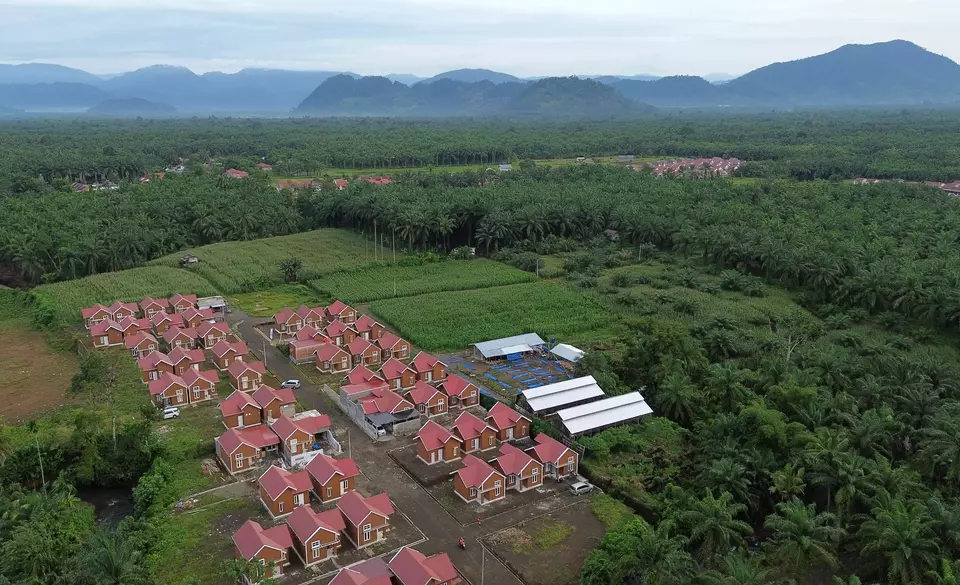
Jakarta. The Housing Ministry has requested an additional Rp 96.09 trillion ($5.4 billion) in funding for 2027 to accelerate President Prabowo Subianto’s flagship Three Million Homes Program, as the government pushes to reduce a housing backlog affecting an estimated 9.9 million to 11 million families.
Housing and Settlement Areas Minister Maruarar Sirait told lawmakers on Wednesday that the ministry’s budget ceiling of Rp 9.91 trillion for 2027 is insufficient to meet the government’s housing targets, prompting a request for total funding of around Rp 106 trillion.
The Three Million Homes Program is a cornerstone of Prabowo’s housing agenda, aimed at addressing Indonesia’s chronic housing shortage. The initiative seeks to build three million homes annually, including two million landed houses in rural and coastal areas and one million vertical housing units in urban centers, with a particular focus on low-income households and informal sector workers.
Data from the Central Statistics Agency (BPS) shows homeownership backlog remains substantial, with between 9.9 million and 11 million families still lacking a home of their own. BPS estimates that roughly 13% of the population continues to live in rented accommodation or with relatives, underscoring the scale of unmet housing demand.
“The indicative budget requires an additional Rp 96.09 trillion to achieve the target,” Maruarar said during a hearing with the House of Representatives’ Commission V.
The largest portion of the proposed budget, Rp 57.29 trillion, would go to the government’s home renovation program to build or upgrade more than 2 million homes. Another Rp 36.94 trillion would fund the construction of 50,000 apartment units across 421 residential towers, while Rp 8 trillion would be used to build 23,410 homes for disaster victims.
The funding request comes as the government reports steady progress in the program. As of June 13, a total of 324,213 housing units had been built or renovated nationwide under the Three Million Homes initiative.
According to Government Communications Agency (Bakom) chief Muhammad Qodari, private developers accounted for the largest contribution with 181,291 units, followed by self-help housing projects with 83,210 units, government-funded projects with 55,655 units, and community-based initiatives with 4,057 units.
Beyond its social objectives, the government sees the program as a key economic stimulus, supporting construction activity, building material industries, job creation, and investment in the housing sector.
To supplement state funding, officials are exploring alternative financing mechanisms, including corporate social responsibility (CSR) funds, the optimization of Bank Indonesia’s reserve requirement policy, and the development of a housing-focused microcredit scheme.
Tags: Keywords: as a preferred
Related Articles

Indonesia Turns to China for Technology to Advance 3 Million Homes Program
Indonesia is seeking Chinese construction technology and investment to help advance Prabowo’s flagship 3 million homes program.
Indonesia, China Explore Affordable Housing Partnership to Tackle 9.6 Million Home Backlog
Indonesia and China explore housing cooperation on technology, financing and land to help tackle the country's 9.6 million home backlog.
Subsidized Mortgage Interest Stays 5% Despite BI Rate Hike
Bank Indonesia raised its benchmark interest rate or BI rate by 25 basis points to 5.75% on Thursday.
Housing Ministry Requests $5B Extra to Accelerate 3 Million Homes Plan
Indonesia seeks Rp 96.09 trillion more for its 3 million homes program as it works to reduce a housing backlog of up to 11 million families.The Latest

Ye Concert, Other Events to Draw 130,000 to GBK, Here’s What to Know
Around 130,000 visitors are expected at Jakarta’s GBK on Saturday as Ye’s concert and several major events take place.
Indonesia Allocates Rp 722 Billion for Year-End Flight Ticket Tax Relief
Indonesia allocates Rp 722 billion to cover domestic flight ticket VAT during the 2026/2027 Christmas and New Year holidays.
Greece Floats Shipbuilding Partnership with Indonesia
Greece says that it possesses “extensive expertise” as it woos Indonesia in shipbuilding partnership.
Indonesian Stocks Rally 4.9%, but Foreign Investors Keep Selling
Indonesia’s JCI rose 4.9% last week, but foreign selling and MSCI downgrade risks continue to cloud the market outlook.
Ye Concert in Jakarta to Deploy 2,000 Security Personnel
More than 2,000 personnel will secure Ye’s Jakarta concert on Saturday, as organizers urge fans to use public transport.Most Popular
