



Gov’t to Send Team to China to Verify Halal Food Trays for Free Meal Program
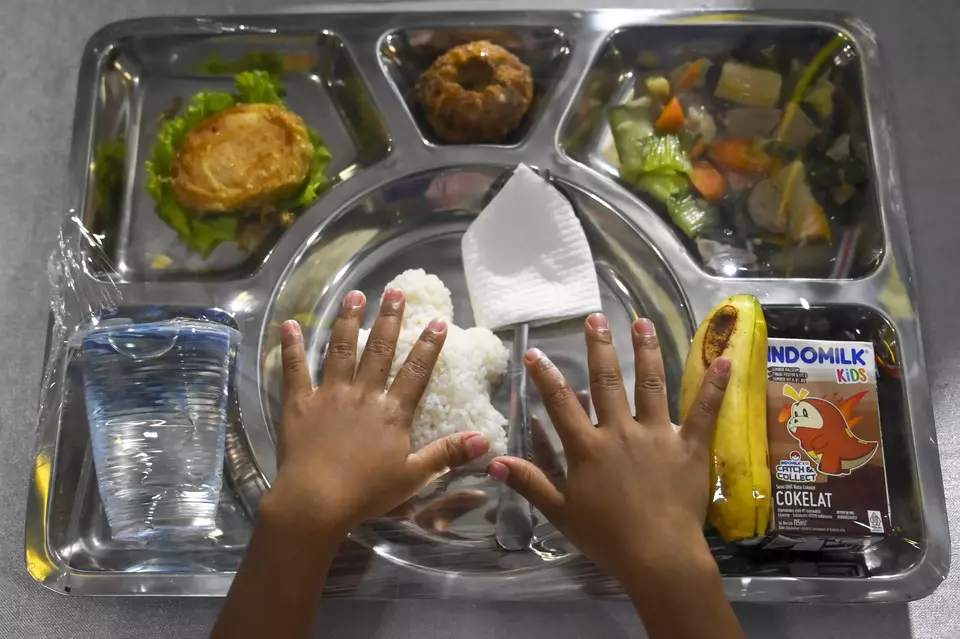
Jakarta. The Indonesian government said Monday it will send officials to China to inspect imported food trays used in its flagship Free Nutritious Meals (MBG) program, following public concerns that the products may contain pork-derived materials.
The National Halal Product Assurance Agency (BPJPH) and the National Nutrition Agency (BGN) will jointly conduct the verification to ensure halal compliance.
“We don’t want to respond to rumors or hoaxes without clear evidence. That’s why we will directly observe and audit everything at the production site,” BPJPH head Haikal Hasan told reporters after signing a memorandum of understanding with BGN in Jakarta. He said the inspection mission is expected to depart for China this week.
BGN chief Dadan Hindayana confirmed the trays currently in circulation are imported from China due to limited domestic capacity. From September to December 2025, Indonesian manufacturers can only supply around 10 million trays, far short of the 70 million needed for the MBG program.
“To keep the program running, the Trade Ministry has coordinated the import mechanism,” Dadan said, stressing that procurement so far has been carried out by private partners rather than BGN itself and has not involved state budget funds.
Dadan added that future government-funded procurement, particularly for remote and underdeveloped regions, would prioritize local production. He also underlined that all trays and food items under the program must meet health, safety, and religious standards, including halal certification from BPJPH, hygiene approval from the Food and Drug Agency (BPOM), and Indonesian National Standards (SNI) from the Industry Ministry.
The government reiterated that every product in the MBG program, from containers to meals and beverages, must be halal-certified. The joint MoU between BPJPH and BGN signed Monday is aimed at strengthening oversight and reassuring the public, particularly in Muslim-majority areas.
Halal assurance is mandatory for local program operators, known as SPPG. If beneficiaries include Muslims, the SPPG must be halal-certified, Dadan said. Even in predominantly non-Muslim areas, he added, cultural sensitivities must be considered.
He pointed to past experiences, such as in West Halmahera, where even program staff were required to undergo halal certification training to maintain public trust.
The MBG initiative, launched earlier this year under President Prabowo Subianto, aims to provide free nutritious meals to schoolchildren and pregnant or breastfeeding mothers. The government allocated Rp 71 trillion for the program in 2025 and has set aside an additional Rp 100 trillion in reserves. At the start of the year, the program targeted 17.9 million people, including 15.5 million schoolchildren and 2.4 million pregnant or breastfeeding women and toddlers. The government expects to reach more than 80 beneficiaries next year.
Tags: Keywords: as a preferred
Related Articles

AGO Probes Alleged Fraud in $72 Million Free Meal Motorcycle Deal
Five suspects are detained in Indonesia’s $72 million motorcycle procurement probe, with cash, aircraft and vehicles seized
'Indonesia Isn't That Rich': Economists Question Universal Free Meal Program
Economists are urging Indonesia to target free meals at those most in need, arguing a narrower program could cost less than Rp 8 trillion.
MBG Food Poisoning in Pati: 416 Affected, 63 Hospitalized
Food poisoning symptoms affect 416 MBG recipients in Pati, with 63 hospitalized as authorities investigate the cause.
256 Students Affected by Suspected Free Meal Poisoning
Several Karo students remain under treatment weeks after 256 students fell ill in a suspected free nutritious meal poisoning incident.
Widespread Food Poisoning Cases Hit Indonesia’s Free Meals Program
Hundreds of schoolchildren across Indonesia have fallen ill after consuming meals from the government’s Free Nutritious Meals (MBG) program.
567 Students Fall Ill in Suspected MBG Food Poisoning Case in E. Java
At least 567 students in Sidoarjo have received medical treatment after suspected food poisoning linked to the MBG meal program.
Free Meal Program Gets Lion’s Share of BGN’s $13.6 Billion 2027 Budget
Indonesia’s Nutrition Agency gets Rp 240 trillion for 2027, with 97% earmarked for the government’s free nutritious meal program.
Nutrition Agency Chief Threatens Dismissal for MBG Program SOP Violations
Indonesia’s nutrition agency chief threatens dismissals over violations in Prabowo’s flagship free meal program.
133 Students Hospitalized in Suspected Food Poisoning Linked to Free Meals Program
Authorities are investigating suspected food poisoning after 133 students fell ill following government-provided meals in Sukabumi.
Indonesia Proposes $46b Education Budget, Including Free Meals Program
Indonesia proposes Rp820.9 trillion for education in 2027, up 13.9%, with free meals still included.The Latest

Christiane Amanpour to Leave CNN After 43 Years
Her announcement came weeks after media corporation Paramount Skydance formally took over Warner Bros. Discovery, the parent company of CNN.
Indonesia Records Rp 1.54 Quadrillion in Investment Through September
Cumulative investment since President Prabowo Subianto took office on Oct. 20, 2024, had reached approximately Rp 3.92 quadrillion.
UN Boss Wants to Fix Security Council as Indonesia Seeks Seat
Outgoing UN chief Guterres says the current permanent member setup at the Security Council fails to reflect today's realities.
Saudi Flagship Investment Conference Pushed to 2027 after Houthi Attacks
The annual Future Investment Initiative (FII), often dubbed "Davos in the Desert", was originally scheduled to take place from October 26-29
Government Sets Aside Rp 1.3 Quadrillion for Final-Quarter Spending
Government spending has reached Rp 2.66 quadrillion, equivalent to 69.2% of the full-year budget target of Rp 3.84 quadrillion.Most Popular
