



French PM Lecornu Quits After One Day, Deepening Macron’s Political Crisis
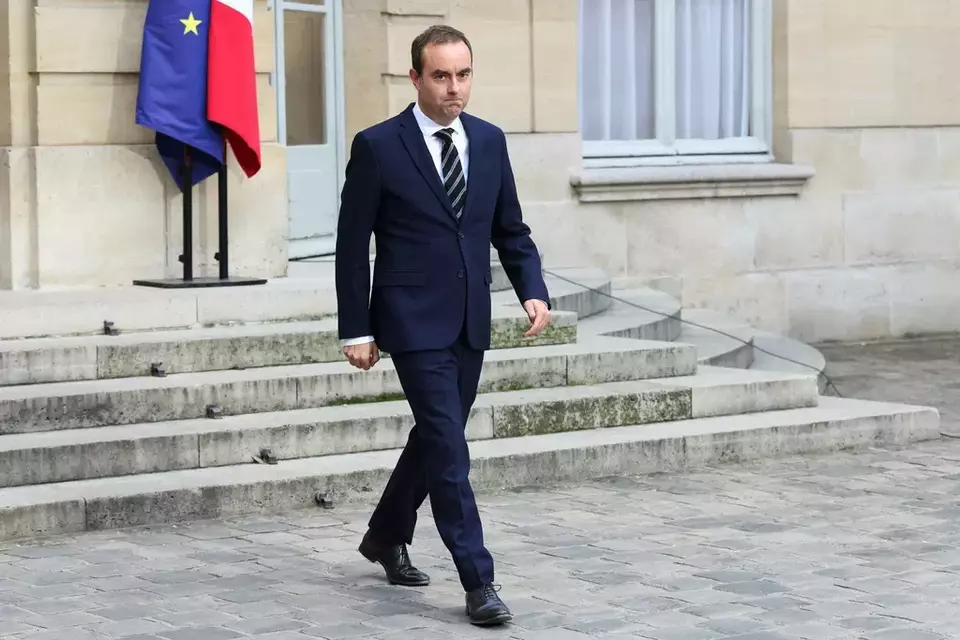
Paris. France’s new Prime Minister Sebastien Lecornu resigned less than a month into the job and barely 24 hours after naming a new government that triggered a coalition ally to withdraw support, plunging the country deeper into political chaos and leaving President Emmanuel Macron with dwindling options.
The Élysée Palace said Monday that Macron, whose approval ratings have fallen to record lows, had accepted Lecornu’s resignation.
Lecornu, who replaced François Bayrou on Sept. 9, became France’s fourth prime minister in just over a year, during one of the most turbulent periods of the Fifth Republic. He is now the shortest-serving premier since the system was established in 1958.
France has been gripped by political paralysis since Macron’s snap elections last year produced a fragmented legislature with no clear majority. Far-right and left-wing blocs hold over 320 seats in the National Assembly, while Macron’s centrist alliance and its conservative partners control just 210.
Despite three weeks of negotiations to avoid a no-confidence vote, Lecornu was forced to step down hours after unveiling his Cabinet on Sunday, following the defection of conservatives who objected to his appointment of former finance minister Bruno Le Maire as defense minister.
Lecornu’s caretaker government will handle day-to-day affairs until a new administration is formed. Macron must now either appoint another prime minister or dissolve the National Assembly and call fresh legislative elections.
A loyal Macron ally, Lecornu said he could no longer continue in office after failing to build consensus.
“The government could have succeeded with just a bit more work, and if our coalition partners had been a little more selfless,” he said, in a veiled rebuke of conservative leader Bruno Retailleau. “One must always put one’s country before one’s party.”
Macron under pressure
With less than two years before the next presidential election, Macron’s opponents seized on the resignation. Far-right leader Marine Le Pen called for either parliamentary dissolution or Macron’s own resignation.
“This raises a question for the President of the Republic: can he continue to avoid dissolving Parliament?” Le Pen said. “We have reached the end of the road. The only reasonable solution is to return to the polls.”
The left-wing France Unbowed party also urged Macron to step down, while socialist and green leaders called for reviving their leftist coalition.
The political upheaval rattled investors, sending France’s CAC 40 index down nearly 2 percent early Monday before recovering some losses.
Several newly appointed ministers found themselves in the awkward position of becoming caretakers before being formally sworn in. “I despair of this circus,” Ecology Minister Agnès Pannier-Runacher wrote on X (formerly Twitter).
Criticism over Cabinet choices
Lecornu faced sharp criticism across party lines for his Cabinet picks, particularly his decision to return Le Maire, blamed by many for France’s ballooning deficit, to a top role. France’s public debt reached €3.35 trillion ($3.9 trillion), or 114 percent of GDP, at the end of the first quarter of 2025, with debt servicing consuming about 7 percent of government spending.
Key posts such as interior, foreign affairs, and justice remained unchanged, with Retailleau, Jean-Noël Barrot, and Gérald Darmanin staying in their respective roles.
Retailleau denied responsibility for Lecornu’s downfall despite publicly criticizing the Cabinet lineup. “It’s a matter of trust,” he told TF1 television. “You promise change and end up with the same old faces. This government had all the conditions to be censured.”
Lecornu had promised to seek consensus in Parliament and ruled out invoking Article 49.3, a constitutional mechanism used by previous governments to bypass lawmakers and pass budgets without a vote.
Instead, he vowed to negotiate with both left and right-wing factions. But his brief tenure will likely be remembered as another casualty of France’s deepening political fragmentation.
Tags: Keywords: as a preferred
Related Articles

No Indonesian Involved in France Protests: Gov't
No Indonesian had participated in France's violent demonstrations, the government says.
Author Apologizes to Prabowo, Macron Over Unauthorized Names in Nobel-Themed Paper
Dian Damayanti apologized for using Prabowo and Macron's names without authorization and asked for her Nobel-themed paper to be withdrawn.
Prabowo Returns to Jakarta with $3.5 Billion French Deals
These French commercial deals cover the trade, energy security, and defense sectors, although not much is known about the details.
‘Bonjour, Monsieur’: Prabowo Wants Indonesian Schools to Teach French
This is not the first time for Prabowo to announce his plans to include foreign languages in Indonesia's curriculum.
France, Indonesia Mustn't Rely on Major Powers for Minerals: Macron
Macron told Prabowo that Indonesia and France must not work together to avoid relying on major powers for minerals and raw materials.
Foreign Minister Defends Prabowo’s Third France Visit This Year
Indonesia says Prabowo’s third trip to France this year was made in response to repeated invitations from Macron.
Indonesia and France to Upgrade Ties to Comprehensive Strategic Partnership
Indonesia and France are set to elevate bilateral ties as defense, energy, and technology cooperation deepen.
Prabowo Lands in Paris After Receiving New Rafale Jets
This also means Prabowo will be celebrating Eid al-Adha in Paris.
Macron Faces Backlash After Interrupting Africa Summit Panel
Videos of Macron's heated intervention on Monday quickly spread across social media, drawing a mix of mockery, praise, and criticism.The Latest

Chandra Asri Group Receives Trade Finance Excellence Award, Reinforcing Its Role in Indonesia’s Industrial Development
Chandra Asri Group receives the Trade Finance Excellence Award at CIMB Niaga Business Summit 2026.
AEON MALL Deltamas Brings 11 Sports and Creative Competitions to AEONLYMPIC 2026
AEON MALL Deltamas hosts AEONLYMPIC 2026, featuring 11 sports and creative competitions, with more than 3,100 participants.
Indonesian Stocks Extend Losses for Third Day, Fall 3.64% to 4,996
Indonesian stocks fell 3.64% on Monday, extending losses for a third straight session amid MSCI concerns and tighter trading limits.
Prabowo Calls Meeting on Forest Fires as Haze Reaches Jakarta, Singapore
Prabowo summons senior officials to discuss forest fires as smoke reaches Jakarta and Malaysia pushes for regional action.
Jakarta Outranks Amsterdam in Global Public Transport Survey
Jakarta climbs two places to 15th in Time Out's 2026 public transport survey, with its governor citing better network integration.Most Popular
