



Trump’s Tariffs Blocked by US Court, Leaving Trade Policy in Limbo
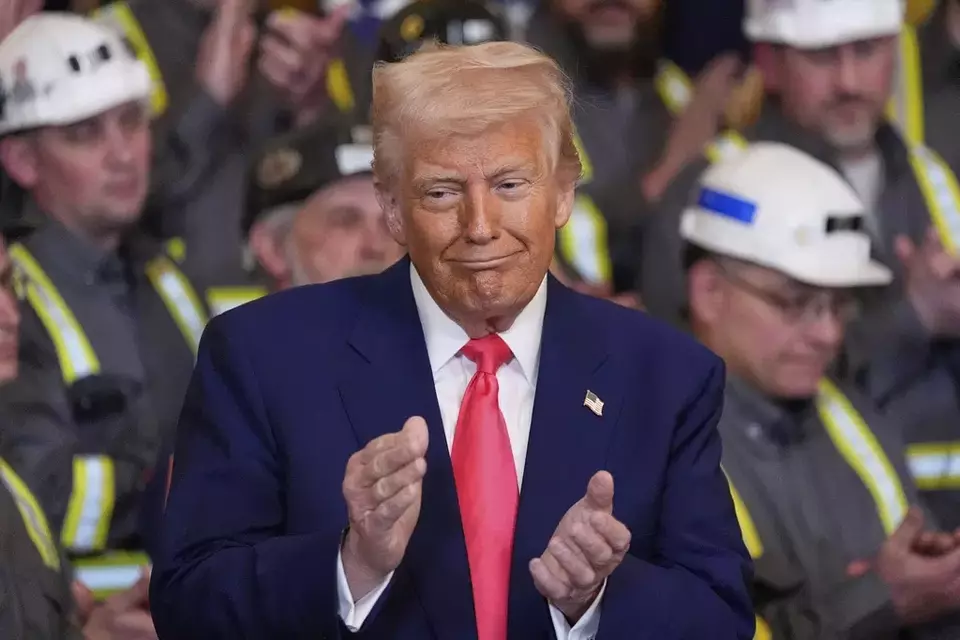
Washington. A federal court in New York dealt a major blow to former President Donald Trump’s trade agenda Wednesday, blocking his sweeping plan to impose steep tariffs on imports from nearly every country.
A three-judge panel from the US Court of International Trade ruled that Trump exceeded his authority by invoking the 1977 International Emergency Economic Powers Act (IEEPA) to declare a national emergency and justify the tariffs.
The levies marked a departure from decades of US trade policy. They disrupted global commerce, unsettled financial markets, and raised fears of inflation and a global recession.
The trade court, which has jurisdiction over civil cases involving international trade, said its decision could be appealed to the U.S. Court of Appeals for the Federal Circuit in Washington, and potentially to the Supreme Court, where many expect legal challenges to end up.
Read More:
The Best Deal with Trump is No DealWhich tariffs did the court block?
The ruling blocks tariffs Trump imposed last month on nearly all US trading partners, as well as earlier levies on China, Mexico, and Canada.
On April 2, Trump introduced so-called “reciprocal tariffs” of up to 50 percent on countries with which the US had a trade deficit, and a 10 percent baseline tariff on most other countries. He later suspended the reciprocal tariffs for 90 days to allow time for negotiations, but left the baseline tariffs in place.
Trump claimed he had the authority to act unilaterally under IEEPA by declaring America’s long-standing trade deficits a “national emergency.”
In February, he had also invoked IEEPA to justify tariffs on Canada, Mexico, and China, citing illegal immigration and drug trafficking across the southern border as part of that emergency declaration.
While the US Constitution grants Congress the authority to set taxes, including tariffs, lawmakers over the years have delegated significant powers to the executive branch. Trump aggressively pushed those boundaries.
The tariffs are the subject of at least seven lawsuits. In Wednesday’s ruling, the trade court consolidated two of the cases: one brought by five small businesses and another by 12 US states.
The decision does not affect other Trump-era tariffs, such as those on foreign steel, aluminum, and autos, which were imposed under a separate law requiring a Commerce Department investigation.
Why did the court rule against Trump?
The Trump administration cited precedent from the Nixon era, when courts upheld President Richard Nixon’s emergency use of tariffs during the 1971 economic crisis after the US decoupled the dollar from gold. Nixon’s administration used the 1917 Trading With the Enemy Act, which later informed parts of IEEPA.
But the court found that Trump’s broad use of IEEPA far exceeded what the law allows. It also determined that the tariffs did little to resolve the issues they targeted. In their filing, the states argued that chronic US trade deficits—ongoing for 49 years—do not constitute a sudden national emergency.
What’s next for Trump’s trade agenda?
Wendy Cutler, a former US trade negotiator and vice president at the Asia Society Policy Institute, said the ruling throws Trump’s trade strategy “into turmoil.”
“Partners negotiating hard during the 90-day tariff pause period may now delay further concessions until there’s more legal clarity,” she said.
Companies, meanwhile, may scramble to adjust their supply chains, speeding up shipments in case the tariffs are reinstated on appeal.
The court noted Trump still holds limited authority to impose tariffs under the Trade Act of 1974. That law allows a maximum 15 percent tariff for up to 150 days on countries with significant trade deficits, but it falls far short of what Trump attempted under IEEPA.
“For now, the ruling destroys the Trump administration’s rationale for using emergency powers to impose tariffs,” said Eswar Prasad, a trade policy professor at Cornell University. “It makes clear that the sweeping tariffs imposed unilaterally by Trump represent an overreach of executive power.”
Tags: Keywords: as a preferred
Related Articles

Indonesia’s US Trade Surplus Defies Tariffs, but Economists Warn Risks Remain
Indonesia posted a $12.47 billion surplus with the US in January-August 2026, up from $12.26 billion a year earlier.
US Defends Tariffs on ASEAN Amid $327.4 Billion Deficit
US says it wants to "bring reciprocity and balance" to its ASEAN trade ties amid double-digit tariff hikes.
BRICS Indirectly Hits Out at Trump’s Tariffs, WTO Paralysis
BRICS doesn't want to see unilateral tariffs and a paralyzed WTO court system, all of which are linked to the US.
Trump Tariffs Cripple EU Firms’ Confidence in ASEAN
As many as 81% of the surveyed European businesses admit that the US tariffs had weakened their confidence in ASEAN.
'We Don't Export Plastic to US': Indonesia on ‘False’ Transshipment Scam Claims
Indonesia denies enabling Chinese goods, namely plastic packaging, avoid Trump's tariffs.
Indonesia Denies US Accusation of Chinese Transshipment Scam
Senior minister Airlangga Hartarto says "Indonesia has never done transshipment", when asked about the US report.
US Accuses Indonesia of Helping China Dodge Trump Tariffs
The US accuses Indonesia and dozens of other countries of being part of "China's shadow transshipment network".
ASEAN Hopes for Predictability on Trump’s Tariffs
ASEAN says the region's businesspeople wish for a predictability and certainty as Trump launches a fresh round of tariff hikes.
Indonesia in Talks with US for 0% Tariff on Palm Oil
Indonesia is in talks with the US to have its palm oil exempted from the latest tariff measure.
Indonesia Banks On EU as Trump's 10% Tariff Kicks In
Indonesia wants to fast-track its European Union (EU) trade deal as Jakarta tries to find alternatives to the tariff-agressive US.The Latest

Chandra Asri Group Receives Trade Finance Excellence Award, Reinforcing Its Role in Indonesia’s Industrial Development
Chandra Asri Group receives the Trade Finance Excellence Award at CIMB Niaga Business Summit 2026.
AEON MALL Deltamas Brings 11 Sports and Creative Competitions to AEONLYMPIC 2026
AEON MALL Deltamas hosts AEONLYMPIC 2026, featuring 11 sports and creative competitions, with more than 3,100 participants.
Indonesian Stocks Extend Losses for Third Day, Fall 3.64% to 4,996
Indonesian stocks fell 3.64% on Monday, extending losses for a third straight session amid MSCI concerns and tighter trading limits.
Prabowo Calls Meeting on Forest Fires as Haze Reaches Jakarta, Singapore
Prabowo summons senior officials to discuss forest fires as smoke reaches Jakarta and Malaysia pushes for regional action.
Jakarta Outranks Amsterdam in Global Public Transport Survey
Jakarta climbs two places to 15th in Time Out's 2026 public transport survey, with its governor citing better network integration.Most Popular
