



Trump Tariff Countdown: $82.3 Billion Cost Looms for US Employers
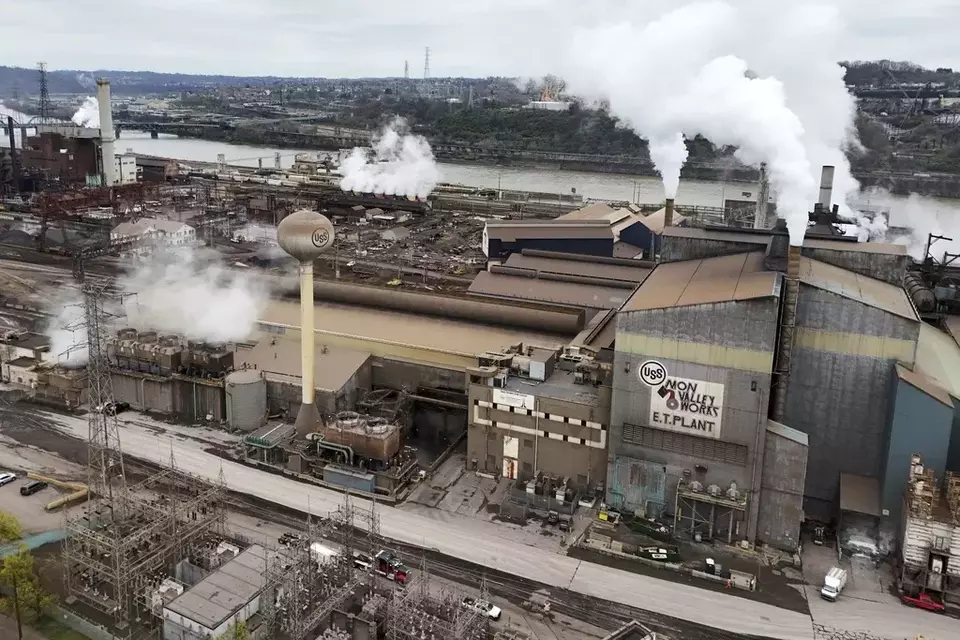
Washington. An analysis finds that a key group of US employers could face direct costs of $82.3 billion from President Donald Trump’s proposed tariffs --expenses they may be forced to absorb through price hikes, layoffs, hiring freezes, or slimmer profit margins.
The study by the JPMorgan Chase Institute is among the first to estimate the direct impact of the import taxes on businesses with annual revenues between $10 million and $1 billion, a segment that employs about one-third of the US private-sector workforce. These companies, especially in the retail and wholesale sectors, rely more heavily than larger firms on imports from China, India, and Thailand and are particularly vulnerable to the tariffs being imposed by the Republican president.
The findings highlight the trade-offs of Trump’s import taxes, contradicting his claims that foreign manufacturers would bear the costs instead of US companies. Although Trump’s tariffs have yet to significantly push up overall inflation, large companies such as Amazon, Costco, Walmart, and Williams-Sonoma have so far cushioned the blow by stockpiling inventory before the tariffs took effect.
The report comes days before Trump’s July 9 deadline to finalize tariff rates on goods from dozens of countries. He set the deadline after financial markets panicked over his April tariff announcements, leading him to allow a 90-day negotiating window in which most imports faced a baseline 10 percent tariff. China, Mexico, and Canada face higher rates, with separate 50 percent tariffs applied to steel and aluminum.
If the initial April 2 tariffs had remained in place, the companies in the JPMorgan Chase Institute analysis would have faced an additional $187.6 billion in direct costs. Under the current plan, the $82.3 billion cost equals about $2,080 per employee, or roughly 3.1 percent of the average company payroll, even when factoring in businesses that don’t import goods.
Asked Tuesday how the trade talks are going, Trump said simply, “Everything’s going well.”
The president has signaled he will determine final tariff rates himself, citing the challenge of negotiating with so many nations at once. As the 90-day period ends, only the United Kingdom has signed a trade framework with the administration, though India and Vietnam have indicated they are close to agreements.
A growing body of research suggests higher consumer prices could follow. Investment bank Goldman Sachs projects companies will pass along about 60 percent of their tariff costs to consumers. The Atlanta Federal Reserve, citing its own business surveys, estimates firms could on average pass along roughly half the cost of a 10 percent or 25 percent tariff without hurting demand.
The JPMorgan Chase Institute also noted the tariffs could encourage more domestic manufacturing as companies seek new suppliers. But it warned wholesalers and retailers, which already operate on thin profit margins, may be forced to pass on most of the added costs to customers.
The outlook remains highly uncertain. Trump previously walked away from talks with Canada, only to resume them after Canada scrapped a plan to tax digital services. On Monday, he threatened additional tariffs on Japan unless it buys more US rice.
Treasury Secretary Scott Bessent said Tuesday that the concessions secured so far have impressed career officials at the Office of the US Trade Representative and other agencies.
“People who have been at Treasury, at Commerce, at USTR for 20 years are saying these are deals like they’ve never seen before,” Bessent said on Fox News Channel’s “Fox & Friends.”
Bessent added that the administration will continue trade negotiations next week, while prioritizing the multitrillion-dollar tax cuts package passed Tuesday by the Republican-controlled Senate. Trump has set a Friday deadline for the bill, hoping to offset its costs with revenues generated by the tariffs.
Tags: Keywords: as a preferred
Related Articles

Indonesia’s US Trade Surplus Defies Tariffs, but Economists Warn Risks Remain
Indonesia posted a $12.47 billion surplus with the US in January-August 2026, up from $12.26 billion a year earlier.
US Defends Tariffs on ASEAN Amid $327.4 Billion Deficit
US says it wants to "bring reciprocity and balance" to its ASEAN trade ties amid double-digit tariff hikes.
BRICS Indirectly Hits Out at Trump’s Tariffs, WTO Paralysis
BRICS doesn't want to see unilateral tariffs and a paralyzed WTO court system, all of which are linked to the US.
Trump Tariffs Cripple EU Firms’ Confidence in ASEAN
As many as 81% of the surveyed European businesses admit that the US tariffs had weakened their confidence in ASEAN.
'We Don't Export Plastic to US': Indonesia on ‘False’ Transshipment Scam Claims
Indonesia denies enabling Chinese goods, namely plastic packaging, avoid Trump's tariffs.
Indonesia Denies US Accusation of Chinese Transshipment Scam
Senior minister Airlangga Hartarto says "Indonesia has never done transshipment", when asked about the US report.
US Accuses Indonesia of Helping China Dodge Trump Tariffs
The US accuses Indonesia and dozens of other countries of being part of "China's shadow transshipment network".
ASEAN Hopes for Predictability on Trump’s Tariffs
ASEAN says the region's businesspeople wish for a predictability and certainty as Trump launches a fresh round of tariff hikes.
Indonesia in Talks with US for 0% Tariff on Palm Oil
Indonesia is in talks with the US to have its palm oil exempted from the latest tariff measure.
Indonesia Banks On EU as Trump's 10% Tariff Kicks In
Indonesia wants to fast-track its European Union (EU) trade deal as Jakarta tries to find alternatives to the tariff-agressive US.The Latest

UN Boss Wants to Fix Security Council as Indonesia Seeks Seat
Outgoing UN chief Guterres says the current permanent member setup at the Security Council fails to reflect today's realities.
Saudi Flagship Investment Conference Pushed to 2027 after Houthi Attacks
The annual Future Investment Initiative (FII), often dubbed "Davos in the Desert", was originally scheduled to take place from October 26-29
Government Sets Aside Rp 1.3 Quadrillion for Final-Quarter Spending
Government spending has reached Rp 2.66 quadrillion, equivalent to 69.2% of the full-year budget target of Rp 3.84 quadrillion.
Indonesia Probes 98 Corporate Wildfire Cases, Including Possible Foreign Links
Police investigate 98 corporate-related wildfire cases, including possible links to investors from neighboring countries.
Students Plan Jakarta Protests to Mark Two Years of Prabowo's Presidency
Police have advised the public to avoid areas around the House of Representatives complex, the National Monument and the State Palace.Most Popular
