



Toyota Indonesia Navigates Trade Barriers to Protect Latin American Export Markets
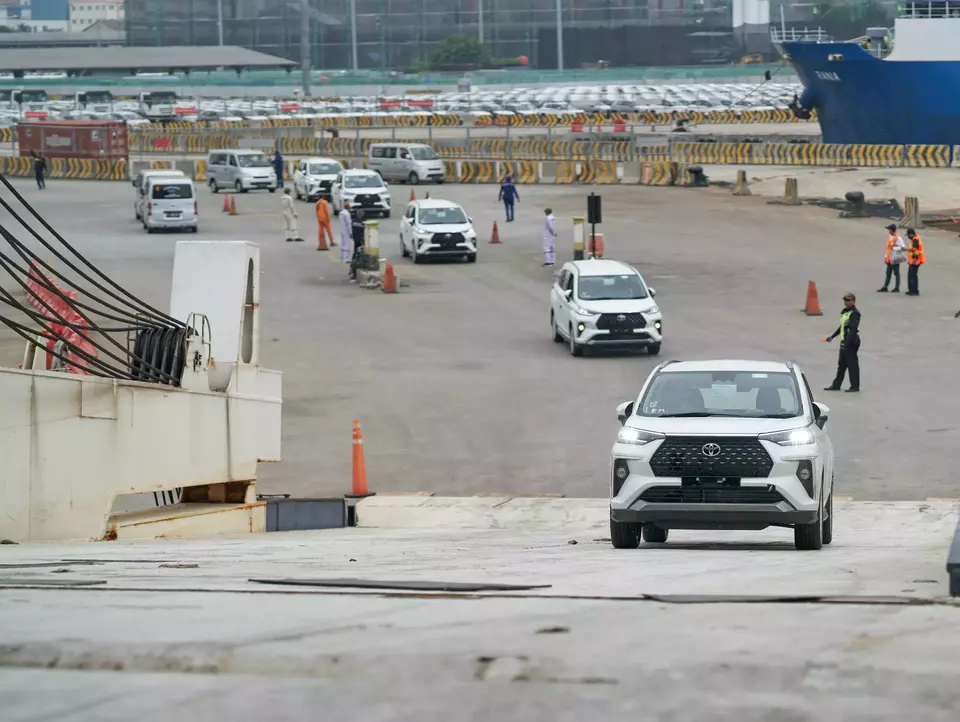
Bandung. Toyota Motor Manufacturing Indonesia (TMMIN) is seeking to secure export market certainty in Latin America as geopolitical turbulence and potential tariff risks under US President Donald Trump continue to unsettle global trade.
TMMIN President Director Nandi Julyanto said Toyota has, in recent years, actively encouraged the expansion of trade agreements with multiple countries and regions to preserve the competitiveness of Indonesian-made vehicles and automotive components in export markets.
One agreement already in place is with Peru, although implementation challenges remain.
“Indonesia already has a trade agreement with Peru, but some technical issues have to be settled first. Coordination among the ministries of trade, foreign affairs, and industry is quite complex,” Nandi said in Bandung on Sunday.
Beyond Peru, Mexico has emerged as another potential export destination. However, discussions on a bilateral trade agreement have yet to make significant progress, he said.
These challenges are partly driven by Indonesia’s trade surplus with several Latin American countries, which often complicates negotiations.
“When Indonesia comes asking for a trade agreement, they say, ‘You already have a surplus, what more do you want?’ That’s why we need creative proposals, one of which could be linked to bioethanol,” Nandi said.
He added that geopolitical volatility is not new for global businesses. Since the Trump era, companies have grown accustomed to uncertainty, although the current intensity of disruption is higher than before.
“Geopolitical tensions have been around since Mr. Trump’s time, but now the turbulence is even greater, especially with developments in Venezuela,” he said.
Export-Led Production
TMMIN recorded relatively stable production performance throughout 2025, producing a total of 263,000 vehicles. Of that figure, 67% was allocated for export markets, while 33% was absorbed domestically.
The company operates five plants in Indonesia, although vehicle production is concentrated in two main facilities, Plant 1 and Plant 2. Production growth remained modest, rising by around 3,000 units, or 1.1%, compared with the previous year.
“Even though growth is limited, our production utilization remains high at 93%,” said TMMIN Vice President Director Bob Azam.
Toyota continues to play a dominant role in Indonesia’s automotive exports. Last year, Toyota accounted for 57.7% of the country’s total vehicle exports. Electrified vehicles contributed 8% of Toyota’s export volume, reflecting gradual growth in line with rising global demand for lower-emission vehicles.
“This is part of our commitment to promote electrification, not only for the domestic market but also for exports,” Bob said.
Logistics and Supply Chain Risks
Bob said the most immediate geopolitical risk for manufacturers is disruption to supply chains and rising global logistics costs.
“When geopolitical tensions flare up, the first impact we usually feel is higher logistics costs,” he said.
He cited instability in the Middle East, which has disrupted shipping routes through the Suez Canal, forcing many shipments to reroute via the Cape of Good Hope in South Africa. As a result, logistics costs have doubled in some cases.
He added that the global automotive industry was originally designed to operate under a multilateral trading system. Increasing geopolitical fragmentation now threatens to erode that efficiency.
“The world feels increasingly fragmented. This will inevitably affect logistics and supply chains. We hope there is no further escalation, because the impact will be higher logistics costs and higher prices for goods,” Bob said.
Industry Data
According to data from the Indonesia Automotive Industry Association (Gaikindo), Indonesia’s completely built-up (CBU) vehicle exports reached 427,033 units between January and October 2025, up 9.1% year on year from 391,483 units in the same period last year.
Toyota remained Indonesia’s largest vehicle exporter, shipping 145,395 units during the period, a 5.6% annual increase. Daihatsu followed with 102,188 units, up 9.9%, while Mitsubishi Motors exported 83,276 units, surging 15.5%.
Hyundai Motor Manufacturing Indonesia ranked fourth with 48,213 units, followed by Suzuki with 25,161 units, Honda with 13,798 units, and Isuzu with 6,600 units. Smaller contributions came from Wuling, Chery, Hino, and DFSK.
Tags: Keywords: as a preferred
Related Articles

Toyota Accounts for Nearly 58% of Indonesia's Vehicle Exports
Toyota exported 145,080 vehicles from Indonesia in the first half, accounting for nearly 58% of the country's total vehicle exports.
Toyota Invests $76 Million for CATL-Backed Battery Project in Indonesia
From bioethanol plant to hybrid batteries, Toyota is ramping up its investment in Indonesia.The Latest

MSCI Concerns, Tighter IDX Trading Rules Send Indonesian Stocks Down 5% by Midday
Indonesian stocks plunge 5% by midday as MSCI concerns weigh on sentiment and the IDX tightens its daily downside limit to 7%.
Jakarta Prepares 367 Health Facilities as Haze Reaches the Capital
Jakarta prepares 367 health facilities to treat potential haze-related illnesses after smoke from Sumatra and Kalimantan crosses the region.
Jakarta Expands Flood Prevention With New Water Storage Ponds
Jakarta opens two East Jakarta water storage ponds as it expands flood prevention efforts through reservoirs and river normalization.
Press Council Highlights AI Ethics at United Tractors Journalist Workshop
United Tractors’ 2026 journalist workshop highlights ethical AI use and the importance of trust and credibility in journalism.
How Indonesia Can Make Forest Protection Pay
Indonesia can make forest protection pay by channeling international climate funds through ecological fiscal transfers to local governments.Most Popular
