



Rising Crude Prices May Add Pressure on State Budget
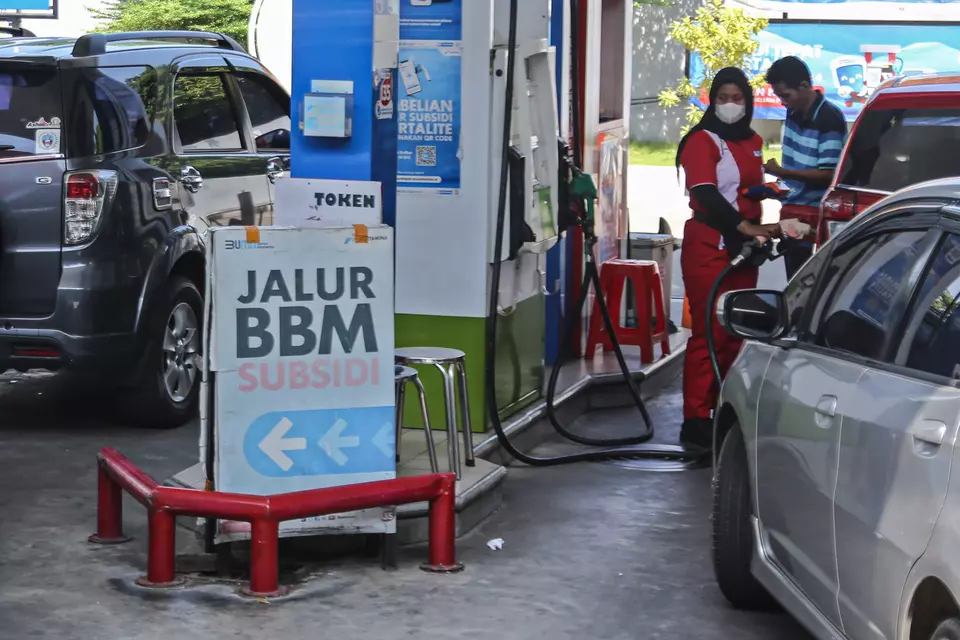
Jakarta. A surge in global crude oil prices driven by escalating tensions in the Middle East could trigger a massive shift among Indonesian consumers toward subsidized fuels, potentially placing additional strain on the state budget and widening the fiscal deficit.
Indonesia currently caps subsidized fuel prices at Rp 10,000 per liter ($0.59) for Pertalite gasoline and Rp 6,800 per liter for diesel, creating a widening gap with market-based fuel prices.
Abra Talattov, a researcher at the Institute for Development of Economics and Finance (Indef), said the growing price disparity between subsidized and non-subsidized fuels could incentivize consumers to switch. Retail fuel prices are expected to rise in early April, further increasing the gap.
“When the price disparity widens, the risk of migration becomes inevitable. Consumption of subsidized fuels such as Pertalite and diesel could surge,” Abra said on Tuesday.
The government has set this year’s subsidy quotas at 29.7 billion liters for Pertalite and 18.6 billion liters for diesel. However, these allocations could be depleted quickly if demand spikes without mitigation measures.
Economists estimate that every $1 increase in crude oil prices, a Rp 100 depreciation in the rupiah against the US dollar, and a 0.1% rise in government bond yields could add up to Rp 9.5 trillion ($562 million) to the budget deficit. This projection accounts only for macroeconomic variables and excludes additional pressure from increased subsidy volumes due to shifting consumption patterns.
Energy security remains another concern. Indonesia’s fuel reserves currently cover only about 25 days of demand, well below the minimum 90-day benchmark recommended by the International Energy Agency (IEA).
While the government aims to expand reserves to meet international standards, achieving this target is expected to take two to three years and require significant investment.
To maintain stability, Abra urged the government to tighten fuel distribution controls and boost domestic oil production, which remains stagnant at around 600,000 barrels per day.
“This would help extend fuel reserves and prevent public anxiety that could lead to panic buying,” he said.
Abra added that a planned work-from-home (WFH) policy could help curb fuel consumption, though its impact would likely be limited if implemented only once a week.
He described WFH as a short-term emergency measure to reduce mobility, noting that similar restrictions during the Covid-19 pandemic in 2020 led to a roughly 12.9% annual decline in national fuel consumption.
Beyond temporary measures, Abra stressed the need for longer-term behavioral changes, including greater reliance on public transportation to improve energy efficiency.
Tags: Keywords: as a preferred
Related Articles

Businesses Back Mandatory Halal Rules, Warn of Rising Compliance Costs
Businesses support Indonesia’s mandatory halal rules but urge simpler certification and lower compliance costs to protect MSMEs and consumer
Indonesia Vows No Subsidized Fuel Price Hike Despite $106 Oil
Indonesia will keep subsidized fuel prices unchanged through 2026 despite crude oil prices rising to around $106 a barrel.
Egg, Chicken Price Slump Spurs Push for Processing Industry
Surplus egg and chicken supply is dragging down farm-gate prices, prompting calls for stronger processing capacity and government absorption
Indonesia Could Save $1.2 Billion by Restricting Subsidized Fuel for Wealthiest
Indonesia could save Rp21 trillion ($1.2 billion) by restricting subsidized Pertalite gasoline purchases by the country’s wealthiest.
Government Defends 32% Pertamax Price Increase Amid Rising Global Oil Prices
Rising global oil prices, driven by prolonged geopolitical tensions, left it with little choice but to raise the price of Pertamax gasoline.
Indonesia Holds Subsidized Fuel Prices as Drivers Abandon Pertamax
Indonesia kept subsidized fuel prices unchanged despite a steep Pertamax hike that triggered long queues for cheaper fuel.
Indonesia Keeps Subsidized Fuel Prices Unchanged Despite Rupiah Slide
Indonesia says subsidized fuel prices will stay unchanged through 2026 despite the rupiah weakening near Rp 17,900 per dollar.
What’s at Stake as UAE Walks Away From OPEC
The UAE’s exit from OPEC could weaken the cartel’s grip on oil supply, signaling a more fragmented market and higher price volatility.
Fuel, LPG Hikes Squeeze Middle Class, Risk Subsidy Overrun
Analysts warn fuel, LPG hikes may hit middle-class spending and push 5–10% users into subsidized LPG, risking quota breach.
Indonesia Could Forfeit Rp 67 T a Year Without Windfall Profit Tax, Indef Warns
Commodity boom lifts revenue, but Indef says Indonesia still loses massive gains without windfall tax reform.The Latest

UN Boss Wants to Fix Security Council as Indonesia Seeks Seat
Outgoing UN chief Guterres says the current permanent member setup at the Security Council fails to reflect today's realities.
Saudi Flagship Investment Conference Pushed to 2027 after Houthi Attacks
The annual Future Investment Initiative (FII), often dubbed "Davos in the Desert", was originally scheduled to take place from October 26-29
Government Sets Aside Rp 1.3 Quadrillion for Final-Quarter Spending
Government spending has reached Rp 2.66 quadrillion, equivalent to 69.2% of the full-year budget target of Rp 3.84 quadrillion.
Indonesia Probes 98 Corporate Wildfire Cases, Including Possible Foreign Links
Police investigate 98 corporate-related wildfire cases, including possible links to investors from neighboring countries.
Students Plan Jakarta Protests to Mark Two Years of Prabowo's Presidency
Police have advised the public to avoid areas around the House of Representatives complex, the National Monument and the State Palace.Most Popular
