



Not Just Mining: Indonesia to Build Downstream Marine Industry
Jakarta. Indonesia has plans to expand its downstream industry policy, in which it focuses on processing its raw materials for higher added value, into the marine sector.
Indonesia has set a goal to become a global maritime superpower by its centennial in 2045. The world’s largest archipelagic country is working towards that goal, among others, by developing the downstream marine industry.
According to Chief Investment Minister Luhut Binsar Pandjaitan, despite the immense marine wealth, Indonesia’s blue economy potential remains largely untapped.
The so-called blue economy today is still not contributing as much to the national gross domestic product (GDP). The maritime economy only contributed approximately 7.6 percent to the national GDP in 2021. The sector's GDP only grew by 2.04 percent in 2021, far below the national GDP growth of 3.69 percent, data shows.
According to the ministry’s data, the development of the marine processing industry stands at 4.13 percent. The figures only reach 0.74 percent for the ship manufacturing and maintenance industry.
“The development of our marine industry and also the downstream within the marine sector have only reached 4 percent. There are still so many things that we can work on if we want, but let’s walk the talk. Do not just criticize things. We need to come up with innovations,” Luhut told a recent maritime forum in Jakarta.
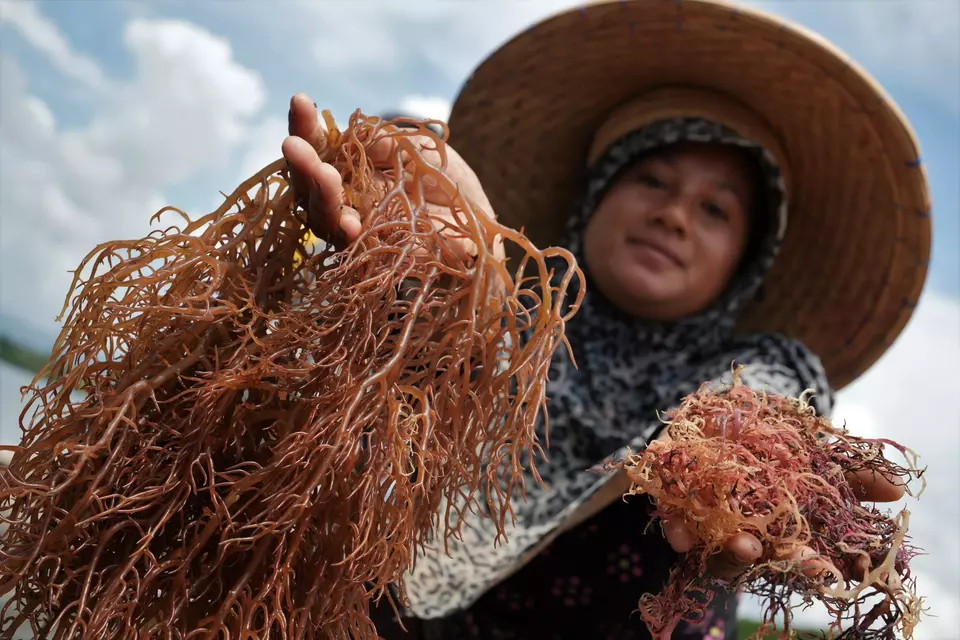
A high-potential marine resource for the downstream industry policy is seaweed. Indonesia can try processing seaweed into cosmetics, pharmaceutical, and food products, among others. The country can also export seaweed as animal feed.
“We are the world’s largest archipelagic country. Water makes up over 70 percent of our territories. There are so many things we can do here. But we have not built the downstream industry for seaweed,” Luhut said.
“We want to become the center of the global epicenter for maritime civilization. This is not just a dream, but we must be able to do it. We are a rich country!” Luhut added.
According to the Fisheries Ministry, Indonesia is the world’s largest tropical seaweed producer with productions amounting to 9.6 million tons a year. From Jan-Sep 2022, Indonesia exported 180,600 tons of seaweed worth $455.7 million, with exports mainly going to China. About 93.2 percent of the exports were dried seaweed.
Downstreaming is still far from visible in the marine sector. However, the downstream industry policy within the mining sector has begun to take shape. Indonesia in 2020 banned exports of unprocessed nickel ores. Government data shows the nickel downstream exports stood at $33.8 billion in 2022, of which $14.3 billion were iron and steel exports.
Tags: Keywords: as a preferred
Related Articles

KPK Rejects Luhut’s Bid to Remove State Losses From Corruption Definition
Indonesia’s KPK rejects Luhut’s proposal to remove state financial losses from the legal definition of corruption.
AI to Watch Over Indonesia’s Social Aid to Save $15 Billion
The estimated savings from the AI-backed social aid rollout are still subject to change, depending on the quality of the data.
Luhut Says Indonesia Could Attract $500 Billion Through Family Office Initiative
Luhut said Indonesia had been relatively slow to pursue the concept compared with other jurisdictions that have attracted global wealth.
Luhut Floats AI-Run Customs as Indonesia’s New Trade Regime Nears
Ex-minister Luhut Binsar Pandjaitan says nothing can escape AI as he heavily promotes the technology in the new export regime.The Latest

Ye Concert, Other Events to Draw 130,000 to GBK, Here’s What to Know
Around 130,000 visitors are expected at Jakarta’s GBK on Saturday as Ye’s concert and several major events take place.
Indonesia Allocates Rp 722 Billion for Year-End Flight Ticket Tax Relief
Indonesia allocates Rp 722 billion to cover domestic flight ticket VAT during the 2026/2027 Christmas and New Year holidays.
Greece Floats Shipbuilding Partnership with Indonesia
Greece says that it possesses “extensive expertise” as it woos Indonesia in shipbuilding partnership.
Indonesian Stocks Rally 4.9%, but Foreign Investors Keep Selling
Indonesia’s JCI rose 4.9% last week, but foreign selling and MSCI downgrade risks continue to cloud the market outlook.
Ye Concert in Jakarta to Deploy 2,000 Security Personnel
More than 2,000 personnel will secure Ye’s Jakarta concert on Saturday, as organizers urge fans to use public transport.Most Popular
