



Prabowo, Luhut Downplay JCI Selloff as Indonesia Pushes Market Reforms
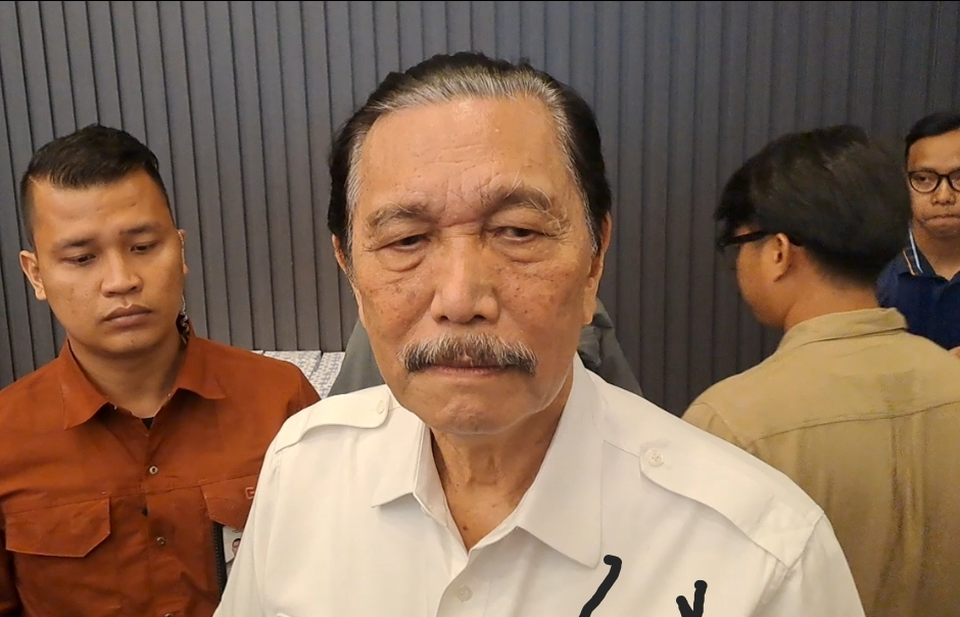
Jakarta. As the Jakarta Composite Index (JCI) came under heavy selling pressure, President Prabowo Subianto showed no alarm, with State Secretary Prasetyo Hadi and National Economic Council (DEN) Chairman Luhut Binsar Pandjaitan seeking to reassure investors and casting the volatility as a catalyst for reform.
“The President is not angry. He understands that the stock market has its own dynamics. What matters most is that we understand the root causes and carry out improvements,” Prasetyo told reporters in Sentul, Bogor, on Monday.
JCI weakened sharply from late January to early February 2026, heightening market anxiety. The government, however, views the turbulence as an opportunity to accelerate long-discussed capital market reforms, with a focus on strengthening governance, improving transparency, and preserving the credibility of regulators and market participants.
“Under the President’s direction, the government wants Indonesia’s capital market to be healthier, more open, and trusted by investors, both domestic and global,” Prasetyo said.
He added that confidence should recover as economic fundamentals remain intact. “The stock market is not just about today or tomorrow. What matters are fundamentals and long-term trust,” he said.
Luhut echoed the message after Indonesia’s market correction followed an evaluation and warning from MSCI stressing that short-term volatility is a normal part of market mechanics and does not reflect a weakening of the national economy.
“We don’t need to panic. MSCI’s warning is an honest reflection of areas that need fixing. This is a momentum to build a credible capital market trusted by investors because the system is strong, not because of speculation,” Luhut said in a statement on Monday.
The government, together with the Financial Services Authority (OJK) and the Indonesia Stock Exchange (IDX), is pursuing structural reforms, including tighter transparency on ultimate beneficial ownership (UBO) and raising the minimum free-float requirement to 15% to create a fairer and more liquid market.
These measures are being reinforced by efforts to accelerate the demutualization of the IDX, aimed at ensuring the exchange is managed professionally, independently, and free from conflicts of interest. The ongoing, transparent selection of strategic leadership positions at OJK and IDX is also seen as a critical moment to bring in new leaders with integrity and a clear reform mandate.
“We need leaders who are brave enough to execute change and enforce the rules. The capital market must become a pillar of Indonesia’s economic growth, one that is fair and can be enjoyed by the wider public,” Luhut said.
To strengthen domestic market fundamentals, OJK and IDX have also raised the equity investment cap for pension funds and insurance companies to 20%, with full government backing, to position local institutional investors as a stronger liquidity buffer. The policy is intended to deepen the domestic market and reduce vulnerability to swings in foreign capital flows.
“By expanding the role of domestic institutional investors, we are building a liquidity buffer so the market is not overly exposed to fluctuations in foreign capital flows,” Luhut said.
The JCI closed down 406.87 points, or 4.88%, at 7,922 after briefly sliding as much as 5% during the afternoon session, as risk appetite remained fragile amid lingering regulatory uncertainty.
Tags: Keywords: as a preferred
Related Articles

Prabowo Calls Meeting on Forest Fires as Haze Reaches Jakarta, Singapore
Prabowo summons senior officials to discuss forest fires as smoke reaches Jakarta and Malaysia pushes for regional action.
MSCI Concerns, Tighter IDX Trading Rules Send Indonesian Stocks Down 5% by Midday
Indonesian stocks plunge 5% by midday as MSCI concerns weigh on sentiment and the IDX tightens its daily downside limit to 7%.
IDX Caps Daily Stock Losses at 7% as MSCI Fallout Fuels Sell-Off
IDX cuts the daily stock loss limit to 7% to curb MSCI-driven selling, but analysts warn market pressure could persist.
Books on Prabowo's Ideas Distributed Free at Jakarta Car-Free Day
Prabowo, who took office on Oct. 20, 2024, will mark the second anniversary of his presidency on Tuesday.
Indonesian Stocks End at 2026 Low After Losing 11.57% on MSCI Warning
Indonesian stocks lost 11.57% to hit a new 2026 low as MSCI's reclassification warning rattled investor confidence.
MSCI Concerns Put Indonesia’s Market Reforms to the Test
MSCI’s concerns over ownership transparency and market enforcement put Indonesia’s stock-market reforms under scrutiny.
Indonesia Could Join Zimbabwe, Palestine in MSCI Standalone Market Downgrade
Indonesia risks joining Zimbabwe and Palestine in MSCI’s Standalone Market category, threatening foreign fund flows.
Indonesian Stocks Crash 10.76% by Midday as MSCI Downgrade Fears Mount
Indonesian stocks plunged 10.76% by midday Friday after MSCI proposed reclassifying the market from Emerging to Standalone status.
Indonesian Stocks Plunge 8% as MSCI Weighs Standalone Market Downgrade
Indonesian stocks plunge 8% after MSCI weighs a shift to standalone market status, raising fears of US$ 3 billion in foreign fund outflows.
Two Years Into Prabowo Presidency, Infrastructure Takes Back Seat
Prabowo’s social spending push raises concerns over infrastructure delays and uneven growth beyond Java.The Latest
Prabowo Calls Meeting on Forest Fires as Haze Reaches Jakarta, Singapore
Prabowo summons senior officials to discuss forest fires as smoke reaches Jakarta and Malaysia pushes for regional action.
Jakarta Outranks Amsterdam in Global Public Transport Survey
Jakarta climbs two places to 15th in Time Out's 2026 public transport survey, with its governor citing better network integration.
MSCI Concerns, Tighter IDX Trading Rules Send Indonesian Stocks Down 5% by Midday
Indonesian stocks plunge 5% by midday as MSCI concerns weigh on sentiment and the IDX tightens its daily downside limit to 7%.
Jakarta Prepares 367 Health Facilities as Haze Reaches the Capital
Jakarta prepares 367 health facilities to treat potential haze-related illnesses after smoke from Sumatra and Kalimantan crosses the region.
Jakarta Expands Flood Prevention With New Water Storage Ponds
Jakarta opens two East Jakarta water storage ponds as it expands flood prevention efforts through reservoirs and river normalization.Most Popular
