



Jokowi’s Resource Nationalism Leads to $80.3 Billion Investment
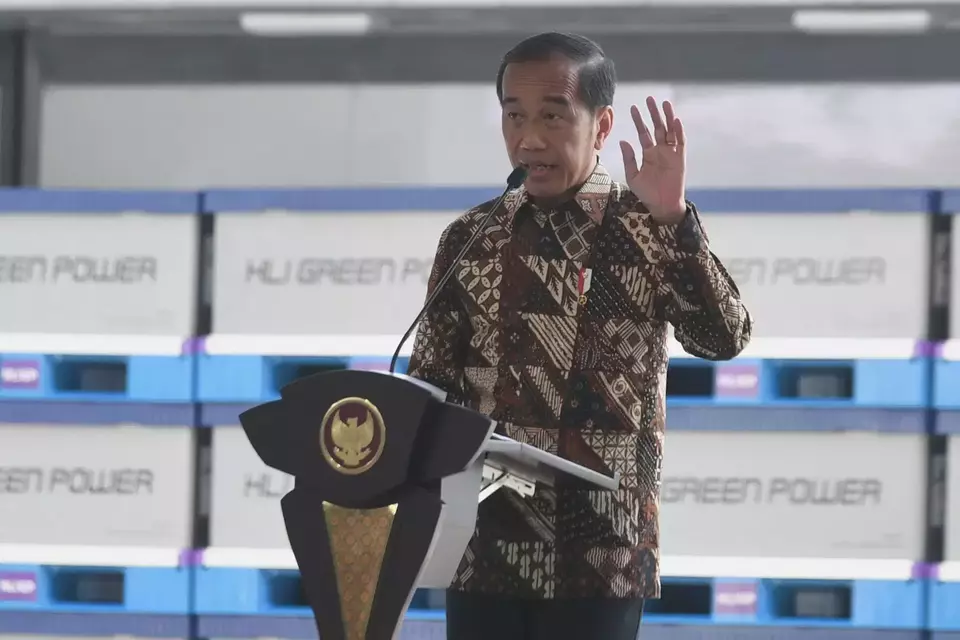
Jakarta. President Joko “Jokowi” Widodo’s economic policies are synonymous with resource nationalism, and his persistence has convinced many investors to develop Indonesia’s mineral industries, with accumulated investments totaling dozens of billions of American dollars.
Jokowi was first elected in 2014 and became president for a second term in 2019. To Jokowi, investment is pivotal in growing the country’s economy and creating job opportunities for its sizable population. Indonesia’s outgoing leader also grew even more ambitious in his second term as he kept raising the bar for the national investment targets.
Jokowi has been banking on resource nationalism, among others, to attract both domestic and foreign investors. Jokowi wants to put an end to Indonesia’s exports of raw materials -- something that he oftentimes said could be traced back to the colonial era.
In 2020, Indonesia stopped exporting unprocessed nickel ores in a move to capitalize on its abundant mineral reserves. The export ban would force companies to build their factories right here in the country. Nickel is a mainstay for the production of electric vehicle (EV) batteries, among others. Investors would have no choice, but to accept Jokowi’s offer if it wants to use Indonesian nickel to seize the EV market opportunity.
This will lead to the development of the domestic downstream industries, thus letting Indonesia export goods of higher value rather than selling unprocessed ores. The postponed ban on unprocessed copper export is set to come into effect later this year as Jokowi hopes to create a similar effect.
Jokowi’s bold decision to proceed with the nickel ore export ban had ruffled the feathers of the European Union (EU). The EU even sued Indonesia at the World Trade Organization (WTO), saying that the ban could affect Europe’s stainless steel production. Jakarta lost the lawsuit but had filed an appeal. The unwavering resource nationalism amid international opposition appears to have bore fruit, particularly from a realized investment perspective.
As of September 2024, Indonesia’s mineral industries have attracted around Rp 1,245.8 trillion (around $80.3 billion) in combined investments since 2020, the government announced Tuesday. This is almost 22.2 percent of the total investments that Indonesia secured over the said period.
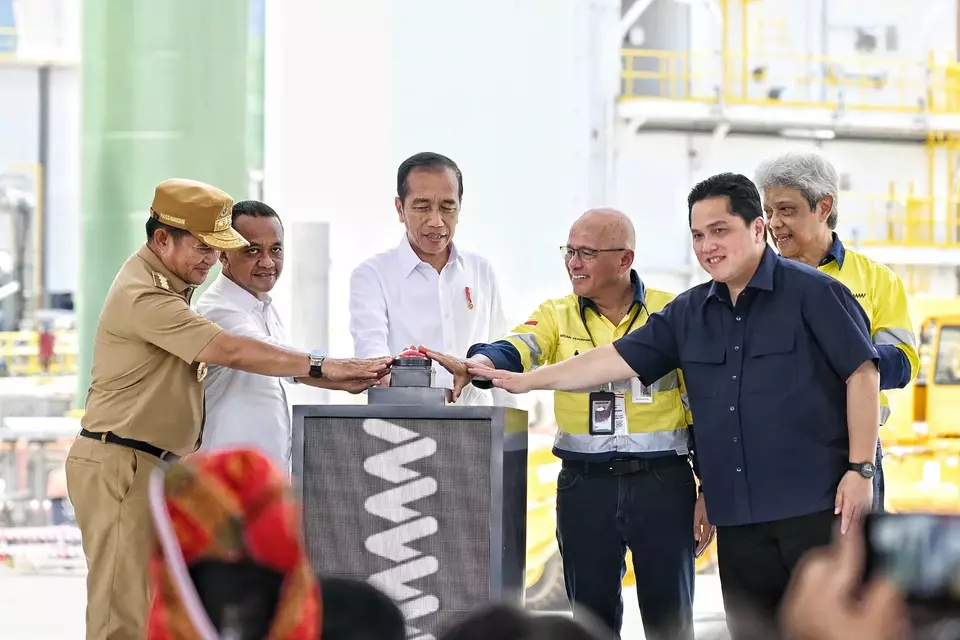
Indonesia reported that Rp 759.8 trillion of those accumulated investments went to mineral smelters. About Rp 514.8 trillion were going to nickel smelting. Investors had also put nearly Rp 46.8 trillion into Indonesia’s copper smelting industries, and around Rp 194.2 trillion for bauxite smelters. The government also revealed that the investments in tin smelting had reached Rp 4 trillion.
Some Rp 197 trillion of the accumulated commodity sector-related investments went to pulp and paper industries. Jokowi’s resource nationalism resulted in Rp 130.2 trillion worth of investments in crude palm oil or oleochemicals industries. Indonesia’s petrochemical industry has also booked around Rp 139.6 trillion in investments since 2020. Jokowi managed to bring in around Rp 19.1 trillion worth of investments to Indonesia’s EV battery ecosystem over the past 4 years, data showed.
After years of mineral-focused resource nationalism, preparations are underway to also develop the downstream industries in non-mining commodities.
“Speaking of this resource nationalism, we have to think of our comparative advantage. The next commodity that the government will push is actually seaweed,” Investment Minister Rosan Roeslani told reporters in Jakarta on Tuesday.
“We can use seaweed for cosmetics and even food production. Our coastlines are rich in seaweed, but of course, we will have to build the ecosystem,” Rosan said.
The 10 years of Jokowi’s leadership have brought in Rp 9,117.4 trillion in overall investments. Rosan said that the country’s stability was what had charmed investors into investing in the archipelagic Indonesia.
Tags: Keywords: as a preferred
Related Articles

Jokowi Confirms PSI Membership After Months of Speculation
Jokowi confirms he joined PSI in October 2025, ending months of speculation over his political ties to the party.
Downstream Industries Account for Nearly 30% of Indonesia's New Investment
Downstream industries attracted nearly 30% of Indonesia's new investment in the first half, led by mineral processing.
Danantara Advances $12.5 Billion Industrial Projects Across Metals, Energy, Food
The first phase of the program, launched on Feb. 6, covered six projects across 13 locations with a total investment of Rp 109 trillion.
Jokowi Launches Nationwide Political Tour Wearing Son’s PSI Party Uniform
Jokowi has begun his first nationwide political tour since leaving office, openly wearing the uniform of the party led by his youngest son.
Former Minister, Social Media Activist Arrested in Jokowi Diploma Defamation Case
Roy Suryo and Tifauzia Tyassuma were arrested for accusing the former president of using a fake university diploma to run for president.
Indonesia’s Taxpayers Must Repatriate Offshore Assets within 6 Months
Indonesia is giving taxpayers 6 months to repatriate their offshore wealth or else they can't use the money to invest in the country.The Latest

Jakarta Seeks to Become Southeast Asian Film Production Hub
Jakarta aims to become a Southeast Asian film hub by attracting foreign productions and expanding global partnerships.
Indonesia’s Value-Added Processing Investment Reaches $26.69 B
Indonesia’s value-added processing investment rose 11.3% year-on-year to $26.69 billion in January-September 2026.
Indonesia Steps Up Trade Deals to Unlock Export Opportunities Worth Billions
Indonesia seeks to unlock $10.9 billion in potential export growth through a trade deal with the European Union.
INDEF: Only 5% of Formal MSMEs Join Free Meals Program, Most See No New Business
Only 5% of formal MSMEs have ties to Indonesia’s free meals program, with most businesses yet to see new opportunities, INDEF says.
Indonesia Lags Behind Vietnam in Tariff-Hit US Furniture Export
Furniture producers association says that Indonesia needs to improve its logistics if it wants to catch up to Vietnam in US exports.Most Popular
