



JCI Returns to 7,000 Level as Trump Declares ‘Total Reset’ With China
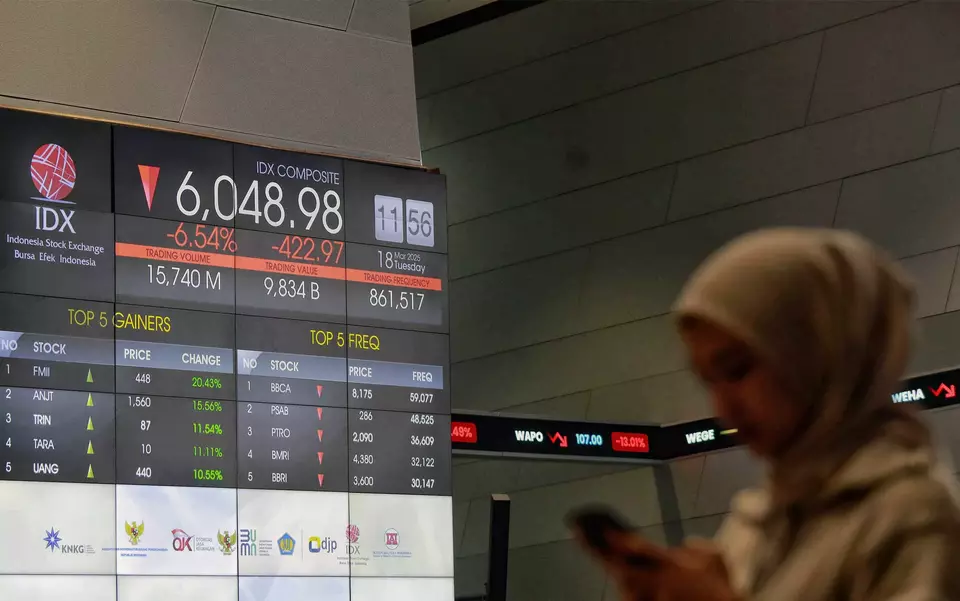
Jakarta. Indonesia’s benchmark Jakarta Composite Index (JCI) rallied past the 7,000 mark for the first time in over three months on Thursday, buoyed by optimism surrounding a temporary easing in US–China trade tensions. The benchmark rose 1 percent to 7,050.5 as of 9:37 a.m. local time, after a 2.15 percent surge the day prior.
This is the first time the index has crossed the psychological level since Feb. 5, a sign that investor sentiment is rebounding after weeks of volatility driven by heightened geopolitical and trade risks.
The latest rally was fueled by a 90-day suspension of tariffs between the US. and China, announced following high-level talks in Genevaon Monday The move eased fears of a global recession and sparked recovery across emerging markets.
“We see the 7,000 mark to be a positive psychological resistance level that is quite challenging to break. If the JCI fails to sustain momentum, we may see a pullback to lower support levels,” NH Korindo Sekuritas Indonesia wrote in a Thursday note.
US–China Reset Eases Market Anxiety
Helmy Kristanto, analyst at BRI Danareksa Sekuritas, described the development as a “total reset” in US–China relations. “The trade war de-escalation, marked by a 90-day suspension, has eased recession concerns and provided relief to global markets,” Kristanto said. “Trump's declaration of a ‘total reset’ signals a willingness to cooperate and a complete reversal from his earlier stance.”
Helmy also highlighted comments from US Treasury Secretary Scott Bessent, who said that “neither side wants to decouple,” offering further reassurance that the two largest economies are aiming to reduce tensions.
Under the temporary truce, China will reduce tariffs on US goods from 125 percent to 10 percent, while the US will lower tariffs on Chinese imports from 145 percent to 30 percent.
Still, Helmy warned that the historical precedent suggests caution. “A similar truce in 2018 paused tariffs but ultimately failed, resulting in the 2020 Phase One deal. While markets have responded positively, the path forward remains uncertain.”
From Rout to Recovery
The JCI had tumbled 3.82 percent over the April 8–11 trading window, falling to 6,262.23, its sharpest weekly loss in years, after US President Donald Trump abruptly hiked tariffs on several trading partners, including Indonesia. The resulting selloff wiped out Rp 431 trillion ($25.6 billion) in market value and prompted a significant pullback by foreign investors.
Banking and mining stocks, particularly vulnerable to international trade dynamics, were hit hardest during the downturn.
US equities posted modest gains Wednesday. The S&P 500 inched up 0.1 percent to 5,892.58, while the Nasdaq Composite rose 0.72 percent to 19,146.81. The Dow Jones Industrial Average fell 0.21 percent to 42,051.06.
Indonesia, one of the countries targeted in Washington’s tariff offensive, has dispatched a high-level delegation to the US led by Chief Economic Affairs Minister Airlangga Hartarto, on April 2. The team is pushing for tariff exemptions within a 60-day negotiation window. In exchange, Indonesia is offering to increase imports of US goods --including liquefied petroleum gas, gasoline, soybeans, and capital goods-- and to ease domestic content rules on electronics.
Tags: Keywords: as a preferred
Related Articles

MSCI Concerns, Tighter IDX Trading Rules Send Indonesian Stocks Down 5% by Midday
Indonesian stocks plunge 5% by midday as MSCI concerns weigh on sentiment and the IDX tightens its daily downside limit to 7%.
Indonesian Bank Stocks Hit Pandemic-Era Valuations After MSCI Shock
Indonesian bank stocks hit crisis-era lows as MSCI's downgrade proposal sparks a selloff and fuels fears of foreign outflows.
Black Week for Indonesia Stocks Exchange as Market Loses $85 Billion
Indonesia’s stocks plunged 14.91% in a week, wiping out $94 billion in market value as MSCI weighs a downgrade to standalone status.
Indonesia Fines DSSA, BREN and CUAN Rp 2.1 Trillion for Market Violations
OJK fines DSSA, BREN and CUAN Rp 2.1 trillion over stock manipulation and alleged irregularities in share offerings.
MSCI Warning Raises Existential Questions for Indonesia's Stock Market, Economist Says
MSCI's downgrade threat tests Indonesia's market credibility, with an economist urging reforms to restore investor trust.
Explainer: What Is MSCI Market Classification and Why Does It Matter for Indonesia?
MSCI classifies stock markets as developed, emerging, frontier or standalone. Here’s how the system works and why Indonesia’s status matters
MSCI Mulls Downgrading Indonesia to Standalone Market
MSCI is now weighing launching a consultation on the standalone market downgrade unless Jakarta shows meaningful progress by November.
OJK Flags 19 Stocks for High Ownership Concentration
OJK flags 19 stocks for high ownership concentration and will step up scrutiny of actively traded shares over manipulation risks.
Indonesia Braces for MSCI Review in November
MSCI has given Indonesia time until November, warning that it could downgrade Jakarta’s status to frontier markets.
Jakarta Stocks Rise 1.21% as Indonesia Lags in AI Boom
Indonesia’s stocks gained 1.21% as the World Bank said the country is lagging Malaysia and Vietnam in benefiting from the AI boom.The Latest

Chandra Asri Group Receives Trade Finance Excellence Award, Reinforcing Its Role in Indonesia’s Industrial Development
Chandra Asri Group receives the Trade Finance Excellence Award at CIMB Niaga Business Summit 2026.
AEON MALL Deltamas Brings 11 Sports and Creative Competitions to AEONLYMPIC 2026
AEON MALL Deltamas hosts AEONLYMPIC 2026, featuring 11 sports and creative competitions, with more than 3,100 participants.
Indonesian Stocks Extend Losses for Third Day, Fall 3.64% to 4,996
Indonesian stocks fell 3.64% on Monday, extending losses for a third straight session amid MSCI concerns and tighter trading limits.
Prabowo Calls Meeting on Forest Fires as Haze Reaches Jakarta, Singapore
Prabowo summons senior officials to discuss forest fires as smoke reaches Jakarta and Malaysia pushes for regional action.
Jakarta Outranks Amsterdam in Global Public Transport Survey
Jakarta climbs two places to 15th in Time Out's 2026 public transport survey, with its governor citing better network integration.Most Popular
