



Indonesia’s Q1 Economic Growth Projected to Fall Below 5%
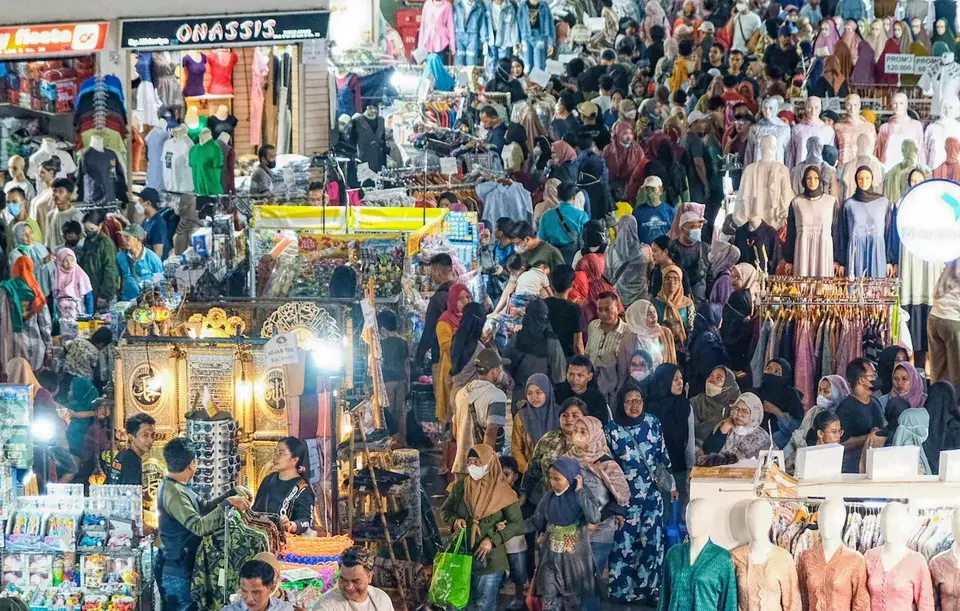
Jakarta. Indonesia’s economy is expected to expand by just 4.91 percent in the first quarter of 2025, marking a slowdown from both the previous quarter (5.02 percent in Q4 2024) and the same period last year (5.11 percent in Q1 2024).
The projection reflects a mix of persistent domestic and external pressures, as captured by macroeconomic indicators, business and consumer surveys, and real-sector data.
“Overall, the Q1 2025 growth estimate of 4.91 percent reflects a combination of still-solid but weakening consumption, restrained government spending, and a sluggish recovery in investment and exports due to ongoing global headwinds,” said Permata Bank Chief Economist Josua Pardede on Sunday.
According to Josua, household consumption -- the backbone of Indonesia’s economy -- is expected to grow by just 4.5 percent year-on-year in Q1, down from 4.91 percent in the same quarter of 2024. Government spending is projected to contract by 2.88 percent year-on-year, a sharp reversal from the 20.44 percent growth seen in Q1 2024.
“This is in line with the realization of the state budget, which reached just 17.1 percent of the annual spending target as of March 2025,” he noted.
Investment, meanwhile, is expected to grow by 3.11 percent year-on-year -- a relatively stable figure supported by a 15.9 percent rise in real investment, reaching Rp 465.2 trillion in Q1 2025. Exports of goods and services rose 9.52 percent year-on-year, continuing their positive momentum thanks to downstream mineral processing and higher-value manufacturing exports.
However, imports also rose by 5.07 percent year-on-year, signaling that domestic demand has not yet fully recovered. Uncertainty from abroad -- particularly the impact of US trade tariffs and fears of a global slowdown -- poses further risks to Indonesia’s short-term outlook.
“In this context, policy coordination between fiscal and monetary authorities will be critical to maintaining stability and supporting domestic demand in the quarters ahead,” Josua added.
In a separate statement, Reyhan Noor, lead researcher at Laboratorium Indonesia 45, said domestic growth remains hampered by budget efficiency measures and delays in executing priority government programs.
He cited the Free Nutritious Meals initiative as an example. Though expected to have a multiplier effect, its implementation has yet to meaningfully boost consumption. Meanwhile, government spending composition has declined due to fiscal efficiency efforts.
Reyhan also warned that while Indonesia’s economy is not heavily dependent on global trade, US tariff policies could still weigh on investment and consumption by driving up prices and reducing job opportunities.
“To mitigate these uncertainties, the government must adopt clear and well-coordinated policies,” he said. “This includes trade negotiations with the United States -- Indonesia must avoid fallout that could hurt trade ties with other countries or diminish the competitiveness of domestic industries.”
Tags: Keywords: as a preferred
Related Articles

‘Only Time Will Tell’: Indonesia on World Bank’s 5.2% Forecast
Indonesia aims to grow 5.4% in 2026 and expand further by 6% the following year, topping the World Bank's 5.2% forecasts.
Jakarta Stocks Extend Gains as Investors Await Forex Reserves Data
Indonesian stocks rose for a third day as investors awaited September forex reserves data and assessed economic growth prospects.
Two Years into Prabowo Presidency, Economists Question Quality of Economic Growth
Growth has accelerated under Prabowo, but economists say it has yet to generate enough quality jobs and stronger purchasing power.
Indonesia’s Growth Holds Up as Consumer Confidence, Investment Weaken
Indonesia’s economy remains resilient, but falling consumer confidence is pushing households to become more cautious with spending.
East Asia’s Next Growth Model: How to Grow Better, Not Just Faster
While East Asia still outpaces the global average, slower growth is exposing persistent vulnerabilities.
Indonesia's Q2 GDP Expands 5.29% on Strong Consumption
Indonesia's GDP grew 5.29% in Q2 as household spending and investment strengthened, while mining remained the only sector to contract.
Indonesia Layoffs Top 23,000 in 2026 as Economists Warn of Economic Slowdown
Economists warn persistent layoffs could weaken household spending, deepen jobless growth, and threaten Indonesia's economy.
Indonesia’s New Trade Regime and Rate Hike Deliver Double Blow to Markets
Business groups and economists warn Indonesia’s new centralized export policy could weaken investor confidence and slow economic activity.
Indonesian Economists Question Validity of Reported 5.61% Q1 Growth
The group said its own research identified discrepancies within the official data, raising concerns over the integrity of the measurement.
Indonesia’s Growth Paradox: Higher Growth, Poorer People
Indonesia’s middle class is shrinking despite strong economic growth, raising fears over jobs and inequality.The Latest

Students Plan Jakarta Protests to Mark Two Years of Prabowo's Presidency
Police have advised the public to avoid areas around the House of Representatives complex, the National Monument and the State Palace.
UN Boss Commends Indonesian Forest Protection Despite Persistent Haze Problem
Outgoing UN boss António Guterres' comment comes at an ironic time amid Indonesia's struggle with forest fires.
Indonesia Must Benefit Most From Its Minerals: UN Chief
Outgoing UN chief António Guterres says that Indonesia must "retain a far greater share of the economic value" from its minerals.
Chandra Asri Group Receives Trade Finance Excellence Award, Reinforcing Its Role in Indonesia’s Industrial Development
Chandra Asri Group receives the Trade Finance Excellence Award at CIMB Niaga Business Summit 2026.
AEON MALL Deltamas Brings 11 Sports and Creative Competitions to AEONLYMPIC 2026
AEON MALL Deltamas hosts AEONLYMPIC 2026, featuring 11 sports and creative competitions, with more than 3,100 participants.Most Popular
