



Indonesia's Car Market Struggles as Prices Soar and Household Incomes Lag
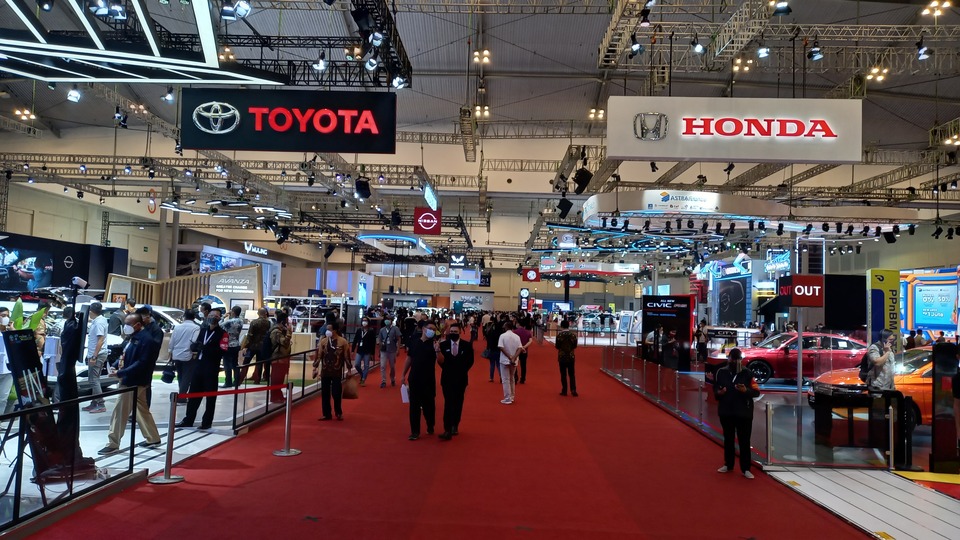
Jakarta. The Indonesian automotive industry is facing significant challenges as rising car prices and stagnant household incomes strain consumer purchasing power, leading to a decline in new car sales.
From January to September 2024, total wholesale sales reached 633,218 units, marking a 16.2 percent drop from 755,778 units during the same period in 2023. Retail sales also declined by 11.9 percent year-on-year, totaling 657,223 units compared to 746,246 units in the first nine months of 2023.
According to recent research presented during the Automotive Industry Roundtable organized by MarkPlus on Wednesday, titled Navigating The Future of The 4W Industry, the rising costs of new cars are becoming increasingly out of reach for many consumers. This disparity is a key reason why consumers are moving away from the new car market.
"Our study found that 56 percent of consumers feel that the price of new cars is growing far beyond their income levels, 50 percent believe vehicle taxes are too high, and 37 percent are burdened by high interest rates on car loans," said Iwan Setiawan, CEO of MarkPlus, Inc. and Marketeers.
"Additionally, 26 percent of consumers are opting for used cars because they are more affordable. These trends indicate that the new car market is becoming increasingly inaccessible for the majority of consumers," Setiawan added.
The main challenge, Setiawan noted, is the stark contrast between rising car prices and slow growth in household incomes. Over the past decade, car prices have increased by 37 percent, while household incomes have only grown by 28 percent during the same period.
This gap has further strained consumers' purchasing power. "The price of a new car now exceeds the average annual household income, forcing many to either choose used cars or delay their purchase altogether," Setiawan continued.
Consumer preferences are also shifting, with more buyers expressing interest in electric vehicles (EVs). While EVs offer an environmentally friendly alternative, their prices remain out of reach for many. However, this shift toward greener vehicles presents an opportunity for automakers to innovate while maintaining affordable pricing.
Rising interest rates from Bank Indonesia (BI) are also affecting consumers' willingness to purchase new cars, particularly those relying on financing. Higher interest rates lead to heavier monthly installments, making new cars less affordable for many.
Iwan Kurniawan, MarkPlus’s senior analyst, explained that while most Indonesian consumers still conduct online research before purchasing, they prefer to make their purchases offline. This trend challenges automakers to enhance both their digital services and physical showroom networks, especially for electric vehicles, which require in-person verification before purchase.
As new car prices continue to rise, automakers face increasing pressure to develop strategies that meet the needs of consumers burdened by high costs. Companies will need to create more affordable vehicles to remain relevant in a market that is becoming harder to access.
"With the shift towards electric vehicles and growing consumer awareness of sustainability, this segment still offers significant market potential, as long as prices can be reduced and made more accessible to Indonesian consumers," Setiawan concluded.
Setiawan emphasized that innovation and strategies to improve consumer purchasing power will be key drivers for the future of Indonesia’s automotive industry. Without adjustment, the new car market could lose its appeal amid ongoing economic challenges.
In response to these trends, the Indonesian Automotive Industry Association (Gaikindo) has revised its 2024 vehicle sales target from 1.1 million units to 850,000 units. Gaikindo Chairman Jongkie Sugiarto explained that the automotive market, particularly for passenger vehicles, has been sluggish throughout 2024, prompting this downward revision.
Tags: Keywords: as a preferred
Related Articles

Indonesia’s Growth Holds Up as Consumer Confidence, Investment Weaken
Indonesia’s economy remains resilient, but falling consumer confidence is pushing households to become more cautious with spending.
Indonesia Reconsiders Hybrid Car Incentives as Sales Surge 45%
Hybrid sales jumped 45% in H1 2026, but the government says strong demand weakens the case for more incentives.
Indonesian Stocks Rise as Government Delays 0.5% Marketplace Tax
Indonesia delayed a 0.5% marketplace tax to protect purchasing power as the JCI rose 0.48% amid stronger Fed rate-cut hopes.
Indonesia’s Rich Are Saving More While Millions Struggle to Put Money Aside
Indonesia's bank deposit growth is set to slow in 2026 as households struggle to save, while gains are driven by wealthy depositors.
Indonesia Expects Auto Sales to Top 850,000 Units in 2026 as Market Recovers
Indonesia expects auto sales to top 850,000 units in 2026 as production and wholesale deliveries rebound, signaling a recovery in domestic d
Indonesia's Auto Industry Says Diesel Vehicles Ready for B50
Indonesia's automakers say B50 biodiesel is safe for diesel vehicles as the government targets a nationwide rollout by Oct. 1.
Chinese Car Sales Jump 72% in Indonesia Amid EV Boom
Chinese automakers posted a 72% sales jump in Indonesia, driven by strong demand for electric vehicles.
Economy Isn’t Just Numbers, But Also Perception and Trust
On paper, several indicators still appear reasonably solid. Indonesia’s economy reportedly grew by 5.61% yoy in the first quarter of 2026.
Stronger Car Sales in Indonesia Not a Sign of Middle-Class Recovery
Indonesia auto sales rose 12% in early 2026, but recovery in middle-class consumption remains uneven, says Permata Bank.
Indonesia Car Sales Jump 12% as EV Demand Accelerates
Indonesia’s car sales climbed 12% in early 2026 as EV demand surged, helping Chinese brands gain ground against Astra.The Latest

Ferry Burns for Hours Near Merak After Passengers and Crew Escape
The Batumandi ferry fire is the latest in a series of serious passenger vessel accidents reported in Indonesia over the past five months.
Indonesia Attracts $2.5 Billion Palm Oil Investment So Far in 2026
In Q3 alone, Indonesia saw Rp 14.9 trillion ($829 million) worth of investments coming to its value-added palm oil processing.
Minimum Wage Hikes Fail to Keep Up With Rising Living Costs
Indonesia’s 2026 minimum wage hikes offer limited relief as rising prices erode purchasing power and job insecurity persists.
Prabowo Government Gets Poor Ratings from 66% of Surveyed Professionals
According to the findings, 66% of respondents rated the government's overall performance as poor or very poor.
Rupiah Strengthens to Rp 17,992 as Investment Data Lifts Sentiment
Rupiah gains 0.30% to Rp 17,992 per dollar as strong investment realization and easing US-Russia tensions lift market sentiment.Most Popular
