



IMF: New Oil Shock Rivals 1970s Crisis, But Policy Mistakes Could Decide Outcome
Jakarta. International Monetary Fund (IMF) warned that the latest energy shock triggered by the Middle East conflict is comparable in scale to the 1970s oil crisis, but said the global economy’s trajectory will depend heavily on how policymakers respond.
IMF said disruptions to energy supply, particularly through the Strait of Hormuz, have sharply lifted oil and gas prices, raising the risk of a broader economic slowdown and renewed inflation pressures worldwide.
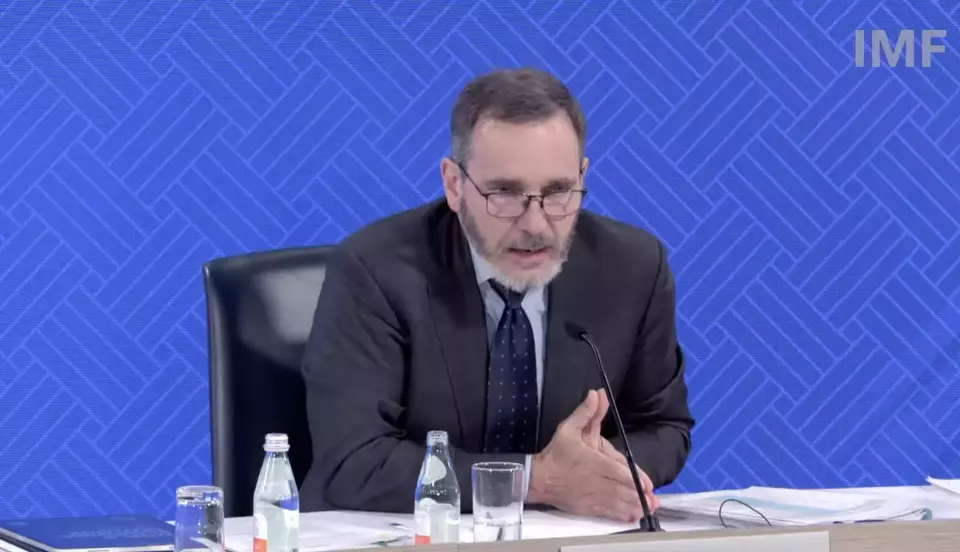
“If the conflict were to stop today, the oil shortfall for the year would be comparable to the 1970s shock,” IMF Economic Counsellor Pierre-Olivier Gourinchas said in a press briefing for World Economic Outlook 2026 April edition on Tuesday, referring to the 1974 oil crisis that triggered a period of global stagflation.
Despite the similarities, the IMF highlighted key differences that could help the global economy avoid a repeat of that episode. The world is now less dependent on oil, with more diversified energy sources, while central banks have stronger credibility and clearer mandates to maintain price stability.
Still, risks remain elevated.
The Fund projected global growth will slow to 3.1% this year under its baseline scenario, with inflation rising to 4.4% as energy prices climb. In a more adverse scenario, growth could fall to 2.5%, while inflation may accelerate to 5.4%. Under a severe and prolonged disruption, global growth could drop to around 2%, with inflation exceeding 6%.
IMF warned that rising energy costs act as a negative supply shock, pushing up production costs, disrupting supply chains, and eroding household purchasing power. These pressures could be amplified if businesses and workers attempt to offset losses, raising the risk of a wage-price spiral.
Unlike in the 1970s, however, central banks are not expected to immediately tighten policy aggressively. The IMF said monetary authorities can afford to “wait and watch” as long as inflation expectations remain anchored, but must be ready to act decisively if price pressures become entrenched.
On the fiscal side, IMF cautioned against broad subsidies or price controls, noting that many governments now have limited fiscal space after years of rising debt. Instead, support should be targeted and temporary, aimed at protecting the most vulnerable households.
IMF also pointed to tightening global financial conditions as another transmission channel of the shock. Heightened uncertainty has driven investors toward safe-haven assets, strengthening the US dollar and increasing borrowing costs for emerging markets.
While the immediate focus remains on stabilizing energy markets, the Fund said the current crisis could accelerate structural shifts, including investment in renewable energy and diversification of trade partnerships.
“The lesson from the 1970s is clear,” Gourinchas said. “You don’t want a relative price shock to turn into a sustained inflation problem.”
IMF added that a swift resolution to the conflict and the reopening of key energy routes would be critical to limiting long-term damage to the global economy.
Tags: Keywords: as a preferred
Related Articles

Indonesian Stocks Struggle Near Three-Month Low as Global Sell-Off Deepens
Indonesian stocks slip 0.17% after briefly hitting a three-month low as a global tech sell-off and oil prices above $105 weigh on sentiment.
Indonesian Stocks Sink Below 6,000 at Midday as Oil, Geopolitical Risks Weigh
Indonesian stocks fall 1.94% below 6,000 as Middle East tensions fuel risk aversion and technical indicators point to further losses.
‘It’s Trump Who Sets Oil Price’: Prabowo’s Brother
Neither the Indonesian government nor OPEC sets the oil price, Hashim Djojohadikusumo says.
Jakarta Stocks Rise 0.46% as Trade Surplus Offsets Iran War Fears
Jakarta stocks rose 0.46% as a wider trade surplus lifted sentiment, offsetting concerns over US-Iran tensions and oil prices.
Indonesian Stocks Flat as Investors Await September Inflation Data
Indonesian stocks were flat as investors awaited September inflation data amid concerns over rising oil prices and inflation.
Finance Minister Warns Rising Oil Prices Could Shrink Fiscal Space for Economic Stimulus
Indonesia's finance minister warns rising oil prices from Middle East tensions could limit fiscal space for stimulus.
Jakarta Stocks Jump 1.7% on Optimism Over Proposed Financial Hub
Jakarta stocks jumped 1.7% as optimism over a proposed international financial center outweighed caution before BI's rate decision.
Indonesia Stocks Rise as Investors Eye BI Meeting, Oil Rally
Indonesia's stocks opened higher as stronger domestic sentiment and foreign inflows outweighed global jitters over oil prices and AI stocks.
Oil Prices Rise Nearly 10% Following Latest Fighting in the Middle East
Brent's price, though, remains well below its wartime peak of nearly $120 per barrel for its most actively traded contract.
Iran Peace Talks Spark Late Rally in Indonesian Stocks
JCI recovered from a sharp midday drop to close higher as hopes for renewed US-Iran talks and a steady IMF outlook lifted sentiment.The Latest

Chandra Asri Group Receives Trade Finance Excellence Award, Reinforcing Its Role in Indonesia’s Industrial Development
Chandra Asri Group receives the Trade Finance Excellence Award at CIMB Niaga Business Summit 2026.
AEON MALL Deltamas Brings 11 Sports and Creative Competitions to AEONLYMPIC 2026
AEON MALL Deltamas hosts AEONLYMPIC 2026, featuring 11 sports and creative competitions, with more than 3,100 participants.
Indonesian Stocks Extend Losses for Third Day, Fall 3.64% to 4,996
Indonesian stocks fell 3.64% on Monday, extending losses for a third straight session amid MSCI concerns and tighter trading limits.
Prabowo Calls Meeting on Forest Fires as Haze Reaches Jakarta, Singapore
Prabowo summons senior officials to discuss forest fires as smoke reaches Jakarta and Malaysia pushes for regional action.
Jakarta Outranks Amsterdam in Global Public Transport Survey
Jakarta climbs two places to 15th in Time Out's 2026 public transport survey, with its governor citing better network integration.Most Popular
