



How Nickel Industrialization Is Transforming Indonesia’s Economy
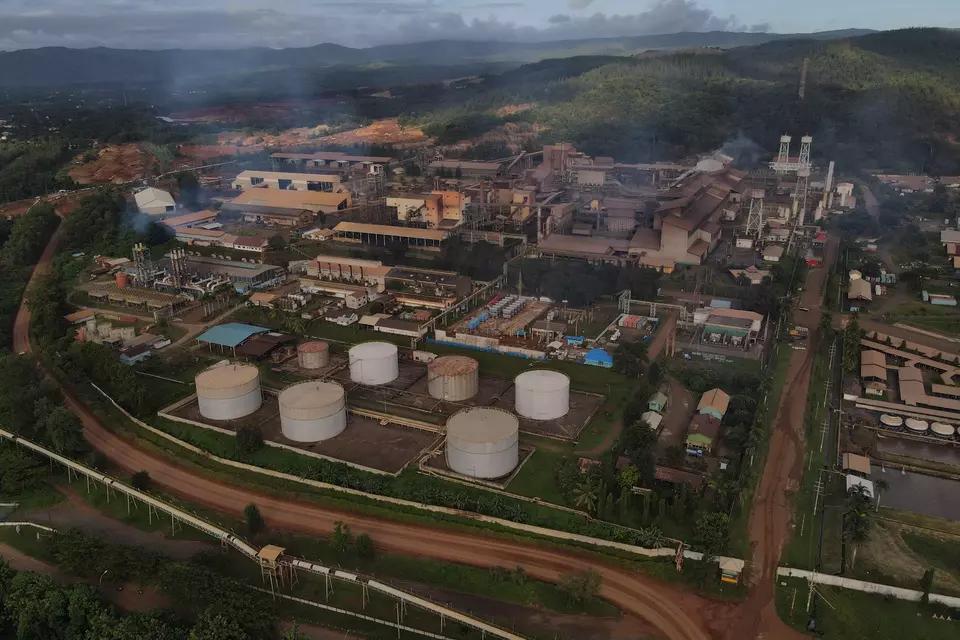
Jakarta. The shift from exporting raw minerals to industrializing the downstream mining sector has significantly impacted Indonesia’s economy, Energy and Mineral Resources Minister Bahlil Lahadalia said on Thursday.
The policy began with nickel, one of Indonesia’s most abundant natural resources, and in just a few years, it has transformed the country’s economic landscape, Bahlil said during the Outlook 2025 seminar hosted by Beritasatu in Jakarta.
According to data from the Energy and Mineral Resources Ministry, the industrialization policy has boosted nickel export values from $3.3 billion in 2017 to $33.5 billion in 2023.
The domestic nickel industry has attracted $47.36 billion in new investment, created 180,600 new jobs, and contributed $34.1 billion to Indonesia’s exports.
“And this is from just one commodity,” Bahlil said.
Indonesia has enjoyed a surplus in its overall international trade for 56 consecutive months since May 2020.
Indonesia’s Growing Dominance in the Global Nickel Industry
Indonesia is the world’s largest producer and exporter of nickel, accounting for more than 40 percent of global nickel production. The country’s rich nickel reserves, primarily located in Sulawesi and Maluku, have positioned it as a key player in the global supply chain, particularly for electric vehicle (EV) batteries and stainless steel production.
The government’s ban on raw nickel exports, enforced in January 2020, has pushed foreign companies -- especially those from China, South Korea, and the United States -- to invest in domestic nickel processing and smelting facilities. Major companies like Tesla, CATL, and LG Energy Solution have expressed interest in securing nickel supply chains in Indonesia.
This policy shift has cemented Indonesia’s role in the global EV revolution, as nickel is a critical component of lithium-ion batteries used in electric vehicles.
A Long-Overdue Shift from Raw Commodity Exports
Bahlil argued that for decades, Indonesia has followed an economic model inherited from the Dutch colonial era, relying heavily on exporting raw materials. This dependency, he said, has made foreign countries "addicted" to cheap, unprocessed Indonesian resources.
While selling unprocessed commodities provided quick revenue in the early years after independence, Bahlil stressed that the policy was not sustainable and harmed long-term economic growth.
“How much longer do we have to run the economy like this? We need a trigger to bolster the economy, and the answer is industrialization in the downstream mining sector,” said Bahlil, who is also the chairman of Golkar, the second-largest party in the national legislature.
Started by SBY, Executed by Jokowi, and Strengthened by Prabowo
The push for industrialization began during the Susilo Bambang Yudhoyono administration, when major mining companies were required to build and operate smelters in Indonesia. However, it was President Joko “Jokowi” Widodo who aggressively enforced the policy, starting with nickel, despite facing opposition from Western economies that relied on Indonesian raw materials.
Bahlil confirmed that the industrialization model will expand to other key sectors, including forestry, fisheries, oil, and gas.
Under President Prabowo Subianto, the policy will not only continue but be expanded with even greater emphasis. Shortly after taking office in October 2024, Prabowo formed a special task force to oversee the policy’s execution and appointed Bahlil as its chairman.
“Next, the industrialization approach will be applied to bauxite and tin,” Bahlil said.
Tags: Keywords: as a preferred
Related Articles

Indonesia Says Subsidized Fuel Stocks Cover 16–18 Days
Indonesia says fuel reserves remain adequate, with Pertalite stocks covering 16–18 days as Pertamina boosts deliveries.
Indonesia Opens New LPG Plant in West Java to Reduce Import Dependence
Bahlil said the plant was expected to supply around 15% of LPG demand in Jakarta and West Java.
Indonesia Aims $45 Billion Nickel Exports in 2026
Indonesia's nickel exports neared $34 billion in 2024, government data showed.
Bahlil Says B50 Program Shields Indonesia from Diesel Import Disruptions
Indonesia says its B50 biodiesel program has ended diesel imports, even as Middle East tensions threaten global oil supplies.
‘It’s Trump Who Sets Oil Price’: Prabowo’s Brother
Neither the Indonesian government nor OPEC sets the oil price, Hashim Djojohadikusumo says.
Indonesia Rewrites Its Economic Model to Power Faster Growth
Indonesia bets on investment, downstream industries and clean energy to achieve 8% economic growth.
Indonesia Insists on Deciding Singapore Power Export Price
Senior minister Bahlil Lahadalia says that Indonesia doesn't want to sell its electricity cheaply.
Indonesia’s 1M-Bpd Oil Import Gap Is ‘Miserable’, Bahlil Says
Indonesia’s oil lifting meets the 2025 target, but Bahlil calls the 1M-bpd import gap “miserable” as demand hits 1.6M bpd.
Bahlil Signals More Ministries May Join New Downstream Coordination
Bahlil signals one or two more ministries could join the new downstream coordination, with the Industry Ministry among those considered.
Bahlil: Coal Quotas Needed to Protect Indonesia’s Pricing Power
Bahlil says tighter coal quotas are needed to control supply, prevent oversupply and strengthen Indonesia’s influence over coal prices.The Latest

Students Plan Jakarta Protests to Mark Two Years of Prabowo's Presidency
Police have advised the public to avoid areas around the House of Representatives complex, the National Monument and the State Palace.
UN Boss Commends Indonesian Forest Protection Despite Persistent Haze Problem
Outgoing UN boss António Guterres' comment comes at an ironic time amid Indonesia's struggle with forest fires.
Indonesia Must Benefit Most From Its Minerals: UN Chief
Outgoing UN chief António Guterres says that Indonesia must "retain a far greater share of the economic value" from its minerals.
Chandra Asri Group Receives Trade Finance Excellence Award, Reinforcing Its Role in Indonesia’s Industrial Development
Chandra Asri Group receives the Trade Finance Excellence Award at CIMB Niaga Business Summit 2026.
AEON MALL Deltamas Brings 11 Sports and Creative Competitions to AEONLYMPIC 2026
AEON MALL Deltamas hosts AEONLYMPIC 2026, featuring 11 sports and creative competitions, with more than 3,100 participants.Most Popular
