



Gov’t Lifts Hotel Meeting Restrictions as Industry Faces Financial Crunch
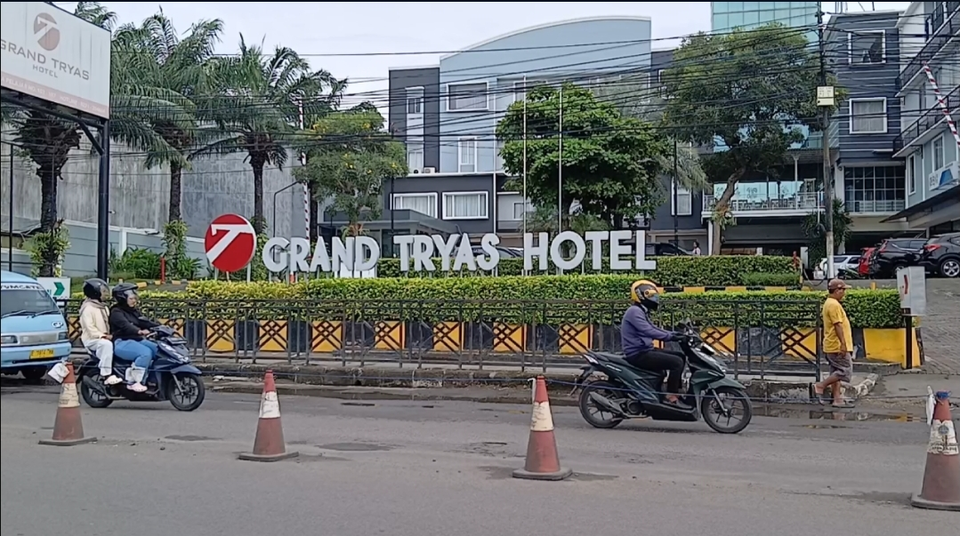
Mataram. The Indonesian government has lifted restrictions on regional governments holding meetings and events at hotels, a policy reversal that comes after mounting pressure from the hospitality industry and warnings about the economic drag of excessive austerity.
The ban had been part of a nationwide cost-cutting program but was blamed for worsening financial strain on hotels that depend heavily on government bookings.
“Regional governments are now allowed to hold events at hotels and restaurants. I confirmed this directly with President Prabowo Subianto,” Home Affairs Minister Tito Karnavian announced on Wednesday during a visit to Mataram, West Nusa Tenggara.
Tito added that the hospitality industry is inherently labor-intensive and heavily reliant on meetings, incentives, conventions, and exhibitions (MICE). A halt in government MICE activities, he said, had rippled through the industry, threatening not only hotels but also suppliers and related businesses.
“With this policy change, hotels and their supporting industries -- such as food and beverage suppliers -- can start returning to normal operations,” he said. “Reducing bookings is understandable, but there should never be zero activity. Events at hotels and restaurants are once again permitted to help the industry recover.”
The minister acknowledged that the central government has slashed Rp 50 trillion from budgets allocated to over 500 cities and regencies. However, he said this would not severely affect overall fiscal capacity.
“Official travel is allowed again, but it must be done wisely and only for essential purposes,” he added.
Since taking office last October, President Prabowo has implemented sweeping austerity measures to reallocate over Rp 300 trillion in state spending to fund his administration’s flagship free meal program for schoolchildren and pregnant women.
The cuts prompted immediate and severe curbs on non-essential travel, seminars, and government-hosted events.
In Bogor, two hotels shut down in March, unable to cover operating costs. Hotels in Cirebon have warned of potential layoffs due to plunging occupancy rates --concerns echoed by operators across other cities.
The Indonesian Hotel and Restaurant Association (PHRI) has repeatedly criticized the austerity campaign, citing its damaging effect on an industry still recovering from the pandemic.
PHRI Secretary-General Maulana Yusran said that government institutions account for 40 to 60 percent of hotel revenues in most regions -- and up to 80 percent in some areas.
“The efficiency push has deeply impacted our sector,” Maulana said in April. “Ministries, agencies, and local governments have significantly scaled back public events, and consumer spending is also weakening.”
He added that broader economic pressures are compounding the crisis, as many consumers have begun holding back on travel and leisure-related expenses.
Tags: Keywords: as a preferred
Related Articles

Indonesia Earmarks $6.2 Billion for Sumatra Disaster Recovery
Indonesia has allocated Rp 100 T over three years to accelerate post-disaster rehabilitation and reconstruction in three Sumatra provinces.
Jakarta’s Rp 5.6 Trillion Bond Plan Draws Caution from Home Affairs Minister
Tito Karnavian urged caution over Jakarta’s Rp 5.6 trillion bond plan, warning regional debt must not burden future administrations.
UGM Professor Links Mass Layoffs to Trade and Fiscal Policies
An Indonesian economist says trade, fiscal, and tax policies have contributed to layoffs despite solid economic growth.
Indonesia Denies Reports That Two Border Villages Were Lost to Malaysia
Indonesia denied reports that two villages were ceded to Malaysia, saying only a small border area was affected.
Purbaya Signals Further Budget Tightening in 2027 Amid Rising Spending Commitments
For 2027, the government has set a budget deficit target of between 1.8% and 2.4% of gross domestic product.The Latest

Chandra Asri Group Receives Trade Finance Excellence Award, Reinforcing Its Role in Indonesia’s Industrial Development
Chandra Asri Group receives the Trade Finance Excellence Award at CIMB Niaga Business Summit 2026.
AEON MALL Deltamas Brings 11 Sports and Creative Competitions to AEONLYMPIC 2026
AEON MALL Deltamas hosts AEONLYMPIC 2026, featuring 11 sports and creative competitions, with more than 3,100 participants.
Indonesian Stocks Extend Losses for Third Day, Fall 3.64% to 4,996
Indonesian stocks fell 3.64% on Monday, extending losses for a third straight session amid MSCI concerns and tighter trading limits.
Prabowo Calls Meeting on Forest Fires as Haze Reaches Jakarta, Singapore
Prabowo summons senior officials to discuss forest fires as smoke reaches Jakarta and Malaysia pushes for regional action.
Jakarta Outranks Amsterdam in Global Public Transport Survey
Jakarta climbs two places to 15th in Time Out's 2026 public transport survey, with its governor citing better network integration.Most Popular
