



Government Earmarks Rp 20 Trillion to Rescue Labor-Intensive Industries
Jakarta. The government has announced a series of new policies aimed at protecting and revitalizing labor-intensive industries, including textiles, footwear, furniture, food, and beverages, in response to widespread factory closures and mass layoffs.
The move comes amid declining orders, rising production costs, and weakened competitiveness, which have forced numerous companies to shut down. One of the most notable cases is the recent bankruptcy of Sritex, Indonesia’s oldest textile company, which resulted in more than 10,000 job losses in Central Java.
Chief Economic Minister Airlangga Hartarto revealed on Wednesday that the government will introduce financial incentives, anti-dumping measures, and deregulation to support struggling industries. As part of these efforts, Rp 20 trillion ($1.2 billion) has been allocated to help small and medium enterprises invest in new machinery.
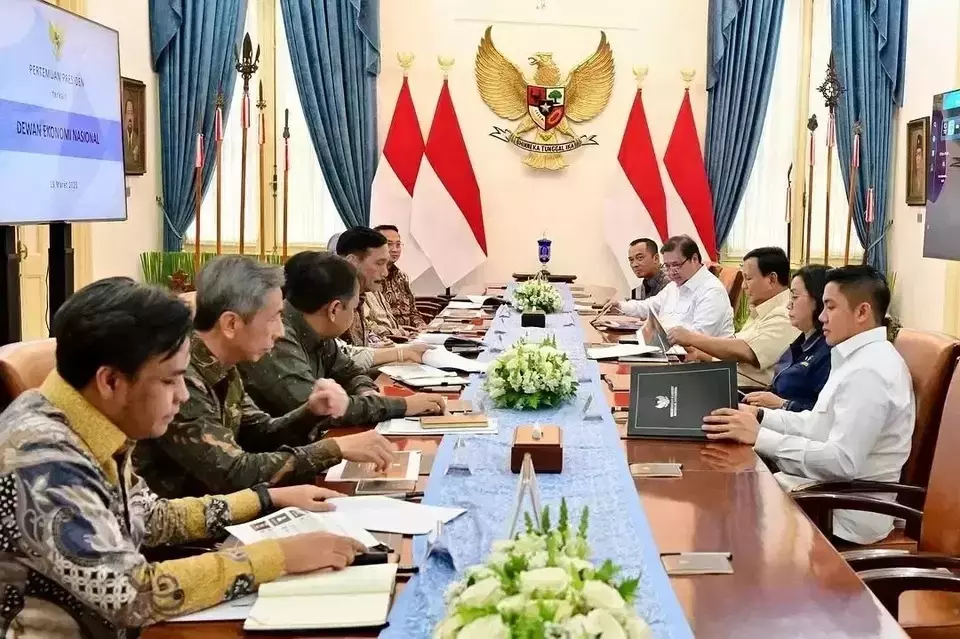
“The government has formulated a stimulus package for machinery revitalization, allocating Rp 20 trillion in investment subsidies,” Airlangga said during a press conference following a meeting with President Prabowo Subianto at the State Palace in Jakarta. The meeting, also attended by representatives of the National Economic Council (DEN), focused on economic recovery strategies.
Under the new policy, industries such as textiles, footwear, food, beverages, furniture, and leather will be prioritized for subsidized loans, offering a 5 percent interest subsidy over an eight-year period.
“Without upgraded machinery, these industries cannot compete in terms of output, energy efficiency, and production speed,” Airlangga explained.
Textile Industry
Labor-intensive sectors play a crucial role in Indonesia’s economy, both in job creation and export revenues. The textile industry alone employs over four million people and generates more than $2 billion in exports annually.
To enhance competitiveness, the government will streamline regulations related to raw material procurement, import procedures, tariff structures, and supply chain management.
In addition, Indonesia is pushing for the swift ratification of the Comprehensive Economic Partnership Agreement (CEPA) with the European Union, which is expected to open new markets for labor-intensive industries.
“The European Union is the world’s largest textile market, accounting for 30 percent of global demand. If we finalize the agreement, our textile exports could increase by 50 percent, as we have already seen in Vietnam,” Airlangga noted.
Tags: Keywords: as a preferred
Related Articles

Indonesia, Russia Seek Deeper Trade and Industrial Ties
Indonesia and Russia are seeking deeper trade, investment and industrial ties as bilateral trade rises 21.6% to $4.84 billion in 2025.
'MSCI is Not Always Right’: Indonesia Tells Investors to Calm Down
Senior deputy economy minister says "not everything that MSCI does is beneficial for investors" as Indonesian stocks plunge.
Indonesian Stocks End at 2026 Low After Losing 11.57% on MSCI Warning
Indonesian stocks lost 11.57% to hit a new 2026 low as MSCI's reclassification warning rattled investor confidence.
Indonesia Surprised by MSCI Downgrade Despite Bangkok Talks
Senior minister Airlangga Hartarto admitted that the Indonesian government was taken aback by MSCI’s latest announcement.
Indonesia Waives Import Duties on Plastic Raw Materials for Six Months
Indonesia cuts import duties on selected plastic raw materials to 0% for six months as global prices surge.
Indonesia Targets Integrated Textile Industry with Rp 100 Trillion Investment
The initiative is part of a broader strategy to consolidate existing manufacturers and strengthen their competitiveness.
Airlangga Urges Indonesia to Catch Up With Vietnam in Digital, AI Industries
Indonesia needs to accelerate digital, semiconductor and AI industries to catch up with Vietnam and achieve its 8% growth target.
Prabowo Adds 6% Mortgages, Expands Worker Tax Relief in 2027
Indonesia will offer 6% mortgages to salaried workers and expand tax relief as the government extends economic incentives into 2027.
All Workers Paid Under Rp 10 Million Exempt From Income Tax in 2027
The government-borne income tax will apply to workers earning less than Rp 10 million a month regardless of the sector, starting next year.
Airlangga Highlights Market Diversification, Global Competitiveness for Furniture Industry
Airlangga urges Indonesia’s furniture industry to diversify export markets, strengthen global competitiveness and tap international demand.The Latest

UN Boss Wants to Fix Security Council as Indonesia Seeks Seat
Outgoing UN chief Guterres says the current permanent member setup at the Security Council fails to reflect today's realities.
Saudi Flagship Investment Conference Pushed to 2027 after Houthi Attacks
The annual Future Investment Initiative (FII), often dubbed "Davos in the Desert", was originally scheduled to take place from October 26-29
Government Sets Aside Rp 1.3 Quadrillion for Final-Quarter Spending
Government spending has reached Rp 2.66 quadrillion, equivalent to 69.2% of the full-year budget target of Rp 3.84 quadrillion.
Indonesia Probes 98 Corporate Wildfire Cases, Including Possible Foreign Links
Police investigate 98 corporate-related wildfire cases, including possible links to investors from neighboring countries.
Students Plan Jakarta Protests to Mark Two Years of Prabowo's Presidency
Police have advised the public to avoid areas around the House of Representatives complex, the National Monument and the State Palace.Most Popular
