



Economists Call for More Middle-Class Economic Protection
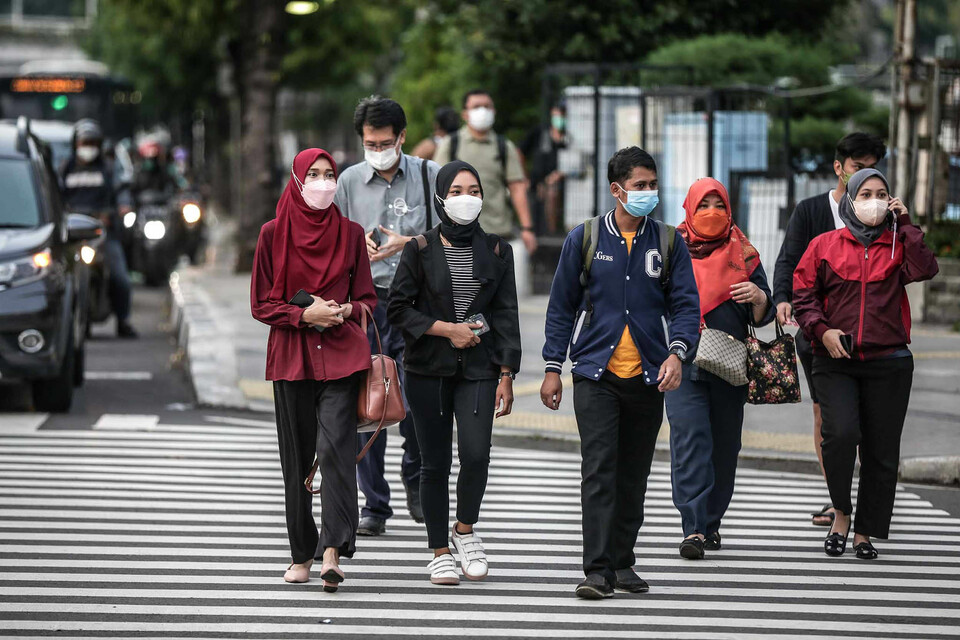
Jakarta. Economists are urging the government to pay more attention to the middle class, not just the poor, to prevent social unrest.
Muhammad Chatib Basri, former Finance Minister, highlighted the "Chilean Paradox," a socio-economic phenomenon in Chile where, despite impressive economic performance and a significant reduction in poverty rates, there was still social unrest.
Chatib pointed out that while economic policies in many countries, including Indonesia, often focus on supporting the poor, the middle class is sometimes overlooked.
"Social protection instruments for the middle class need to be considered. They are not classified as poor, but economic shocks could lead them to become impoverished," stated Muhammad Chatib Basri in his opinion piece published recently.
He highlighted that the middle class might not have many options, and the existing social protection instruments are inadequate. They are ineligible for social assistance since they are not classified as part of the impoverished group.
"They may not have access to government-sponsored scholarships because they came from a middle-class family," added the lecturer from the Faculty of Economics and Business at the University of Indonesia (UI).
Chatib mentioned that the middle class is also responsible for paying their own social and health security fee as they are not covered by the government like low-income families.
Drawing a parallel with Chile, he noted the impressive economic performance of the country. Chile boasts the highest per capita income in Latin America, the fastest economic growth in the region, and a reduction in poverty from 53 percent in 1987 to 6 percent in 2017—outperforming Indonesia.
Ironically, in October 2019, Chile experienced social unrest that almost led to a revolution. "Economist Sebastian Edwards referred to it as 'The Chilean Paradox.' Why [did it happen]? One explanation is the neglect of the middle class," explained Chatib.
According to World Bank Data, The middle class in Indonesia has been growing faster than other groups; there are now at least 52 million economically secure Indonesians or one Indonesian in every five. The Indonesian middle class has been a major driver of economic growth as the group’s consumption has grown by 12 percent annually since 2002 and now represents close to half of all household consumption in Indonesia. Over the past 20 years, the majority of the poor and vulnerable have climbed out of poverty and into the aspiring middle class, where there are approximately 115 million people who belong in this category.
Sofyano Zakaria, Director of the Center for Public Policy Studies (Puskepi), said the government could consider lifting the value-added tax (VAT) on basic necessities as an incentive for the middle class while continuing to provide social assistance to the poor.
"In response to a significant increase in the prices of basic necessities, the government could provide incentives for a specific period, such as removing the VAT on essential goods," Sofyano told Beritasatu.com on Wednesday.
He suggested that the removal of VAT on basic necessities could be implemented during the festive season when demands are high.
Bhima Yudhistira, Director of the Center of Economics and Law Studies (Celios), emphasized the need to boost household consumption, especially among the lower-middle class, to drive economic growth.
Bhima also noted that the upper-middle class has significant savings but tends to be reluctant to allocate those funds to consumption spending. Therefore, stimulating the upper-middle class to be more active in spending and investing presents a major challenge.
"This is influenced by the increasing pressure of basic needs, limited job opportunities, as well as constraints in affordable home ownership and sensitivity to interest rates," said Bhima in late 2023.
Currently, some incentives enjoyed by the middle class include the VAT incentive for housing and electric vehicles.
The government has decided to waive the value-added tax (VAT) on home purchases priced up to Rp 2 billion ($126,000) until June 2024. From June onwards until the end of the year, a 50 percent discount on the VAT will be applied to these purchases.
Additionally, the Finance Ministry has extended VAT incentives for electric cars until December 2024. The VAT for electric cars and buses has been set at 11 percent, with the government covering 10 percent of the VAT burden. As a result, consumers will only be required to pay 1 percent of the VAT on the selling price of electric cars.
Tags: Keywords: as a preferred
Related Articles

Weak Institutions Keep Asia Stuck in Middle-Income Trap: ADBI Dean
Weak institutions and fragmented policymaking may be a bigger barrier to high-income status than growth itself, ADBI says.
Economic Buffer Under Pressure as Middle Class Continues to Shrink
BI’s surprise rate hike and a 32% fuel price increase are squeezing Indonesia’s middle class, raising risks of economic decline.
National Economic Council Pushes MBG Efficiency
DEN called for a more efficient MBG program as a weaker rupiah raises risks of higher prices and pressure on household spending.
JCI Pauses After 7.6% Rally as Investors Assess BI's Suprise Rate Hike
JCI slipped after Tuesday's 7.6% rally as investors weighed BI's surprise rate hike and lingering fiscal concerns.
Kadin Warns Weak Rupiah is Squeezing Middle-Class Consumers
Indonesia’s middle class faces mounting pressure as the rupiah weakens past Rp 17,700 per dollar.The Latest

Chandra Asri Group Receives Trade Finance Excellence Award, Reinforcing Its Role in Indonesia’s Industrial Development
Chandra Asri Group receives the Trade Finance Excellence Award at CIMB Niaga Business Summit 2026.
AEON MALL Deltamas Brings 11 Sports and Creative Competitions to AEONLYMPIC 2026
AEON MALL Deltamas hosts AEONLYMPIC 2026, featuring 11 sports and creative competitions, with more than 3,100 participants.
Indonesian Stocks Extend Losses for Third Day, Fall 3.64% to 4,996
Indonesian stocks fell 3.64% on Monday, extending losses for a third straight session amid MSCI concerns and tighter trading limits.
Prabowo Calls Meeting on Forest Fires as Haze Reaches Jakarta, Singapore
Prabowo summons senior officials to discuss forest fires as smoke reaches Jakarta and Malaysia pushes for regional action.
Jakarta Outranks Amsterdam in Global Public Transport Survey
Jakarta climbs two places to 15th in Time Out's 2026 public transport survey, with its governor citing better network integration.Most Popular
