



Currency Swaps May Support Rupiah Short-Term, but Not a Lasting Fix: Economist
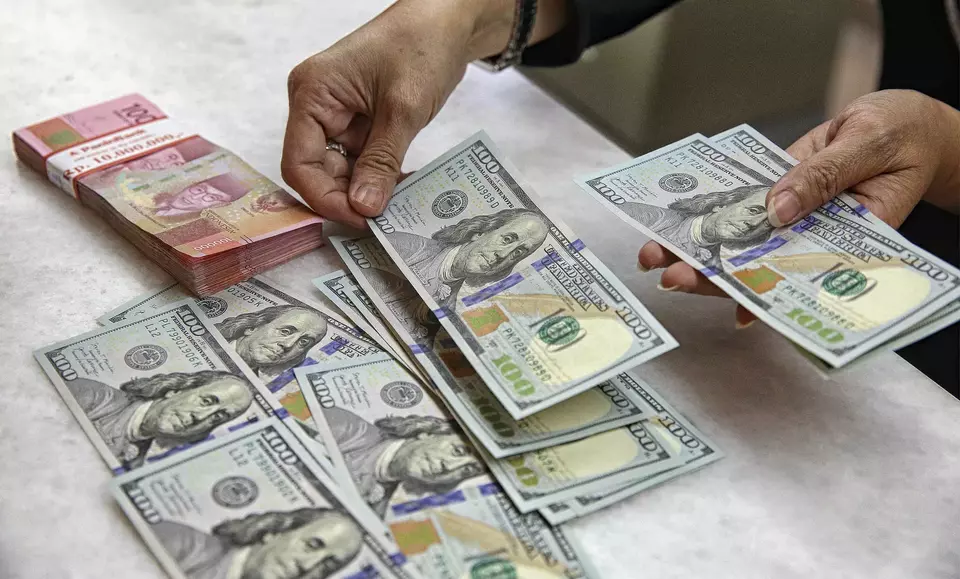
Jakarta. Currency swap agreements being pursued by the Indonesian government and Bank Indonesia may help stabilize the rupiah in the short term, but they are not a sustainable long-term solution for strengthening the currency, a financial analyst said on Thursday.
Esther Sri Astuti, executive director of the Institute for Development of Economics and Finance (Indef), said cross-border currency cooperation could temporarily strengthen foreign exchange reserves and help ensure liquidity for international transactions and external debt payments.
Under such arrangements, Bank Indonesia can reduce the use of its US dollar reserves in transactions with partner countries by relying more heavily on local currencies.
Esther said broader use of local currencies is important for reducing Indonesia’s dependence on the US dollar, while also helping businesses mitigate exchange rate and interest-rate risks.
“In my view, currency swaps have positive aspects, but they are not a long-term solution,” Esther said in Jakarta.
Indonesia’s foreign exchange reserves stood at $148.4 billion at the end of March 2026, according to central bank data.
Reserves have recently come under pressure as Bank Indonesia intensified market intervention to stabilize the rupiah, which earlier this week fell to a record low beyond Rp 17,400 per US dollar.
Esther stressed that swap arrangements cannot substitute for stronger domestic economic fundamentals.
“Swaps are temporary stabilization tools, not the primary remedy for strengthening domestic economic fundamentals,” she said.
She argued that Indonesia must continue diversifying funding sources and strengthening liquidity to reduce reliance on the US dollar. Esther also urged Bank Indonesia to remain active in market operations as long as foreign exchange reserves remain adequate.
Key Strategies for Stronger Rupiah
Earlier, Coordinating Minister for Economic Affairs Airlangga Hartarto said the government and Bank Indonesia are preparing currency swap agreements with China, Japan, South Korea, and several other countries as part of efforts to stabilize the rupiah amid global uncertainty and geopolitical tensions.
Bank Indonesia Governor Perry Warjiyo also reaffirmed the central bank’s commitment to intervening in foreign exchange markets and boosting capital inflows to support the currency.
Perry outlined seven stabilization measures approved by President Prabowo Subianto.
The first involves intervention in spot foreign exchange markets, domestic non-deliverable forwards (DNDF), and offshore non-deliverable forward (NDF) markets.
“In offshore markets such as Hong Kong, Singapore, London, and New York, we will continue intervening to stabilize the rupiah both domestically and internationally. Our foreign exchange reserves are more than sufficient to support rupiah stabilization,” Perry said.
Second, Bank Indonesia and the Finance Ministry are seeking to attract greater foreign capital inflows, including through the optimization of Bank Indonesia Rupiah Securities (SRBI) to offset outflows.
Third, the central bank will continue purchasing government bonds in the secondary market. Year-to-date purchases have reached Rp 123.1 trillion ($7 billion).
Fourth, Bank Indonesia will maintain ample banking and money market liquidity, reflected in 14.1% growth in base money supply.
Fifth, the central bank has tightened rules on domestic dollar purchases without underlying documents, lowering the monthly limit from $100,000 to $50,000.
Perry noted that local currency transactions between the Chinese yuan and the rupiah have expanded significantly, helping diversify payment systems away from the dollar and supporting the rupiah.
Sixth, Bank Indonesia will intensify intervention in offshore NDF markets and now permits domestic banks to participate directly in those transactions to boost foreign exchange supply and strengthen currency stabilization globally.
Seventh, Bank Indonesia and the Financial Services Authority (OJK) will tighten supervision of banks and corporations with large US dollar requirements.
Tags: Keywords: as a preferred
Related Articles

Rupiah Buckles Under MSCI Pressure, Sinks Past Rp 18,000
Rupiah fell 0.50% to Rp 18,027 per dollar as MSCI’s proposed downgrade of Indonesia’s market status rattled investor confidence.
Rupiah Breaks Rp 18,000 as MSCI Review Triggers Market Turmoil
Rupiah breached Rp 18,000 per USD as MSCI's proposed market reclassification rattled investor sentiment and intensified market pressure.
Indonesia’s External Debt Rises to $459.3 Billion in August
Indonesia’s external debt rose 5.6% year-on-year to $459.3 billion in August, as public borrowing offset a decline in private debt.
Indonesia Pushes Rupiah-Yuan, Rupiah-Ringgit Trade to Reduce Dollar Demand
BI is urging greater use of local currencies in cross-border trade to reduce dollar demand as the rupiah trades beyond Rp 18,000.
Rupiah Breaches Rp 18,000 per Dollar on Tuesday as US Yields Pressure Emerging Markets
Rupiah fell to Rp 18,002 per US dollar as a stronger greenback and elevated US yields pressured emerging-market currencies.
Rupiah Slides Toward Rp 18,000 as Asian Currencies Weaken
rupiah weakened 0.34% to Rp 17,964 per dollar, nearing Rp 18,000 as Bank Indonesia stepped up currency stabilization efforts.
Economist Urges Bank Indonesia to Step Up Intervention as Rupiah Nears Rp18,000
The rupiah nears Rp18,000 per dollar as a stronger US currency, high oil prices and capital outflows intensify pressure.
Rupiah Edges Higher as Iran Talks, US-China Truce Ease Pressure
Rupiah rose 0.07% to Rp 17,903 on Friday as easing geopolitical tensions and a US-China trade truce supported the currency.
Indonesian Stocks Rebound as Strong Domestic Liquidity Offers Support
Indonesian stocks rebound at Friday's open as solid domestic liquidity offsets pressure from oil prices and rising US Treasury yields.
BI Cites US Treasury Yields, $100 Oil as Rupiah Comes under Pressure
The rupiah weakened toward Rp 17,900 as rising US Treasury yields, oil above $100 and portfolio outflows pressured the currency.The Latest

Students Plan Jakarta Protests to Mark Two Years of Prabowo's Presidency
Police have advised the public to avoid areas around the House of Representatives complex, the National Monument and the State Palace.
UN Boss Commends Indonesian Forest Protection Despite Persistent Haze Problem
Outgoing UN boss António Guterres' comment comes at an ironic time amid Indonesia's struggle with forest fires.
Indonesia Must Benefit Most From Its Minerals: UN Chief
Outgoing UN chief António Guterres says that Indonesia must "retain a far greater share of the economic value" from its minerals.
Chandra Asri Group Receives Trade Finance Excellence Award, Reinforcing Its Role in Indonesia’s Industrial Development
Chandra Asri Group receives the Trade Finance Excellence Award at CIMB Niaga Business Summit 2026.
AEON MALL Deltamas Brings 11 Sports and Creative Competitions to AEONLYMPIC 2026
AEON MALL Deltamas hosts AEONLYMPIC 2026, featuring 11 sports and creative competitions, with more than 3,100 participants.Most Popular
