



CPOPC Projects Palm Oil Production to Stagnate
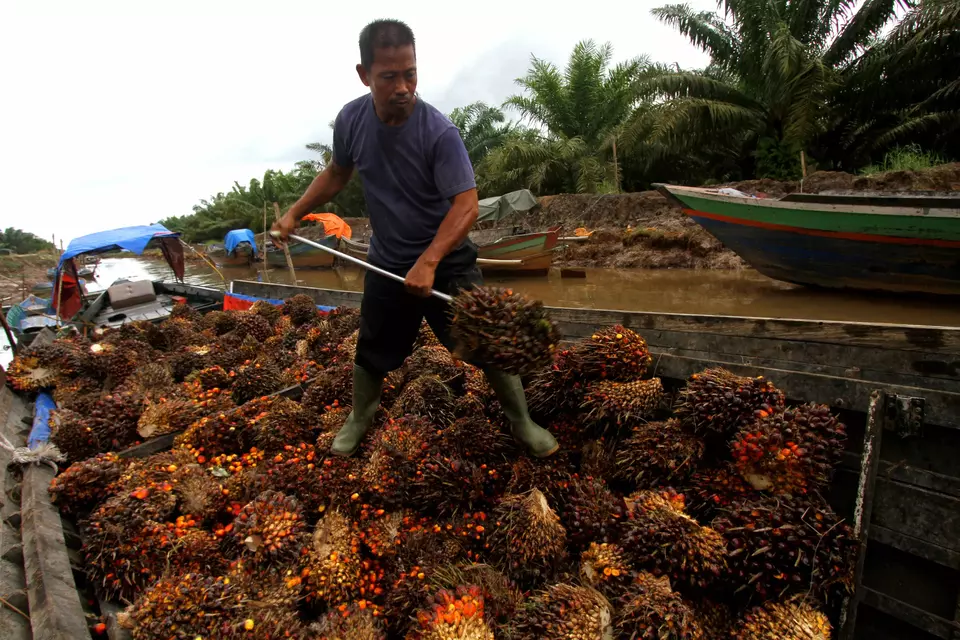
Jakarta. The Council of Palm Oil Producing Countries (CPOPC) anticipates that palm oil production in Indonesia and Malaysia, major contributors to the global market, will plateau at approximately 70 million tons from 2024 onwards. The primary factors attributed to this forecast are environmental considerations and the escalating production cost.
"We will not see an exponential increase in CPO production in Malaysia and Indonesia. We believe production will stagnate at around 70 million tons, which is 84 percent of world production," Datuk Nageeb Wahab, Deputy Secretary-General of CPOPC, told the Jakarta Globe recently
Refinitiv's projections indicate that Indonesia is expected to produce 50.7 million tons of crude palm oil (CPO) this year, marking an increase from 45.1 million tons last year. Similarly, Malaysia is projected to produce 18.4 million tons this year, up from 18.1 million tons in the previous year.
Nageeb emphasized the likelihood of a short supply, attributing it to rising demands and the subsequent stagnation of supply. However, he expressed confidence in price stability at a favorable level. "There is going to be a short supply. By virtue, rising demands will cause supply to stagnate, but we expect prices to remain consistent at a good level," he said.
Large CPO companies are losing interest in expanding due to environmental concerns and increasing production costs. CPOPC forecasts prices to hover between $800- $1.000 per ton next year, up from this year's average price of around $ 900.
"When you don't have big expansion, supply will stagnate," he said.
Nageeb also noted that margins are narrowing but remain reasonable. "Production cost used to be $100 per ton 20 years ago, but now costs have risen to $400-$500. The margin is still there, but not exponential," he added.
Capitalizing on the outcome of the recent COP28 climate summit, CPOPC aims to leverage the global move away from fossil fuels. Rizal Affandi Lukman, Secretary-General of CPOPC, mentioned that Indonesia is on track to transition away from fossil fuels through the implementation of the B35 mandate.
"We are capitalizing on biodiesel usage, with an increase from B35 to B40 hopefully next year," he said. The B35 mandate is a policy that raises the palm oil-based biodiesel blend from 30 percent to 35 percent, with expectations to increase domestic demand for CPO by 2 million tons.
 as a preferred
Related Articles

Cameroon Eyes Indonesian Palm Oil Tech Amid African Bug Import
Central Africa's top palm oil grower Cameroon has quite a huge appetite for Indonesian technologies.
US Bans Imports From 2 Indonesian Palm Oil Producers over Forced Labor
The US border authorities have barred imports from Indonesian palm oil producers Mitra Aneka Rezeki and Hardaya Inti Plantation.
Indonesia's Palm Oil Export Hike to Increase Minyakita Sales
Indonesia is expecting an increase in its mandatory domestic cooking oil sales following rising palm oil exports.
Indonesia Aims Morocco Trade Deal by 2027 For Palm Oil
Indonesia says Morocco-bound palm oil exports remains largely untapped.
Agrinas Palma's Oil Palm Assets Need Full Audit, Watchdog Says
Pustaka Alam called for a full audit of Agrinas Palma after raising concerns over land legality, transparency, and oil palm yields.
PTPN IV PalmCo's 2025 Net Profit Jumps 90% to Rp 7.08 T
PTPN IV PalmCo posted a record Rp 7.08 trillion net profit in 2025, up 90.3%, driven by higher CPO output, prices and efficiency.
Indonesian Palm Oil Exports Up 7.71%, But Not Enough to Prevent Deficit
Indonesia's palm oil shipments to foreign markets reached $9.59 billion from January to May 2026.
Indonesia Mustn't Forget Private Sector in One-Gate Export: Shipowners
Indonesia has begun centralizing the control of strategic commodity exports in one state-run body DSI.
Pakistan Asks Indonesia to Ease Export Levy on Palm Oil
Palm oil makes up a huge bulk of Indonesia’s exports to Pakistan.
Egypt Wants Stable Palm Oil Flow in Indonesia’s One-Gate Export
Palm oil importer Egypt understands that Indonesia is imposing this one-gate export system to "enhance transparency".The Latest

Chandra Asri Group Receives Trade Finance Excellence Award, Reinforcing Its Role in Indonesia’s Industrial Development
Chandra Asri Group receives the Trade Finance Excellence Award at CIMB Niaga Business Summit 2026.
AEON MALL Deltamas Brings 11 Sports and Creative Competitions to AEONLYMPIC 2026
AEON MALL Deltamas hosts AEONLYMPIC 2026, featuring 11 sports and creative competitions, with more than 3,100 participants.
Indonesian Stocks Extend Losses for Third Day, Fall 3.64% to 4,996
Indonesian stocks fell 3.64% on Monday, extending losses for a third straight session amid MSCI concerns and tighter trading limits.
Prabowo Calls Meeting on Forest Fires as Haze Reaches Jakarta, Singapore
Prabowo summons senior officials to discuss forest fires as smoke reaches Jakarta and Malaysia pushes for regional action.
Jakarta Outranks Amsterdam in Global Public Transport Survey
Jakarta climbs two places to 15th in Time Out's 2026 public transport survey, with its governor citing better network integration.Most Popular
