



ASEAN-China Trade Pact May Not Mean Southeast Asia Picks Xi over Trump
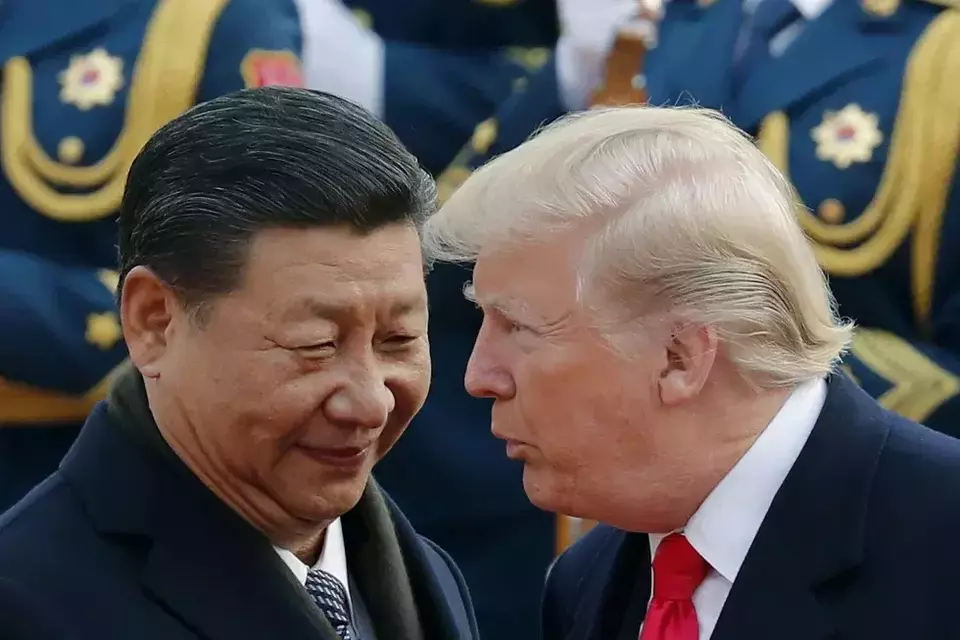
Jakarta. ASEAN’s plan to upgrade its trade pact with China amidst the US tariff war does not mean that the Southeast Asian bloc is tilting toward Beijing, according to a senior economist.
Chinese top diplomat Wang Yi recently revealed that Beijing and ASEAN were set to approve a renewed version of their free trade agreement this October. Wang was in Kuala Lumpur for a gathering with his ASEAN counterparts last week. Indonesian Foreign Minister Sugiono said at the time that the upcoming 3.0 version of their ASEAN-China Free Trade Area (ACFTA) reflected their shared commitment to an “open and rules-based trade”.
The latest advancements came at a time when Southeast Asia, just like the rest of the world, is trying to navigate the US government’s trade move. US President Donald Trump has set major economic uncertainties after he launched unilateral tariffs targeting American trading partners, including ASEAN nations. Trump’s import tax hikes -- set to enter into force next month -- can go up to 40 percent for some Southeast Asian countries.
Lili Yan Ing, the secretary-general for the International Economic Association (IEA), said Tuesday that the timing of the upgraded ACFTA pact could not be interpreted as Southeast Asia finally picking sides in the US-China rivalry.
“ASEAN, including Indonesia, has never really leaned towards one side,” Lili said at the B-Universe Media Holdings’ PIK 2 headquarters.
Lili then pointed out ASEAN founding member Indonesia’s non-aligned foreign policy. “Indonesia treats everyone the same when it comes to trade, investment, and diplomacy. We consider the US as important as China, Japan, South Korea, Australia, New Zealand, India, and Palestine,” she said.
The analyst called on Indonesia to stick to this stance as the tariff war raged on.

ASEAN and China have been working to upgrade their ACFTA, which they had inked back in 2002. The first upgrade officially came into effect for everyone in 2019 with an aim to improve chapters related to investment and customs procedures. The 3.0 version will cover digital economy, green economy, supply chain connectivity, as well as small-sized businesses. Chinese customs data showed that ASEAN-China trade totaled $234 billion in the first quarter of 2025.
As part of Trump’s Liberation Day tariffs, the American businessman-turned-politician has already imposed a 10 percent baseline levy on goods entering the US market. However, some countries are about to face tariff hikes if they fail to clinch a deal with the Trump government before the new August 1 deadline.
Indonesia finds itself somewhere in the middle as to who gets the highest US tariffs in ASEAN. According to Trump’s tariff threat letters, the highest tariff rates will go to Myanmar and Laos, both standing at 40 percent. Thailand comes next with 36 percent, followed by Cambodia (36 percent), Indonesia (32 percent), Malaysia (25 percent), Brunei Darussalam (25 percent), Vietnam (20 percent), and the Philippines (20 percent). Singapore is among the countries that have yet to receive Trump’s letter, and remains subject to the 10 percent baseline levies.
Vietnam managed to dodge the original yet immense 46 percent levy that it was supposed to get after negotiating with the US. However, Washington will still slap a 40 percent tariff on any Vietnamese goods transhipped from third countries.
Trump had sent his chief diplomat, Marco Rubio, to the Kuala Lumpur gathering. Speaking to reporters, Rubio had defended Trump’s tariff letters, saying that bilateral trade had been unfair to the US for a long time. He also said that the tariffs on some ASEAN members were lower than other countries, alluding that the import duty hike differences might have given them some advantage.
“When all is said and done, many of the countries in Southeast Asia are going to have tariff rates that are actually better than countries in other parts of the world, and it could be a benefit,” Rubio said.
ASEAN has been wanting to maintain its neutral stance in the US-China rivalry even before Trump’s tariff blitz.
The US reported that its goods trade with ASEAN totaled $476.8 billion in 2024. Washington ran a $227.7 billion deficit that year.
Tags: Keywords: as a preferred
Related Articles

Trump’s New Press Secretary Out After Less Than a Week
Katie Zacharia’s brief White House tenure ends after less than a week, following a short first briefing and reported tensions over her role.
Defying Trump, Zelensky Says Will Keep Hitting Russian Refineries
Russia on Thursday said Ukraine had attacked an oil refinery in Ryazan, south of the capital, Moscow.
IMF Upgrades Indonesia’s 2026 Growth Forecast to 5.1%
Indonesia has yet to beat Vietnam as the fastest-growing ASEAN economy.
ASEAN Digital Pact to Drive Cross-Border Payments
ASEAN is set to sign its digital economy pact, which Standard Chartered believes will change how the members do business with each other.
Fury as US Federal Agents Search Ilhan Omar's Home
"Make no mistake: this is an attempt to target political enemies and weaponize federal law enforcement," Omar wrote on X.
‘It’s Trump Who Sets Oil Price’: Prabowo’s Brother
Neither the Indonesian government nor OPEC sets the oil price, Hashim Djojohadikusumo says.
Navi Pillay, South African Rights Champion, Wins Nobel Peace Prize
"If you clap a little bit more, I may share this prize with Trump," the 85-year-old said.
Indonesia Races with ASEAN Neighbors for Investments
Indonesia and its ASEAN neighbors are pursuing aggressive reforms to attract foreign investors, according to Investment Minister Rosan.
Trump Vows to Hit Iran 'Very Hard' If Linked to Flydubai Attack
The US leader's threat of retaliation came as he took a harsher tone on the stalled Iran war overall.
ADB to Inject Another $3 Billion to ASEAN Tourism
Between 2015 and 2025, ADB has deployed over $3.7 billion to turn ASEAN into better tourist magnets.The Latest

Ye Concert, Other Events to Draw 130,000 to GBK, Here’s What to Know
Around 130,000 visitors are expected at Jakarta’s GBK on Saturday as Ye’s concert and several major events take place.
Indonesia Allocates Rp 722 Billion for Year-End Flight Ticket Tax Relief
Indonesia allocates Rp 722 billion to cover domestic flight ticket VAT during the 2026/2027 Christmas and New Year holidays.
Greece Floats Shipbuilding Partnership with Indonesia
Greece says that it possesses “extensive expertise” as it woos Indonesia in shipbuilding partnership.
Indonesian Stocks Rally 4.9%, but Foreign Investors Keep Selling
Indonesia’s JCI rose 4.9% last week, but foreign selling and MSCI downgrade risks continue to cloud the market outlook.
Ye Concert in Jakarta to Deploy 2,000 Security Personnel
More than 2,000 personnel will secure Ye’s Jakarta concert on Saturday, as organizers urge fans to use public transport.Most Popular
