



Will War on Iran and Godzilla El-Nino Lead to a Global Food Crisis?
When wars erupt in the Middle East, global attention understandably turns to oil prices and the security of shipping routes such as the Strait of Hormuz and Bab el-Mandeb. Around 20 percent of global oil consumption passes through this narrow waterway each day, making it one of the world’s most critical energy chokepoints. Yet focusing only on oil risks overlooking another, quieter channel through which geopolitical conflict can destabilize the global economy: the agricultural input system that underpins global food production.
The war involving Iran may prove to be more than an energy security crisis. Over the weekend, high-level negotiations between the United States and Iran in Islamabad ended without a deal after more than 20 hours of talks, leaving the direction of the conflict highly uncertain. This uncertainty could soon spill over into global markets. The conflict is increasingly shaping up as an input shock to the global food system, where disruptions in fertilizer supply, rising energy prices and climate risks are colliding simultaneously.
Stripped of geopolitical noise, the world may be facing a compound shock: rising input costs combined with climate-driven yield declines. For food-importing economies—including many in ASEAN—this combination could translate into a sharper-than-expected food price and supply shock.
The Fertilizer Channel Few are Talking About
One of the least discussed consequences of the conflict is its impact on global fertilizer markets. Roughly one-third to nearly half of globally traded ammonia and urea passes through the Strait of Hormuz, making the region a vital artery for nitrogen fertilizer supply. Gulf producers—including Iran, Qatar, Saudi Arabia, the United Arab Emirates and Bahrain—play a dominant role in global nitrogen exports.
Since the escalation of the 2026 Iran conflict, shipping through the Strait of Hormuz has periodically faced restrictions and disruptions. Several gas-fed fertilizer plants in the region have curtailed operations, including a major Qatari-linked urea complex representing up to 14 percent of global supply. The result has been a sharp increase in fertilizer prices. Ammonia and urea prices from the Gulf have surged by roughly 40 percent, while producers outside the region face rising natural gas costs as global energy markets tighten.
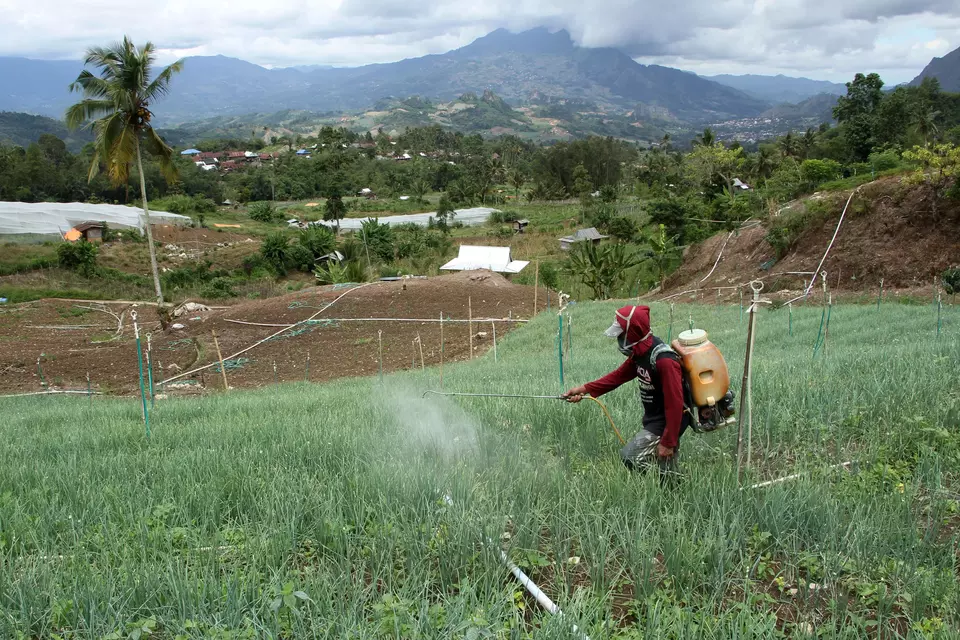
For agriculture, this matters enormously. Nitrogen fertilizers remain one of the most important productivity drivers in modern farming. Studies suggest that as much as half of global crop yields depend on synthetic nitrogen fertilizers—underscoring how sensitive food production is to fertilizer availability. When fertilizer prices rise significantly, farmers—especially smallholders—often respond by cutting application rates. This may reduce immediate costs, but it also reduces yields.
Why Fertilizer Prices Matter for Food Security
Research from organizations such as the International Food Policy Research Institute and the Food and Agriculture Organization shows that sustained increases in fertilizer prices often lead farmers—especially in developing countries—to reduce fertilizer use. In rain-fed farming systems, even modest reductions in application can lower crop yields, and when this occurs across millions of hectares the cumulative effect can significantly tighten global food supply.
Asia is particularly exposed to such shocks. The region produces and consumes roughly 90 percent of the world’s rice, meaning that even modest yield declines in major producing countries can ripple quickly through regional and global markets. For net-importing economies—including Indonesia—this often translates into higher food import bills and greater vulnerability to price fluctuations.
At the same time, the war has driven up energy prices. Higher fuel costs raise the cost of irrigation, crop drying, milling, cold storage and transportation. The result is a cascading effect: farmers face rising production costs while consumers face higher food prices. In this sense, the current situation is not simply “energy inflation plus fertilizer inflation.” It is a systemic input-cost shock layered onto an already fragile global agrifood system.
When Fertilizer Shocks Meet Climate Risk
The risks become even greater when fertilizer disruptions coincide with climate shocks. Climate forecasts increasingly suggest that the world may face an unusually strong El Niño event this year—sometimes described by scientists as a “Godzilla-class” El Niño. Historically, such events have produced prolonged drought conditions across parts of Southeast Asia, including key rice-producing regions.
The 2015–2016 El Niño episode provides a useful benchmark. During that period, severe drought conditions reduced agricultural output across large parts of Asia and pushed global rice prices upward by double digits. If a similar climate pattern emerges while fertilizer prices remain elevated, the consequences could be amplified. Farmers facing higher input costs may reduce fertilizer use, shift to lower-input crops or scale back planting altogether. Under such conditions, a weather-driven yield shock can quickly evolve into a broader supply shock driven by both climatic and economic constraints.
For ASEAN economies, the result could be a “one-two punch”: climate-driven production shortfalls combined with input-driven cost pressures linked to geopolitical tensions in the Middle East.
ASEAN’s Double Exposure
Many Southeast Asian economies face a structural vulnerability in such a scenario. Countries like Indonesia are net importers of fertilizer and energy while simultaneously remaining exposed to fluctuations in global food prices. This creates a double exposure: rising costs for agricultural inputs and rising prices for imported food commodities. In times of global scarcity, another risk often emerges: export restrictions. During the global food crisis of 2008–2009, several major rice-producing countries imposed export bans or tightened controls to protect domestic supplies. If similar policies reappear amid tighter fertilizer supply and climate shocks, food-importing economies in ASEAN could face even greater pressure.
Evidence from farming regions already suggests that higher fertilizer and fuel costs are squeezing smallholder margins. Farmers often respond by reducing fertilizer use or cutting input intensity—decisions that may protect short-term cash flow but ultimately weaken productivity and resilience.
The danger is that food insecurity may worsen quietly. Unlike the dramatic price spikes during the global food crises of 2008 and 2022, the effects this time may appear more gradual. But the underlying pressures—lower productivity, higher costs and persistent food inflation—can accumulate steadily.
A Silent Triple Shock
Taken together, these emerging risks can be understood as a “triple shock” to the global food system. First, geopolitical tensions in the Middle East are driving fertilizer and energy price shocks. Second, a potentially strong El Niño threatens crop yields, particularly in Southeast Asia. And third, logistical disruptions in critical shipping routes such as the Strait of Hormuz and Bab el-Mandeb increase uncertainty in global food and input supply chains.
Individually, each factor would already challenge global food systems. Combined, they create a reinforcing loop of pressure: conflict raises input costs, climate reduces yields and logistical frictions amplify both.
For policymakers, the lesson is clear. The economic consequences of geopolitical conflict do not stop at oil markets or shipping lanes. They can propagate through the agricultural system in ways that are slower, quieter and potentially just as destabilizing. The world may not yet be facing another dramatic food crisis. But the intersection of fertilizer shocks, climate volatility and geopolitical disruption suggests that the foundations of global food security are becoming increasingly fragile.
Mitigating these risks will require action before pressures intensify. Governments can reduce vulnerability by strengthening fertilizer supply diversification, expanding strategic food reserves and improving support for smallholders facing rising input costs. Closer regional coordination within ASEAN—particularly in managing emergency food reserves, fertilizer supply and intra-regional logistics—will also be critical if global markets tighten further.
Another lesson from past crises is equally important. History offers a clear warning: when food insecurity rises, producing countries often prioritize domestic supplies, amplifying pressures in international markets. If similar policies re-emerge amid fertilizer shortages and climate shocks, food-importing economies across ASEAN could face severe supply pressures regardless of how much food exists globally.
Longer-term resilience will also require rethinking the region’s heavy dependence on a single staple. Countries such as Indonesia already produce significant quantities of cassava and sago, while other ASEAN economies possess alternative carbohydrate sources that could complement rice consumption. Diversifying staple food systems may no longer be merely a nutritional or agricultural issue—it may become a strategic necessity.
Because when geopolitical conflict, fertilizer scarcity and climate shocks converge, food crises rarely arrive suddenly. They build quietly—first in farm margins, then in tightening supply chains, and finally in the price of daily food. By the time they dominate global headlines, the pressures have usually been building for months.
----
Iman Pambagyo is the Trade Ministry’s Director General of International Trade Negotiations (2012-2014, 2016-2020) and Indonesia’s Ambassador to the WTO (2014-2015). The views expressed in this article are those of the author.
Tags: Keywords: as a preferred
Related Articles

Rupiah Edges Toward Rp 18,000 as Riyadh Attacks Rattle Markets
Rupiah weakens to Rp 17,913 per dollar as Fed rate hike fears, Middle East tensions and MSCI uncertainty weigh on sentiment.
Oil Supply Fears, US Inflation Data Drag Indonesian Stocks Down 2.59%
Indonesian stocks plunged 2.59% as Middle East tensions fueled oil supply fears and investors awaited US inflation data.
Indonesian Stocks Sink Below 6,000 at Midday as Oil, Geopolitical Risks Weigh
Indonesian stocks fall 1.94% below 6,000 as Middle East tensions fuel risk aversion and technical indicators point to further losses.
Indonesia to Resume Rice Exports After 42-Year Hiatus
Indonesia plans to ship 500,000 tons of rice to Malaysia after achieving self-sufficiency three years ahead of its 2029 target.
Bulog Says Rice Supply Safe Despite Strong El Niño Forecast
Bulog says Indonesia has enough rice to weather a strong El Niño forecast to persist into early 2027.
Indonesia Stocks Slip After Late Sell-Off Wipes Out Intraday Gains
Indonesia's JCI fell 0.3% after a late-session sell-off erased gains built earlier in the day as investors weighed domestic and global cues.
Wells Dry Up, Crops Fail as Drought Expands Across Indonesia
Indonesia's drought is drying wells and damaging rice fields, forcing residents to seek water while farmers face rising irrigation costs.
Indonesia Stocks Buck Regional Selloff on Healthy Debt Outlook
Indonesia stocks rose 1.1%, bucking regional losses as investors welcomed healthy external debt data despite global tensions.
Prabowo Inaugurates Five Dams to Boost Indonesia's Food and Water Security
President Prabowo inaugurated five dams worth Rp9.79 trillion to strengthen Indonesia's food, water and energy security.
Jakarta Stocks Drop Nearly 1% as Geopolitical Fears Overshadow MSCI Hopes
JCI fell 0.98% as Middle East tensions and investor caution ahead of MSCI's review weighed on sentiment.The Latest

Chandra Asri Group Receives Trade Finance Excellence Award, Reinforcing Its Role in Indonesia’s Industrial Development
Chandra Asri Group receives the Trade Finance Excellence Award at CIMB Niaga Business Summit 2026.
AEON MALL Deltamas Brings 11 Sports and Creative Competitions to AEONLYMPIC 2026
AEON MALL Deltamas hosts AEONLYMPIC 2026, featuring 11 sports and creative competitions, with more than 3,100 participants.
Indonesian Stocks Extend Losses for Third Day, Fall 3.64% to 4,996
Indonesian stocks fell 3.64% on Monday, extending losses for a third straight session amid MSCI concerns and tighter trading limits.
Prabowo Calls Meeting on Forest Fires as Haze Reaches Jakarta, Singapore
Prabowo summons senior officials to discuss forest fires as smoke reaches Jakarta and Malaysia pushes for regional action.
Jakarta Outranks Amsterdam in Global Public Transport Survey
Jakarta climbs two places to 15th in Time Out's 2026 public transport survey, with its governor citing better network integration.Most Popular
