



Trump’s Tariff is Part of His Grand Strategy -- with A Huge Cost
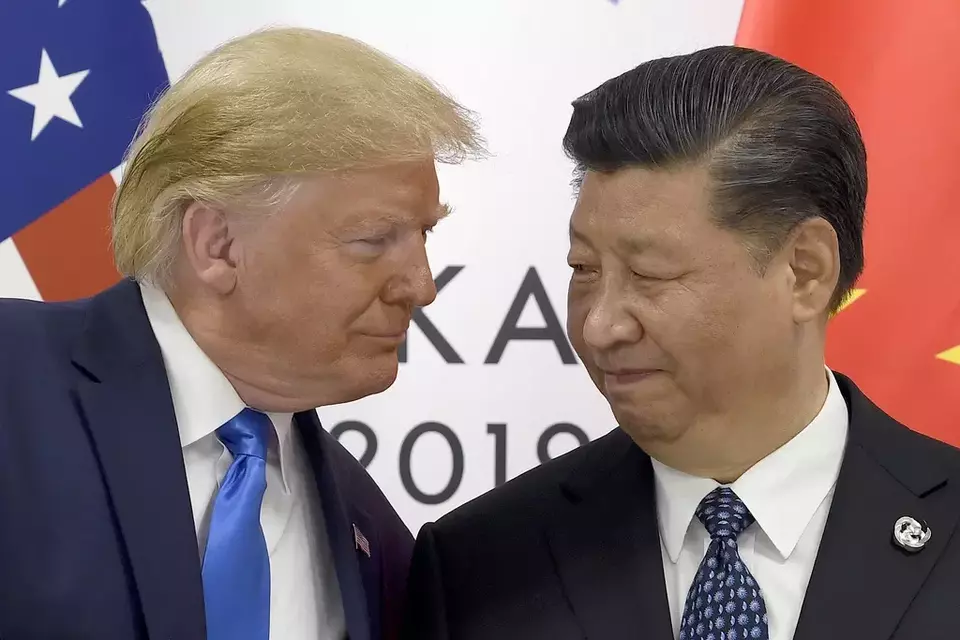
Jakarta. US trading partners around the world may hold out some hope for now, as high-level officials from both the United States and China have reached temporary mutual understandings to reduce tariffs on selected products. This may send a positive signal amidst growing concerns that the global economy will experience its steepest downturn after Covid-19. But what is the underlying rationale of US President Donald Trump’s tariff policy?
Announced on April 2, 2025, Trump's tariff policy reflects a grand strategic approach rather than merely the belief that high tariffs alone will fix the US trade deficit. The policy, branded as "Liberation Day," involved imposing a baseline 10 percent tariff on all imports (except Canada and Mexico) and additional "reciprocal tariffs" on about 60 countries based on perceived unfair trade practices. This strategy was framed as a declaration of economic independence aimed at correcting what Trump described as "decades of unfair trade relationships disadvantaging American manufacturers and workers."
Based on Trump’s statements and policies adopted since he took office, it is quite apparent that the tariffs are part of a broader geopolitical and economic nationalism agenda. Beyond addressing trade imbalances, the tariffs are intended to disrupt established global supply chains, encourage the reshoring of critical industries (especially in high technology), and reduce US dependence on foreign suppliers, notably China. For example, the tariffs have spurred significant investments in domestic manufacturing, such as Apple's expansion in chip production in Texas. This indicates a strategic use of tariffs as economic leverage to achieve national security and geopolitical goals, not just trade deficit reduction.
Many economists criticize Trump's focus on bilateral trade deficits as misguided and simplistic. They argue that bilateral deficits do not necessarily indicate unfair trade and that tariffs will likely raise prices, slow economic growth, and harm US consumers and businesses. Furthermore, the tariffs have triggered retaliatory measures, escalating trade tensions, and have been described as the most significant US protectionist action since the 1930s with potentially huge negative economic impacts.
Arguments Against Trump’s Tariff Policy
Tariffs function as taxes on imports, and the costs are largely passed on to consumers and businesses. This results in higher prices for a wide range of goods, from electronics and cars to everyday groceries, contributing to inflation and reducing purchasing power. The Budget Lab at Yale estimates that the new tariffs could reduce the average US household’s annual income by approximately $3,500–$3,800. Meanwhile, higher input costs for American manufacturers, especially those reliant on imported materials like steel and semiconductors, undermine US competitiveness and threaten jobs in downstream industries. For example, prior steel tariffs created only 1,000 steel jobs but cost 75,000 jobs in steel-using sectors.
Mainstream economists agree that broad tariffs will likely slow the US's economic growth and may increase the risk of recession. Financial markets had responded negatively, with the S&P 500 dropping and investor confidence shaken. Further, tariffs contribute to inflationary pressures, which may force the Federal Reserve to raise interest rates, further slowing growth and increasing borrowing costs for businesses and consumers. While targeted tariffs could support strategic industries, the broad and aggressive approach undermines US ambitions in sectors like artificial intelligence and advanced manufacturing by raising costs and creating supply bottlenecks. Tariffs on critical inputs (e.g., steel for shipbuilding, chips for tech) can hinder efforts to restore or expand domestic capacity in those very industries the policy aims to protect.
Other countries, especially major trading partners like China and the European Union, have retaliated or signaled their intent to retaliate, escalating trade tensions. This can further harm US exporters and global supply chains. There are legal arguments that Trump’s use of executive authority to impose sweeping tariffs may overstep statutory limits, risking judicial challenges and undermining the stability of trade agreements like the USMCA. The policy introduces significant uncertainty for businesses, complicating investment and supply chain decisions.
Tariffs are not an effective tool to fix the overall U.S. trade deficit. The trade deficit is primarily driven by macroeconomic factors such as the gap between national savings and investment, and the government’s fiscal deficit, not by trade policy alone. Tariffs may shift the source of imports, but do not reduce the overall deficit unless underlying fiscal imbalances are addressed. Tariffs can also lead to cascading protectionism, complex exemption processes, and increased opportunities for lobbying and corruption, as firms seek favorable treatment or carve-outs.
Strategic risks associated with Trump’s policy
Trump’s aggressive tariff approach risks damaging critical bilateral relations, notably with Canada and Mexico, undermining the USMCA trade agreement, and destabilizing North American economic integration. This threatens the broader network of US trade alliances and invites contentious renegotiations or breakdowns of established agreements. Moreover, US traditional partners are increasingly seeking alternative trade arrangements to hedge against US unpredictability, which could diminish American influence in global trade.
While tariffs aim to protect domestic industries, the broad and heavy-handed application hampers competitiveness in US strategic sectors such as artificial intelligence, semiconductors, and shipbuilding. Tariffs raise costs for critical inputs, slow innovation, and disrupt supply chains vital for maintaining U.S. leadership in emerging technologies and national security industries. The escalation of trade tensions inflicted by Trump's tariff policy would cause severe supply chain disruptions, economic downturns, and heightened volatility in global markets.
By alienating allies and complicating coordination on economic security measures, the tariffs erode US credibility and weaken its ability to lead multilateral efforts against unfair trade practices, particularly concerning China. Such erosion of credibility reduces the effectiveness of export controls, sanctions, and other strategic economic tools. The disruption of alliances complicates efforts to build coordinated economic and security strategies, such as the Biden administration’s friend-shoring initiatives aimed at strengthening ties with like-minded countries for supply chain resilience.
Perhaps what Trump fails to recognize is that China is playing a longer-term strategic game by reducing its reliance on the US and deepening trade relationships with the Global South, Europe, and Japan. China’s renewed interest in joining multilateral trade agreements, like the Comprehensive and Progressive Agreement for Trans-Pacific Partnership (CPTPP), signals its ambition to position itself as a global trade leader, potentially supplanting US economic dominance.
There is a clear signal that Trump tariffs contribute to a shift from US-centric global economic leadership toward a more multipolar world. Countries are increasingly turning to regional economic cooperation, especially in East Asia, under the RCEP Agreement as the largest FTA in the world, which may solidify China’s hegemony in the region. This reorientation risks isolating the US in a decentralized international economic system, diminishing its geopolitical leverage.
To sum up, Trump's tariff policy in 2025 is underpinned by a grand strategy combining economic nationalism, geopolitical leverage, and industrial policy aimed at reshaping global trade and supply chains. While Trump emphasizes tariffs as a tool to fix the trade deficit, the broader intent includes securing strategic resources, revitalizing domestic manufacturing, and asserting US economic independence. Nonetheless, the approach is flawed and likely harmful to the US economy in the long run. The main arguments against Trump’s tariff policy are that it raises costs for American consumers and businesses, slows economic growth, undermines strategic goals, creates legal and institutional risks, fails to address the root causes of the trade deficit, and fosters protectionism and corruption
Trump’s tariff policy also carries strategic risks of damaging key alliances, undermining US industrial competitiveness, provoking retaliatory trade measures, and diminishing US global economic leadership. These risks collectively threaten both the US economic security and geopolitical standing. Trump’s tariffs risk accelerating the rise of China and regional blocs, escalating trade conflicts, harming developing economies, threatening critical resource security, and contributing to global economic instability—all of which carry profound geopolitical consequences that may diminish US global leadership and reshape international power dynamics.
---
Iman Pambagyo is the Trade Ministry’s Director General of International Trade Negotiations (2012-2014, 2016-2020) and Indonesia’s Ambassador to the WTO (2014-2015).
The views expressed in this article are those of the author.
Tags: Keywords: as a preferred
Related Articles

Indonesia’s US Trade Surplus Defies Tariffs, but Economists Warn Risks Remain
Indonesia posted a $12.47 billion surplus with the US in January-August 2026, up from $12.26 billion a year earlier.
US Defends Tariffs on ASEAN Amid $327.4 Billion Deficit
US says it wants to "bring reciprocity and balance" to its ASEAN trade ties amid double-digit tariff hikes.
BRICS Indirectly Hits Out at Trump’s Tariffs, WTO Paralysis
BRICS doesn't want to see unilateral tariffs and a paralyzed WTO court system, all of which are linked to the US.
Trump Tariffs Cripple EU Firms’ Confidence in ASEAN
As many as 81% of the surveyed European businesses admit that the US tariffs had weakened their confidence in ASEAN.
'We Don't Export Plastic to US': Indonesia on ‘False’ Transshipment Scam Claims
Indonesia denies enabling Chinese goods, namely plastic packaging, avoid Trump's tariffs.
Indonesia Denies US Accusation of Chinese Transshipment Scam
Senior minister Airlangga Hartarto says "Indonesia has never done transshipment", when asked about the US report.
US Accuses Indonesia of Helping China Dodge Trump Tariffs
The US accuses Indonesia and dozens of other countries of being part of "China's shadow transshipment network".
ASEAN Hopes for Predictability on Trump’s Tariffs
ASEAN says the region's businesspeople wish for a predictability and certainty as Trump launches a fresh round of tariff hikes.
Indonesia in Talks with US for 0% Tariff on Palm Oil
Indonesia is in talks with the US to have its palm oil exempted from the latest tariff measure.
Indonesia Banks On EU as Trump's 10% Tariff Kicks In
Indonesia wants to fast-track its European Union (EU) trade deal as Jakarta tries to find alternatives to the tariff-agressive US.The Latest

Chandra Asri Group Receives Trade Finance Excellence Award, Reinforcing Its Role in Indonesia’s Industrial Development
Chandra Asri Group receives the Trade Finance Excellence Award at CIMB Niaga Business Summit 2026.
AEON MALL Deltamas Brings 11 Sports and Creative Competitions to AEONLYMPIC 2026
AEON MALL Deltamas hosts AEONLYMPIC 2026, featuring 11 sports and creative competitions, with more than 3,100 participants.
Indonesian Stocks Extend Losses for Third Day, Fall 3.64% to 4,996
Indonesian stocks fell 3.64% on Monday, extending losses for a third straight session amid MSCI concerns and tighter trading limits.
Prabowo Calls Meeting on Forest Fires as Haze Reaches Jakarta, Singapore
Prabowo summons senior officials to discuss forest fires as smoke reaches Jakarta and Malaysia pushes for regional action.
Jakarta Outranks Amsterdam in Global Public Transport Survey
Jakarta climbs two places to 15th in Time Out's 2026 public transport survey, with its governor citing better network integration.Most Popular
