



Trade Wars Are Back: Why Indonesia Must Brace for Stronger Dollar and Slower Growth
We are witnessing a shift in global hegemony -- a reshaping of political, economic, and military dominance. As political scientist Joseph S. Nye Jr. once noted, power is “the ability to affect others to get what you want,” exercised through coercion, payment, and attraction.
Today, the United States is once again flexing its economic power -- this time through a controversial wave of tariffs dubbed “Liberation Day” measures by President Donald Trump.
On April 2, Trump announced sweeping tariffs of at least 10 percent on imports from roughly 90 countries. The reaction was swift and severe. By April 3, major US stock indices -- the Dow, S&P 500, and Nasdaq -- plunged. Within days, the situation escalated into what is now known as the 2025 stock market crash.
By April 4, the Dow Jones Industrial Average had dropped over 2,200 points, sending shockwaves through markets in Europe, Latin America, and Asia. The intended goal of raising tariff revenue quickly backfired -- over $6 trillion in US market value was wiped out.
These tariffs have disrupted longstanding trade norms and undermined the authority of the World Trade Organization (WTO), which was established to regulate global trade and resolve disputes. Washington’s unilateral actions now cast doubt on the effectiveness of the WTO and contribute to growing global economic instability.
China also felt the sting of market panic. On April 7, the Shanghai and Shenzhen Composite Indexes plummeted before rebounding slightly the next day -- thanks largely to stock purchases by state-owned enterprises and liquidity injections from the People’s Bank of China.
Indonesia was initially shielded due to the Eid holiday market closure. The IDX Composite closed at 6,463 on March 27 and reopened on April 8 at 5,912 -- an 8 percent drop. Although the index rebounded to 6,269 by April 11, volatility remains a concern.
Indonesia’s $17.9 billion trade surplus with the US has become a point of friction in Washington, prompting the Trump administration to impose a 32 percent tariff on Indonesian goods -- despite the 1996 Trade and Investment Framework Agreement (TIFA) between the two countries.
In the US Trade Representative’s 2024 National Trade Estimate Report, concerns were raised over Indonesia’s trade policies, including import regulations, technical barriers, government procurement rules, intellectual property protection, digital trade restrictions, investment limitations, and state subsidies.
One cited example is Bank Indonesia’s mandate requiring all government credit card transactions to be processed via the National Payment Gateway -- a move that complicates cross-border transactions in the global financial system, which doesn't differentiate between government and consumer cards.
On April 9, Trump announced a 90-day pause on the tariffs -- excluding China -- but offered no guarantee of a permanent reversal. If the tariffs proceed in July, they could depress US consumer spending, in turn reducing Indonesia’s export revenue and widening the trade deficit.
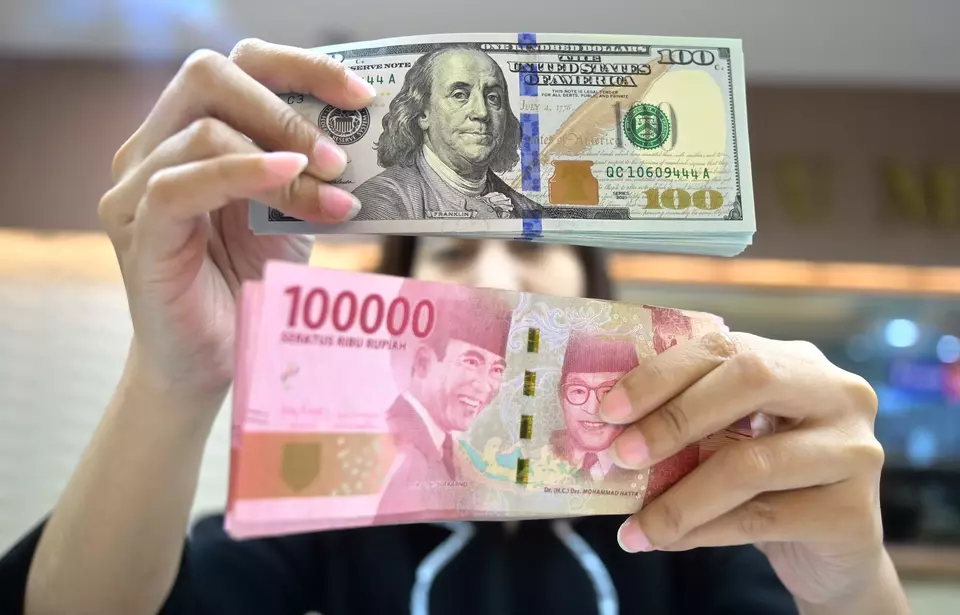
This would decrease the availability of US dollars in Indonesia -- just as the country faces significant foreign debt obligations. A decline in dollar inflows could put further pressure on the rupiah, with analysts warning the exchange rate may hit Rp 17,000 per US dollar by mid-year and Rp 18,000 by year-end.
Indonesia’s economic outlook for 2025 is further complicated by reduced government spending and cautious investor sentiment, despite the launch of the sovereign wealth fund Danantara. A likely drop in net exports could test the nation’s economic resilience.
Still, there are strategic steps Indonesia can take to weather this storm:
First, reduce trade barriers, particularly those affecting bilateral trade with the US, while expanding access to international markets where feasible.
Second, diversify export destinations and reduce dependence on imports. Redirecting commodity exports to high-growth markets can help stabilize the trade balance.
Third, continue fiscal reforms to build financial buffers. While Presidential Decree No. 1 of 2025 authorized Rp 306 trillion ($18.2 billion) in spending cuts, further rounds of adjustments may be necessary to maintain macroeconomic stability.
Fourth, take inspiration from China’s market response. The Danantara sovereign wealth fund, the Indonesia Investment Authority, and state-owned enterprises could increase domestic equity holdings to stabilize capital markets. A resilient stock market boosts investor confidence and supports the rupiah.
As global power dynamics evolve, trade will increasingly be wielded as a tool of statecraft. Indonesia must remain agile, pragmatic, and forward-looking -- recognizing both the risks and the opportunities in this volatile economic landscape.
---
Izhari Mawardi holds a Master of Public Policy from Harvard University and a PhD in Economics from Trisakti University. He specializes in trade, macroeconomics, and governance policy. The views expressed are his own.
 as a preferred
Related Articles

US Bans Imports From 2 Indonesian Palm Oil Producers over Forced Labor
The US border authorities have barred imports from Indonesian palm oil producers Mitra Aneka Rezeki and Hardaya Inti Plantation.
Indonesia’s US Trade Surplus Defies Tariffs, but Economists Warn Risks Remain
Indonesia posted a $12.47 billion surplus with the US in January-August 2026, up from $12.26 billion a year earlier.
US Eyes Indonesian Minerals as It Diversifies Sources
US says that it is important to develop critical mineral supply chains that aren’t dependent on one country in an indirect jab at China.
Canada to Unveil Response to Trump's Steep Tariffs
In an earlier phase of the dispute, Ontario imposed a temporary 25% surcharge on electricity exports to three US states.
'We Don't Export Plastic to US': Indonesia on ‘False’ Transshipment Scam Claims
Indonesia denies enabling Chinese goods, namely plastic packaging, avoid Trump's tariffs.
Indonesia Denies US Accusation of Chinese Transshipment Scam
Senior minister Airlangga Hartarto says "Indonesia has never done transshipment", when asked about the US report.
Indonesia in Talks with US for 0% Tariff on Palm Oil
Indonesia is in talks with the US to have its palm oil exempted from the latest tariff measure.
Indonesia Hopes US Tariff-Free Promises Stay as New Levy Hits
The US has opened up the possibility of tariff reductions for a certain volume of Indonesian textiles in the latest trade measure.
From 32% to 10% to 18%: Indonesia Lives Under Trump's Tariff Uncertainties
Indonesia has been trying to navigate US trade uncertainties, but officials are confident that the tariffs won't derail exports.
Trump to Exempt Indonesian Palm Oil from Tariffs
Indonesia says rubber and coffee will also gain US tariff exemptions.The Latest

MSCI Concerns, Tighter IDX Trading Rules Send Indonesian Stocks Down 5% by Midday
Indonesian stocks plunge 5% by midday as MSCI concerns weigh on sentiment and the IDX tightens its daily downside limit to 7%.
Jakarta Prepares 367 Health Facilities as Haze Reaches the Capital
Jakarta prepares 367 health facilities to treat potential haze-related illnesses after smoke from Sumatra and Kalimantan crosses the region.
Jakarta Expands Flood Prevention With New Water Storage Ponds
Jakarta opens two East Jakarta water storage ponds as it expands flood prevention efforts through reservoirs and river normalization.
Press Council Highlights AI Ethics at United Tractors Journalist Workshop
United Tractors’ 2026 journalist workshop highlights ethical AI use and the importance of trust and credibility in journalism.
How Indonesia Can Make Forest Protection Pay
Indonesia can make forest protection pay by channeling international climate funds through ecological fiscal transfers to local governments.Most Popular
