



The Return of High Tariffs?
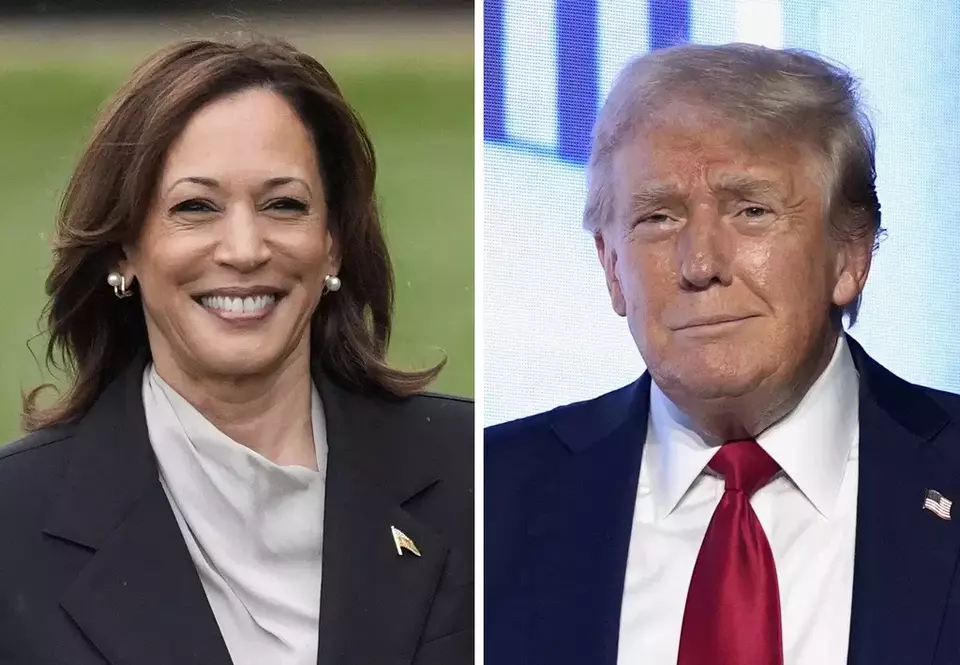
The US Presidential election is just around the corner, with only about two months remaining. However, many analysts continue to closely monitor political developments in the US to gauge their potential impact on global trade and the economy.
On Sept. 1, 538, a website managed by ABC News that focuses on analyzing national polls in politics, economics, and sports in the US, presented the latest data on the endorsement levels of Republican presidential candidate Donald Trump and Democratic presidential candidate Kamala Harris.
The report showed Kamala Harris leading by 3.2 points over Donald Trump, with Harris at 47.1% and Trump at 43.8%. These figures are, of course, still subject to change, particularly in swing states such as Ohio, Florida, Virginia, Wisconsin, Pennsylvania, North Carolina, Iowa, and New Hampshire during this election season.
Kamala Harris's racial and gender background seems to influence her popularity among independent voters who are not affiliated with either the Democratic or Republican parties. As a result, the poll results may still shift depending on how Harris and Trump play their respective strategies. The recent withdrawal of Robert F. Kennedy Jr. as an independent presidential candidate is expected to push his supporters to back Kamala Harris, particularly in New Mexico.
In the dynamics of the US. presidential election, right-wing conservative groups typically support free trade and globalization, while progressive left-wing groups seek protection for domestic industries. President Ronald Reagan's statement during his Thanksgiving address in 1988 is considered economic theology for Republicans. Reagan stated that one of the most important factors behind the prosperity of the American nation is an open trade policy that allows Americans to freely exchange goods and services with people from around the world.
However, the era of Reagan's economic theology quickly ended with the emergence of Donald Trump, also from the Republican camp, as the 45th US. president from 2017 to 2021. Trump implemented two policies on a range of imported products, particularly from China: the first was Section 301 to address unfair trade practices, and the second was Section 232 to raise tariff walls on national security grounds. What is less known to the public is that Trump's protectionist policies, by raising tariffs, affected imports into the U.S. worth nearly $280 trillion and increased the final prices borne by American consumers by more than $51 trillion annually.
The Democratic administration under President Joe Biden, which took office in January 2021, has largely continued many of the trade policies pursued by former President Trump. Recently, President Biden also raised import tariffs on various products from China, amounting to a total of $18 trillion, on items ranging from electric vehicles to semiconductors and critical minerals needed by US industries.
Additionally, President Biden implemented an incentive-disincentive policy outlined in the 2022 Inflation Reduction Act (IRA). With this IRA, the US government offers tax subsidies worth $7,500 to citizens who purchase electric vehicles, provided that the minerals in the vehicle's batteries are mined, processed, or assembled in the U.S. or in countries with free trade agreements (FTAs) with the U.S. This is clearly a containment strategy to prevent China from freely accessing the highly lucrative U.S. consumer market, given that China produces about 79% of the world's lithium-ion battery needs for electric vehicles.
It is now clear that regardless of who the next US president is—whether from the Republican Party, traditionally known for its pro-free trade stance, or from the Democratic Party, which tends to champion protectionist agendas—the US will use high tariffs as one of its main trade instruments to protect and promote its economy in the coming years.
Does this mean the US will become increasingly "isolationist" in the global economic and trade arena?
Generally speaking, neither camp can be easily labeled as "isolationist." However, the Republican camp, particularly under Donald Trump's leadership, has shown increasingly strong "isolationist" rhetoric, while the Democrats still emphasize diplomacy and international cooperation without fully abandoning the "DNA" of protectionism.
Recently, both the Republican and Democratic camps have started making what are called happy-tariff promises. For example, Donald Trump recently asserted that if companies from other countries come and "dump" their products in the US market, they should pay a 10% tax (import duty). Even—perhaps jokingly—Trump stated that he would be happy to impose a 10% tax on all foreign goods entering the U.S.
This increasingly pro-tariff stance by the US will quickly spread to other countries, just as when the US and China imposed high tariffs on each other at the start of their trade dispute. Last week, for example, Canadian Prime Minister Justin Trudeau announced that starting Oct. 1, Canada will raise import tariffs on electric vehicles, steel, and aluminum from China by about 25%.
Earlier, in June, the European Union (EU) announced its plan to impose additional import duties ranging from 17.4% to 38.1% on electric vehicles from China to match the selling prices of electric vehicles made in EU member countries. These additional import duties are on top of the current 10% import duty. It is reported that Beijing is preparing "countermeasures" against this EU plan, including raising import tariffs on several EU products so that the EU will face economic impacts comparable to what China will experience.
Both the US and the EU have long been "trendsetters" in trade liberalization and de-liberalization, which are followed, either openly or covertly, by other countries, particularly their allies. Perhaps there are justifications for the US and EU to raise tariffs on products from China, but this policy is not without risks.
Beijing's support, both openly and covertly, in the form of subsidies to its industries and state-owned enterprises has long been criticized by its trading partners as highly unfair practices. Therefore, raising import tariffs to counterbalance this appears to be justified. However, as has happened, tariff hikes will be met with tariff hikes, and according to the CATO Institute's analysis, in the end, it is the consumers in each country that imposes high tariffs who will bear the brunt of rising prices, not the exporting countries or companies.
The world now faces a Hobson's choice: maintain jobs but face rising prices, declining productivity, and retaliation from other countries. However, the "political gains" from the actions and reactions between countries are real and serve as a stimulus for the growing rise of protectionism in many countries around the world.
Perhaps it is time for Indonesia and fellow ASEAN countries to take more seriously the various regional trade frameworks such as the ASEAN Economic Community, the five ASEAN+1 FTAs (each with China, South Korea, Japan, and Australia-New Zealand), and the Regional Comprehensive Economic Partnership (RCEP) (ASEAN, Australia, Japan, South Korea, China, and New Zealand). As a middle power, it is time for Indonesia to once again play a key role in strengthening economic, trade, and investment relations in this region because Indonesia cannot walk alone.
---
Iman Pambagyo is a former director general of trade negotiations and an Indonesian ambassador in charge of the WTO.
The views expressed in this article are those of the author.
Tags: Keywords: as a preferred
Related Articles

Trump’s New Press Secretary Out After Less Than a Week
Katie Zacharia’s brief White House tenure ends after less than a week, following a short first briefing and reported tensions over her role.
Defying Trump, Zelensky Says Will Keep Hitting Russian Refineries
Russia on Thursday said Ukraine had attacked an oil refinery in Ryazan, south of the capital, Moscow.
Fury as US Federal Agents Search Ilhan Omar's Home
"Make no mistake: this is an attempt to target political enemies and weaponize federal law enforcement," Omar wrote on X.
‘It’s Trump Who Sets Oil Price’: Prabowo’s Brother
Neither the Indonesian government nor OPEC sets the oil price, Hashim Djojohadikusumo says.
Navi Pillay, South African Rights Champion, Wins Nobel Peace Prize
"If you clap a little bit more, I may share this prize with Trump," the 85-year-old said.
Trump Vows to Hit Iran 'Very Hard' If Linked to Flydubai Attack
The US leader's threat of retaliation came as he took a harsher tone on the stalled Iran war overall.
Trump Slammed for 'Illegal' US TV Ads Funded by Taxpayers
Mike Levin, a Democratic member of the House of Representatives, said: "It’s propaganda, and you’re paying the bill."
Airlangga Says Indonesia Won’t Face US Tariffs Over Russian Oil
Airlangga says Indonesia won’t face US tariffs over Russian oil bought within an allowed window.
Masoud Tells Trump that Iran Will Never 'Bend at the Knee'
Pezeshkian accused Washington of "terrorism" for assassinating former supreme leader Ayatollah Ali Khamenei at the start of the conflict.
Trump Thanks Indonesia for Gaza Troops
Indonesia has not only committed troops to the ISF, but is in its upper management.The Latest

Chandra Asri Group Receives Trade Finance Excellence Award, Reinforcing Its Role in Indonesia’s Industrial Development
Chandra Asri Group receives the Trade Finance Excellence Award at CIMB Niaga Business Summit 2026.
AEON MALL Deltamas Brings 11 Sports and Creative Competitions to AEONLYMPIC 2026
AEON MALL Deltamas hosts AEONLYMPIC 2026, featuring 11 sports and creative competitions, with more than 3,100 participants.
Indonesian Stocks Extend Losses for Third Day, Fall 3.64% to 4,996
Indonesian stocks fell 3.64% on Monday, extending losses for a third straight session amid MSCI concerns and tighter trading limits.
Prabowo Calls Meeting on Forest Fires as Haze Reaches Jakarta, Singapore
Prabowo summons senior officials to discuss forest fires as smoke reaches Jakarta and Malaysia pushes for regional action.
Jakarta Outranks Amsterdam in Global Public Transport Survey
Jakarta climbs two places to 15th in Time Out's 2026 public transport survey, with its governor citing better network integration.Most Popular
