



The Middle East Conflict: Not a Clash of Civilizations
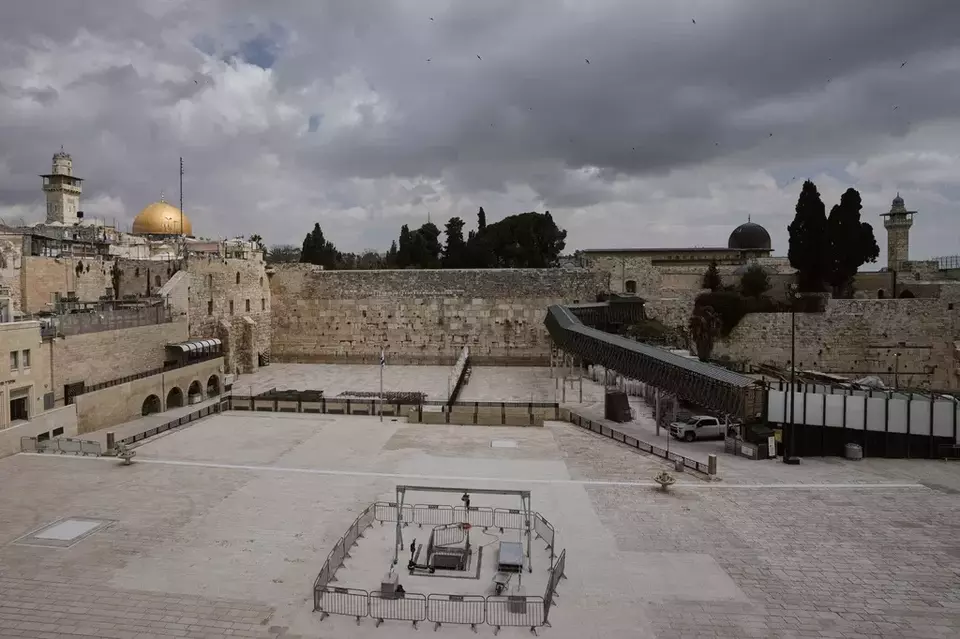
The conflict in the Middle East involving Israel and the United States on one side and Iran on the other shows little sign of ending soon. Instead, it continues to widen, drawing in countries across the region — particularly those hosting US military bases — and generating ripple effects far beyond the battlefield. Disruptions to oil and gas supplies and rising risks to maritime shipping routes are already affecting global logistics and economic stability.
Something to Do with Civilizations?
Some scholars have interpreted the conflict through the lens proposed by Samuel P. Huntington in The Clash of Civilizations and the Remaking of World Order (1996). According to this view, the tensions unfolding in the Middle East represent a post–Cold War clash between civilizations — often framed as a confrontation between Islamic and non-Islamic worlds, or between Western culture and the broader East — rather than the ideological struggle that characterized the Cold War.
Others have taken an even longer historical perspective, portraying the conflict as a struggle between two ancient civilizations. On one side stands the Persian civilization that began around 550 BC when Cyrus the Great established the Achaemenid Empire, although human settlement in the Iranian plateau dates back thousands of years. On the other side is Jewish civilization, whose history stretches back roughly three millennia. According to Jewish tradition, its origins extend even further into antiquity, though archaeological evidence identifies early Jewish communities around 1100–1000 BC.
Yet a closer look reveals that this civilizational framing does not fully capture what is actually happening. Not all Muslim-majority countries stand behind Iran, just as not all US allies support Washington and Israel’s military actions. Moreover, most attacks target military and economic infrastructure rather than symbols representing particular civilizations. For these reasons, describing the confrontation between Israel, the United States, and Iran as a clash of civilizations offers only a partial explanation at best.
Realpolitik
A more convincing interpretation may lie in the realist tradition of international relations articulated by Hans J. Morgenthau in Politics Among Nations: The Struggle for Power and Peace (1948). For Morgenthau, international politics is fundamentally a struggle for power driven by national interests. In such a framework, universal moral standards play only a limited role because states ultimately act according to their own strategic calculations. International politics must therefore be understood not as it ought to be, but as it actually is.

Viewed from this perspective, the policies pursued by Benjamin Netanyahu and Donald Trump toward Iran — and Tehran’s responses — reflect the logic of realpolitik far more than they reflect civilizational confrontation.
Yet conflicts shaped by realpolitik rarely remain confined to the military realm. In an increasingly interconnected global economy, geopolitical escalation can quickly spill over into trade, logistics and financial markets. The Persian Gulf remains one of the world’s key energy hubs, while surrounding maritime routes form vital arteries of global commerce. When tensions rise in this region, uncertainty is immediately reflected in volatile energy prices, higher maritime insurance premiums and disruptions to global supply chains.
These impacts are not merely temporary shocks. Over the past decade, the global economy has already been moving toward a new configuration characterized by intensifying geopolitical rivalry, the restructuring of supply chains and a growing tendency for major powers to link economic policy with national security considerations. The current Middle East crisis is accelerating these trends. Disruptions to energy flows and logistics networks not only affect short-term trade and prices; they also push governments and businesses to reconsider their dependence on concentrated sources of supply and vulnerable shipping routes.
A Hybrid Geoeconomics Order
Seen in this broader context, the confrontation between Israel, the United States, and Iran is better understood not as a clash of civilizations but as part of a wider reconfiguration of the global system. The world is not entering a period of outright deglobalization. Instead, it is moving toward a new form of interdependence—one that is more cautious and increasingly shaped by geopolitical considerations.
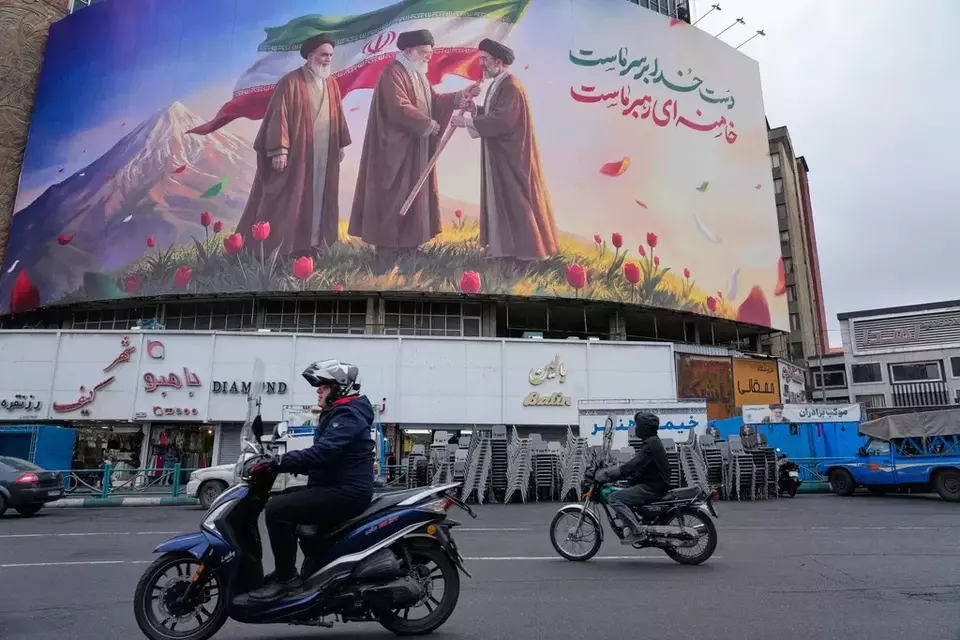
Developments such as energy diversification and the restructuring of global supply chains suggest the emergence of what might be described as a hybrid geoeconomic order. In such an order, globalization does not disappear; rather, it evolves. Economic connectivity continues, but it is increasingly filtered through geopolitical calculations and risk assessments. Major powers remain central to the global system, yet none possesses the capacity to fully dominate the architecture of the world economy.
The international system is therefore becoming increasingly multipolar, with two primary centers of gravity: the United States and China. Both retain immense economic, technological, and military capabilities. At the same time, each faces structural constraints that prevent it from exercising absolute control over an increasingly complex and fragmented global economy.
The Role of Regional Cooperation
These limitations create space for regional groupings to play a larger role in sustaining global economic stability and connectivity. Regional economic integration not only strengthens intra-regional trade but can also serve as a stabilizing anchor amid growing geopolitical uncertainty. In Asia, this role can be reinforced through cooperation led by ASEAN, which for decades has sought to balance economic relations with multiple major powers.
One important ASEAN-led platform supporting this effort is the Regional Comprehensive Economic Partnership (RCEP), which links economies across East Asia, Southeast Asia, and the Pacific within a broad framework for trade cooperation. At a time of intensifying geopolitical rivalry, arrangements such as RCEP help ensure that economic integration across regions can continue even as international politics becomes more complex. Such agreements not only facilitate trade and investment but also help preserve global economic interdependence amid growing fragmentation.

These developments suggest that contemporary geopolitical conflicts do not always conform to the civilizational clash narrative often invoked by commentators. What we are witnessing in the Middle East is more accurately understood as a recalibration of power and interests—an enduring feature of international politics.
But in a world where economies are deeply interconnected, the consequences of such recalibration extend far beyond military confrontation or diplomatic maneuvering. They reverberate across trade, investment, and the broader architecture of the global economy. In this environment, the future of the world economy will increasingly depend on the ability of countries and regions to sustain connectivity despite intensifying geopolitical rivalry. A hybrid geoeconomics order does not signal the end of globalization. Rather, it marks a transformation in how globalization operates — more cautious, more layered, and increasingly shaped by strategic considerations.
Ultimately, what is unfolding before us is not a clash of civilizations, but the gradual emergence of a hybrid geoeconomics order that demands a new balance between power, interests, and global interconnectedness.
---
Iman Pambagyo is the Trade Ministry’s Director General of International Trade Negotiations (2012-2014, 2016-2020) and Indonesia’s Ambassador to the WTO (2014-2015). The views expressed in this article are those of the author.
 as a preferred
Related Articles

Rupiah Edges Toward Rp 18,000 as Riyadh Attacks Rattle Markets
Rupiah weakens to Rp 17,913 per dollar as Fed rate hike fears, Middle East tensions and MSCI uncertainty weigh on sentiment.
Oil Supply Fears, US Inflation Data Drag Indonesian Stocks Down 2.59%
Indonesian stocks plunged 2.59% as Middle East tensions fueled oil supply fears and investors awaited US inflation data.
Indonesian Stocks Sink Below 6,000 at Midday as Oil, Geopolitical Risks Weigh
Indonesian stocks fall 1.94% below 6,000 as Middle East tensions fuel risk aversion and technical indicators point to further losses.
Iraq Exported 30 Million Barrels of Crude via Hormuz in a Month: Monitor
Iraq, an OPEC founding member, was forced to halt production in most of its oil fields during the war as reservoirs filled up.
Trump Says Oil Firms Making 'Too Much Money' from Iran Shortage
High gasoline prices are a key political issue for Trump as his Republican Party heads into the elections in November.
Indonesia Stocks Slip After Late Sell-Off Wipes Out Intraday Gains
Indonesia's JCI fell 0.3% after a late-session sell-off erased gains built earlier in the day as investors weighed domestic and global cues.
Indonesia Stocks Buck Regional Selloff on Healthy Debt Outlook
Indonesia stocks rose 1.1%, bucking regional losses as investors welcomed healthy external debt data despite global tensions.
Oil Prices Rise Nearly 10% Following Latest Fighting in the Middle East
Brent's price, though, remains well below its wartime peak of nearly $120 per barrel for its most actively traded contract.
Pentagon Asks Congress for Roughly $80 Billion to Cover Cost of Iran War
The White House has requested a remarkable $1.5 trillion for the Pentagon — a nearly 50% increase over the current funding levels.
Jakarta Stocks Drop Nearly 1% as Geopolitical Fears Overshadow MSCI Hopes
JCI fell 0.98% as Middle East tensions and investor caution ahead of MSCI's review weighed on sentiment.The Latest

Chandra Asri Group Receives Trade Finance Excellence Award, Reinforcing Its Role in Indonesia’s Industrial Development
Chandra Asri Group receives the Trade Finance Excellence Award at CIMB Niaga Business Summit 2026.
AEON MALL Deltamas Brings 11 Sports and Creative Competitions to AEONLYMPIC 2026
AEON MALL Deltamas hosts AEONLYMPIC 2026, featuring 11 sports and creative competitions, with more than 3,100 participants.
Indonesian Stocks Extend Losses for Third Day, Fall 3.64% to 4,996
Indonesian stocks fell 3.64% on Monday, extending losses for a third straight session amid MSCI concerns and tighter trading limits.
Prabowo Calls Meeting on Forest Fires as Haze Reaches Jakarta, Singapore
Prabowo summons senior officials to discuss forest fires as smoke reaches Jakarta and Malaysia pushes for regional action.
Jakarta Outranks Amsterdam in Global Public Transport Survey
Jakarta climbs two places to 15th in Time Out's 2026 public transport survey, with its governor citing better network integration.Most Popular
