



President Prabowo’s 80% Energy Self-Reliance Target: Visionary, but Needs Measured Discipline
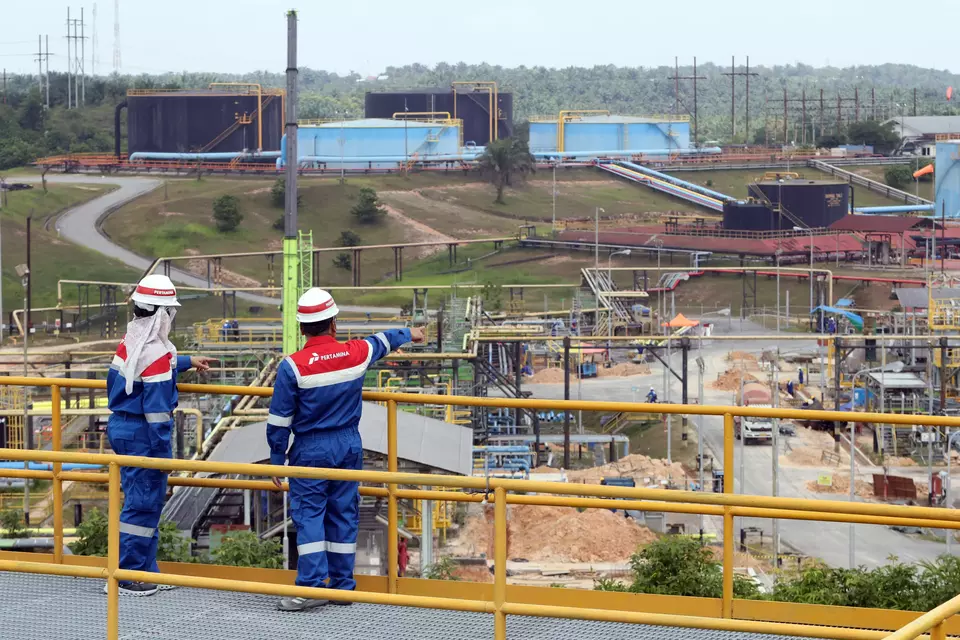
President Prabowo Subianto’s administration has set an audacious target: to achieve 80 percent energy self-reliance by 2029. It is more than a policy goal -- it is a statement of national confidence, a signal that Indonesia aims to stand on its own feet in powering growth and protecting its people from global energy shocks. The aspiration deserves praise. For decades, Indonesia’s dependence on imported fuels has made the economy vulnerable to price swings and supply disruptions.
Breaking that cycle would not only strengthen economic resilience but also restore the sense of sovereignty that has always been at the heart of the nation’s development philosophy. Yet, as in every great transformation, ambition alone is not enough. What matters now is precision, patience, and the discipline to turn vision into measurable progress.
Momentum with Caution
The government has already begun taking visible steps. Plans are underway for a 10 percent bioethanol blending mandate (E10) to reduce gasoline imports and cut emissions. The intention is sound, but supply remains a bottleneck: in 2024, Indonesia’s ethanol output reached just 160,946 kiloliters from a total capacity of 303,000 kL (Reuters, Oct 7 2025).
In the power sector, progress is tangible. PLN’s 92 MW floating solar project at Waduk Saguling has entered construction, marking one of Southeast Asia’s most significant renewable installations (Reuters, Oct 3, 2025). And in the corporate arena, Pertamina is venturing into new territory. Under President Director Simon Mantiri, the company has launched a green hydrogen pilot facility in Ulubelu, Lampung, powered by geothermal energy. “This is a milestone for Indonesia’s future hydrogen ecosystem,” Mantiri said, noting that synergy with PLN through 19 geothermal projects could make Indonesia a leader in geothermal energy and a sustainable economy.”

These efforts show the 80 percent vision is not a slogan; it is beginning to take shape on the ground. But beneath that optimism lies a more complicated reality.
Reality Check
The first challenge is clarity. No official definition yet explains what “energy self-reliance” precisely means. Is it the share of domestic production, the reduction of imports, or a mix weighted toward renewables? Without transparent baselines, measuring success -- or failure -- will be impossible.
The second is capacity. Expanding biofuel and ethanol supply chains will require reliable feedstock, infrastructure, and logistics. Too much acceleration could strain farmland and push up food prices, creating new trade-offs between energy and agriculture.
Then comes infrastructure. Indonesia’s grid was never designed for intermittent sources like solar or wind. Modernization -- storage, transmission, and flexible demand systems -- must happen in parallel, or renewable growth could stall before it scales.

There is also the fiscal dimension. Transitioning away from fossil-fuel dependency demands investment -- and incentives. Balancing subsidies, carbon pricing, and fiscal prudence will be a delicate act. The government cannot afford to simply move one burden to another pocket.
Finally, there is trust. Pertamina remains central to this journey, yet public confidence must keep pace with policy ambition. After the 2024 fuel-adulteration scandal, Simon Mantiri spoke candidly: “We must be honest, open, and transparent … public trust in Pertamina has declined, and we must work hard to win it back.” (Antara News, Sept 2025) That humility is essential. A transparent state-corporate partnership -- where accountability is not optional -- will determine whether self-reliance becomes a reality or remains a rallying cry.
Turning Vision into Practice
To make this national project credible, progress must feel real -- not statistical. That means publishing clear metrics, engaging the public, and ensuring momentum doesn’t outpace capacity.
Instead of imposing nationwide mandates overnight, pilot projects should lead the way. Let E10 or B50 start regionally -- in provinces ready with infrastructure -- before expanding nationwide. This approach would invite local innovation while minimizing costly missteps. The same logic applies to renewables. Projects already shovel-ready, like Saguling, should receive priority financing and grid support so they can come online by 2026–2028.
The RUPTL, Indonesia’s electricity blueprint, must also be updated so that every renewable addition aligns with the 80 percent agenda rather than competing with it. And while fossil subsidies remain politically sensitive, gradually redirecting them toward clean-energy incentives could strengthen investor confidence and relieve fiscal pressure. A well-designed carbon market, transparently governed, would reinforce this shift by rewarding efficiency and innovation.
But perhaps most importantly, energy policy should not live only in the capital. Provincial governments, universities, and civil society must share ownership of the transition -- not just as spectators, but as partners who ensure the transformation is inclusive, accountable, and fair.
Balancing Pride with Prudence
The 80 percent target captures the essence of Indonesia’s current moment: a mix of optimism, urgency, and confidence that the country’s destiny should not depend on others. It is a narrative of self-belief -- but it must be grounded in realism. Ambition without precision risks disappointment; precision without ambition risks stagnation. If Prabowo’s government can strike that balance, Indonesia will not only secure its own energy future but also inspire other nations searching for sovereignty in a world of uncertainty.
Because in the end, energy self-reliance is not isolation -- it is resilience. And resilience, once built, becomes the quiet power that keeps a nation standing tall.
---
Hafif Assaf is a seasoned professional in government relations and public affairs, focusing on public policy, energy governance, and Indonesia’s strategic industries.
The views expressed in this article are those of the author.
 as a preferred
Related Articles

Kencana Energi Wins $116 Million Hydropower Project From PLN
Kencana Energi secured a $116 million hydropower project that will nearly double its installed generation capacity.The Latest

Jakarta Outranks Amsterdam in Global Public Transport Survey
Jakarta climbs two places to 15th in Time Out's 2026 public transport survey, with its governor citing better network integration.
MSCI Concerns, Tighter IDX Trading Rules Send Indonesian Stocks Down 5% by Midday
Indonesian stocks plunge 5% by midday as MSCI concerns weigh on sentiment and the IDX tightens its daily downside limit to 7%.
Jakarta Prepares 367 Health Facilities as Haze Reaches the Capital
Jakarta prepares 367 health facilities to treat potential haze-related illnesses after smoke from Sumatra and Kalimantan crosses the region.
Jakarta Expands Flood Prevention With New Water Storage Ponds
Jakarta opens two East Jakarta water storage ponds as it expands flood prevention efforts through reservoirs and river normalization.
Press Council Highlights AI Ethics at United Tractors Journalist Workshop
United Tractors’ 2026 journalist workshop highlights ethical AI use and the importance of trust and credibility in journalism.Most Popular
