



Inclusivity, Innovation and Indonesia’s Decarbonisation Agenda
In the global race to tackle climate change, the most effective solutions are often hiding in plain sight. A 2025 multi-country study covering 49 nations found that every 1% increase in gender equality is associated with a reduction of 0.14 metric tons of carbon emissions per capita. To put this into perspective, that is roughly equivalent to the average monthly carbon footprint of an Indonesian household. The implication is striking: gender equality is not merely a social objective, but it is a climate strategy to secure Indonesia’s green future.
Around the world, countries making meaningful progress in climate action increasingly go hand in hand with inclusive participation. When women are empowered to contribute to economic and environmental decision-making, climate solutions become more durable and more effective. Research by the United Nations Environment Programme shows that women are significantly more likely to invest in environmentally friendly technologies and eco-conscious products. Inclusive societies, in other words, tend to build greener economies. For Indonesia, this insight is particularly relevant. Our decarbonization agenda will only succeed if inclusivity and innovation advance together. Women must not be viewed simply as beneficiaries of the green transition but must be recognized as active agents of change. This is why the robust implementation of Gender Equality, Disability, and Social Inclusion (GEDSI) principles within public policy frameworks is so critical. In addition, GEDSI goes beyond fairness or representation but is an opportunity for everyone to be part of shaping Indonesia’s pathway to sustainability.
Indonesia has set an ambitious goal of achieving up to 8% economic growth in the coming years. Reaching that target will require unlocking the full productive potential of our society. Globally, gender inequality could cost the world as much as $342 trillion in lost economic gains over the coming decades. Countries that fail to close these gaps will simply leave growth on the table. Indonesia cannot afford to be among them.
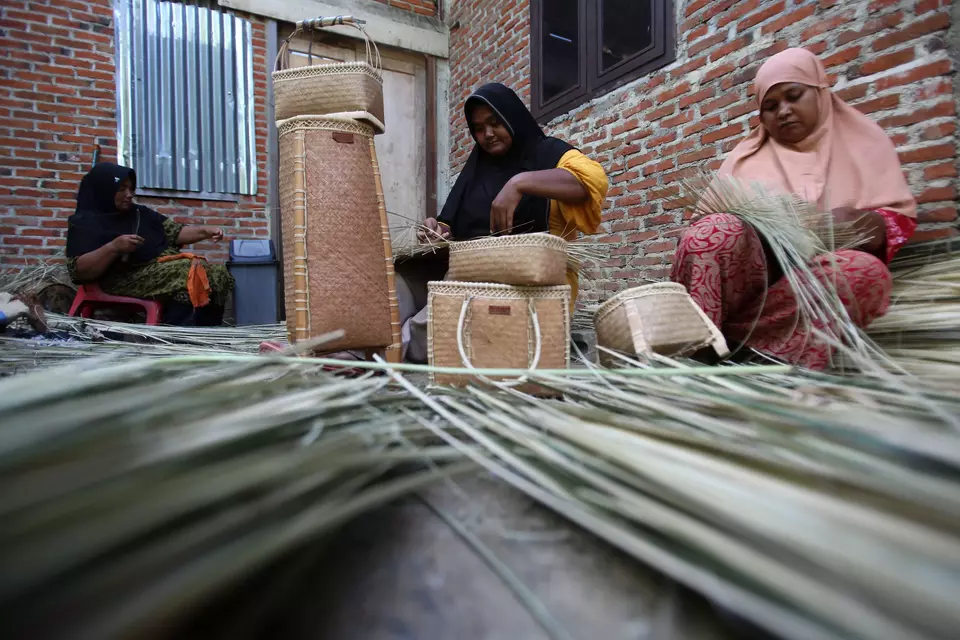
In a nation of approximately 288 million people, women represent a vital pillar of the workforce. Their contribution is especially visible in the informal economy. Roughly 66% of informal workers, around 54.5 million people, are women. These women sustain families, local markets, and rural livelihoods. Yet many still face structural barriers in accessing finance, training, technology, and leadership opportunities. Ensuring equal access to opportunity is therefore not only a matter of social justice. It is a practical step toward strengthening Indonesia’s economic resilience and accelerating the transition to green growth.
Global experience consistently demonstrates that innovation thrives where inclusivity is prioritized. One well-known example is the “Solar Mamas” initiative, which trains women, many of them middle-aged and previously illiterate, to become solar engineers capable of electrifying their own villages. Across Botswana, Zanzibar, Kenya, and other parts of Africa, these women have helped bring renewable energy to communities that previously lacked electricity. This shows that when people are given the opportunity to learn and lead, they become the most effective stewards of change in their communities.
At the Ministry of National Development Planning (Bappenas), we have worked closely with local communities on pilot initiatives such as solar-powered water pumps for agriculture. These projects emphasize transparency and participation from the outset. Project plans, timelines, and budgets are openly shared with communities, and technical decisions are made through consultations involving both male and female farmers. This participatory approach strengthens local ownership. Furthermore, it ensures that low-carbon technologies are not simply introduced but are understood, maintained, and sustained by the communities that rely on them.
Yet advancing both innovation and inclusivity in Indonesia’s decarbonization journey is not without challenges. Indonesia’s vast geography, diverse cultures, and decentralized governance structure mean that national policies must be carefully adapted to local contexts. Global benchmarks can offer inspiration, but solutions ultimately need to reflect Indonesia’s unique social and cultural landscape. Implementing GEDSI principles, therefore, cannot rely on a one-size-fits-all approach. The values underpinning GEDSI—non-discrimination, leaving no one behind, doing no harm, and ensuring safe participation for vulnerable groups—remain non-negotiable. At the same time, their application can integrate local wisdom, community traditions, and linguistic diversity to ensure that policies resonate with the people they are designed to serve.
Indonesia’s National Medium-Term Development Plan (RPJMN) for 2025–2029 outlines a clear vision for building an inclusive society while advancing sustainable development. The next step is ensuring that this commitment translates into concrete action at the regional and local levels. But government efforts alone will not be enough.
As a civil servant and as a woman, I believe the momentum for inclusive green development can be strengthened through collective action. First, civil society organizations play a critical role in mainstreaming GEDSI principles at the grassroots level, particularly in rural communities where vulnerability to climate change is often highest. Second, regional leaders and local champions are essential in aligning GEDSI principles with local decarbonization initiatives using clear and tangible indicators, thus ensuring that national commitments translate into meaningful change on the ground. Third, building safe and inclusive spaces for vulnerable groups must remain a shared responsibility across government, civil society, and the private sector. Finally, our journey to tackle climate change and secure a more inclusive path for Indonesia needs to be complemented with global cooperation. For example, the United Kingdom and Indonesia have worked together to ensure that GEDSI principles are transplanted within the government’s national planning frameworks for low-carbon development. This knowledge exchange and partnership is crucial to ensure that global goals are advanced.
Indonesia stands at a pivotal moment in its development trajectory. The transition to a low-carbon economy is not only an environmental necessity; it is also an opportunity to reshape our growth model to be more inclusive, resilient, and future-ready.
In light of International Women’s Day, we should remember that effective climate action requires the participation of the entire society. In this process, public policy serves as an enabler that places inclusivity as a priority. Indeed, it is my belief that when women are empowered to lead, climate solutions become stronger, and economies become more innovative, equitable, and sustainable.
---
Anna Amalia is a Planner at the Ministry of National Development Planning/Bappenas.
The views expressed in this article are those of the author.
 as a preferred
Related Articles

UK-Indonesia Climate Partnership Brings Solar Irrigation to Lake Toba Farms
Indonesia and the UK launch a solar irrigation project in Samosir to boost rice production and strengthen climate resilience.
Government Targets Zero Out-of-School Children by 2045
Indonesia targets zero out-of-school children by 2045 under a new regulation aimed at returning 645,000 children to school.
Bappenas Launches Export Dashboard to Boost Global Trade Competitiveness
Bappenas introduces a data-driven platform to identify export opportunities and strengthen downstream industries.The Latest

Ye Concert, Other Events to Draw 130,000 to GBK, Here’s What to Know
Around 130,000 visitors are expected at Jakarta’s GBK on Saturday as Ye’s concert and several major events take place.
Indonesia Allocates Rp 722 Billion for Year-End Flight Ticket Tax Relief
Indonesia allocates Rp 722 billion to cover domestic flight ticket VAT during the 2026/2027 Christmas and New Year holidays.
Greece Floats Shipbuilding Partnership with Indonesia
Greece says that it possesses “extensive expertise” as it woos Indonesia in shipbuilding partnership.
Indonesian Stocks Rally 4.9%, but Foreign Investors Keep Selling
Indonesia’s JCI rose 4.9% last week, but foreign selling and MSCI downgrade risks continue to cloud the market outlook.
Ye Concert in Jakarta to Deploy 2,000 Security Personnel
More than 2,000 personnel will secure Ye’s Jakarta concert on Saturday, as organizers urge fans to use public transport.Most Popular
