



How to Mitigate the 0% vs 19% Tariff Agreement with Trump?
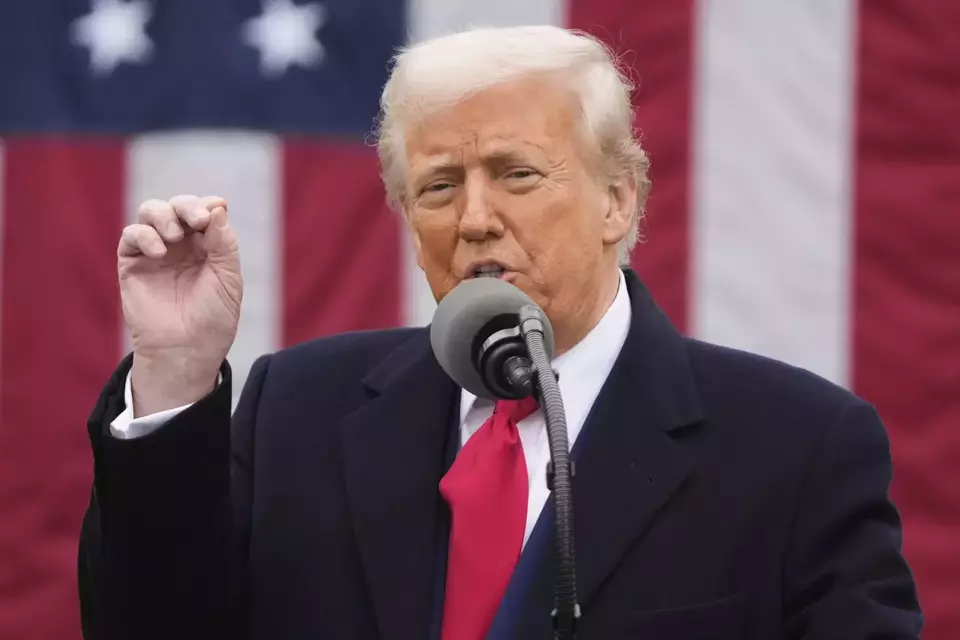
In the second week of July, a preliminary agreement was reached between Indonesia and the US regarding the reciprocal Trump tariff of 19%, exchanged for Indonesia’s commitment of 0% tariffs on most US export products, accompanied by the relaxation of certain non-tariff measures (NTMs) and purchases of US products. We still do not fully understand what is happening, what the impact will be, and what long-term solutions are needed so Indonesia will not face similar pressures again in a world that changes by the day.
Then, on July 22, 2025, the White House issued the “Joint Statement on Framework for United States – Indonesia Agreement on Reciprocal Trade” as a basis for deepening negotiations that will later be formalized into a binding bilateral agreement. This is a kind of scoping paper usually agreed upon by two or more countries before substantive negotiations begin. The difference here is that in this Framework, Indonesia’s commitments beyond 0% tariffs and NTMs granted to the US are specified in detail, while substantively, the US only promises to reduce tariffs which it had unilaterally and arbitrarily raised beyond its WTO bound-rate tariffs, thus violating its own WTO commitments.
Unavoidably, the preliminary agreement between the two countries has sparked prolonged pro and contra opinions. To minimize the potential escalation of debate without resolving the core issues, there are strategic, tactical, and institutional steps that the government, businesses, and the civil society must swiftly undertake to reorganize the national economic foundation so Indonesia can become a stronger emerging economy, respected by both friends and rivals.
First, it is necessary to improve public communication to avoid misleading perceptions. The government should build a strategic narrative that this agreement is a tactical and temporary step to maintain export market access, not a form of submission. Transparent communication is vital to maintain trust and build support among industry players, business associations, and the broader community, so speculations and unproductive negative sentiments do not arise.
Second, tighten the Rules of Origin (ROO) and the monitoring system against potential transshipment. Indonesia must ensure that the ROO agreed upon with the US is sufficiently strict to prevent transshipment originating from Indonesia. This ensures that no other country unfairly benefits from the Indonesia-US agreement. Efforts should be made to develop and utilize digital tracking and early warning systems to take preventive steps against transshipment both from Indonesia and the US.
Domestically, Indonesia needs to strengthen cooperation among ministries and border control agencies such as the Directorate General of Customs and Excise, the Ministry of Trade, including the Issuing Authority of ROO, the Water and Air Police Corps (Polairud), and relevant corps under the Indonesian Navy. Externally, it needs to be agreed that the US government also tighten oversight over products exported to Indonesia labeled as US products. This is to prevent, for example, US soybean shipments to Indonesia from being a mixture of genuine US and Brazilian products, or entirely Brazilian products labeled as US products to meet export volume agreements between Indonesian and US businesses.
Third, conduct an in-depth audit of the impact of the 0% tariff and promised relaxation of NTMs by Indonesia. The government needs to identify sectors directly affected, especially those with substitutes from US products such as agriculture, processed foods, automotive, pharmaceuticals, medical devices, and branded consumer goods. Stress tests on industries and SMEs should be carried out to determine who are most vulnerable to market share loss due to competition from US imports. The government must identify and assess potential import surges due to relaxation of NTMs, especially for products previously strictly regulated by Indonesian National Standards (SNI), distribution permits, labeling regulations including halal certification, and others.
Fourth, use the negotiations with the US to include clauses on industrial cooperation or collaboration between the two countries. In the aircraft industry, for example, future Boeing purchases should be associated with the utilization of Indonesian-made parts or components. Some components that Indonesia is able to supply include the Enhanced Ground Proximity Warning System (EGPWS), KSN (digital radar), KX155A (navigation communication system), and AV850A (audio system) for several Boeing models. Besides Boeing, Indonesia also already produces components for Airbus models such as A320, A330, A340, A350, and A380, so Indonesia could also supply Boeing with specifications tailored accordingly.
Fifth, develop an exit strategy and establish a mechanism for periodic evaluation. Why? This bilateral agreement with the US must have a review period and not be permanent. The government, along with business actors, must set key performance indicators (KPIs) to assess whether the agreement truly increases exports and investment, or instead creates a new source of deficit. Therefore, Indonesian negotiators must negotiate clauses about renegotiation or review if the agreement overall harms Indonesia more than it benefits.
Sixth, strengthen the competitiveness of national industries and SMEs. This has often been reminded but usually ends up as political jargon to please stakeholders and raise public approval. Now is the time— not tomorrow or later— to seriously pursue a national agenda to boost industry and SME competitiveness by (1) providing fiscal and non-fiscal incentives to vulnerable sectors such as tax discounts, low-cost financing, or protection of local products in government procurement; (2) encouraging import substitution based on local raw materials, especially in agro-industry, pharmaceuticals, and light manufacturing so Indonesia can climb the value chain; and (3) providing technical assistance schemes and vocational training to improve efficiency, productivity, and quality of local and national products. In other words, what is needed now is holistic deregulation and reform based on the value chain, not sectoral.
Seventh, enhance diplomatic and negotiation capacity at regional and multilateral levels. Indonesia and other ASEAN countries negotiating similar bilateral agreements with the US need to consult each other to avoid any ASEAN country being perceived as exploiting exclusive preferences from the US to disrupt ASEAN economic integration for its own interest. This is not a beauty contest or a game of luck to see who gets the best deals; ASEAN must be wary of divide-and-rule tactics that only weaken ASEAN and its members. Alongside this, evaluate potential demands for equal treatment from fellow ASEAN countries, ASEAN+1 FTAs, RCEP, bilateral FTAs, or WTO members generally. Indonesia must respect the Most Favored Nation (MFN) principle and provide treatment equal to that given to the U.S. under applicable bilateral, regional, and WTO agreements.
Ultimately, Indonesia’s economic strength must be built internally, not relying on the generosity of other countries, enshrined in agreements that can change anytime according to each country’s geopolitical and economic interests which often shift. The highest priority strategic step is undertaking comprehensive deregulation and value chain-based reform, not sectoral or institutional reforms. From there, Indonesia’s economic core strength can and must be built.
---
Iman Pambagyo is the Trade Ministry’s Director General of International Trade Negotiations (2012-2014, 2016-2020) and Indonesia’s Ambassador to the WTO (2014-2015).
The views expressed in this article are those of the author.
Tags: Keywords: as a preferred
Related Articles

Indonesia’s US Trade Surplus Defies Tariffs, but Economists Warn Risks Remain
Indonesia posted a $12.47 billion surplus with the US in January-August 2026, up from $12.26 billion a year earlier.
US Defends Tariffs on ASEAN Amid $327.4 Billion Deficit
US says it wants to "bring reciprocity and balance" to its ASEAN trade ties amid double-digit tariff hikes.
BRICS Indirectly Hits Out at Trump’s Tariffs, WTO Paralysis
BRICS doesn't want to see unilateral tariffs and a paralyzed WTO court system, all of which are linked to the US.
Trump Tariffs Cripple EU Firms’ Confidence in ASEAN
As many as 81% of the surveyed European businesses admit that the US tariffs had weakened their confidence in ASEAN.
'We Don't Export Plastic to US': Indonesia on ‘False’ Transshipment Scam Claims
Indonesia denies enabling Chinese goods, namely plastic packaging, avoid Trump's tariffs.
Indonesia Denies US Accusation of Chinese Transshipment Scam
Senior minister Airlangga Hartarto says "Indonesia has never done transshipment", when asked about the US report.
US Accuses Indonesia of Helping China Dodge Trump Tariffs
The US accuses Indonesia and dozens of other countries of being part of "China's shadow transshipment network".
ASEAN Hopes for Predictability on Trump’s Tariffs
ASEAN says the region's businesspeople wish for a predictability and certainty as Trump launches a fresh round of tariff hikes.
Indonesia in Talks with US for 0% Tariff on Palm Oil
Indonesia is in talks with the US to have its palm oil exempted from the latest tariff measure.
Indonesia Banks On EU as Trump's 10% Tariff Kicks In
Indonesia wants to fast-track its European Union (EU) trade deal as Jakarta tries to find alternatives to the tariff-agressive US.The Latest

Jakarta Outranks Amsterdam in Global Public Transport Survey
Jakarta climbs two places to 15th in Time Out's 2026 public transport survey, with its governor citing better network integration.
MSCI Concerns, Tighter IDX Trading Rules Send Indonesian Stocks Down 5% by Midday
Indonesian stocks plunge 5% by midday as MSCI concerns weigh on sentiment and the IDX tightens its daily downside limit to 7%.
Jakarta Prepares 367 Health Facilities as Haze Reaches the Capital
Jakarta prepares 367 health facilities to treat potential haze-related illnesses after smoke from Sumatra and Kalimantan crosses the region.
Jakarta Expands Flood Prevention With New Water Storage Ponds
Jakarta opens two East Jakarta water storage ponds as it expands flood prevention efforts through reservoirs and river normalization.
Press Council Highlights AI Ethics at United Tractors Journalist Workshop
United Tractors’ 2026 journalist workshop highlights ethical AI use and the importance of trust and credibility in journalism.Most Popular
