



Here Comes the Sun: Indonesia’s 100 GW Solar Drive for a Brighter Future
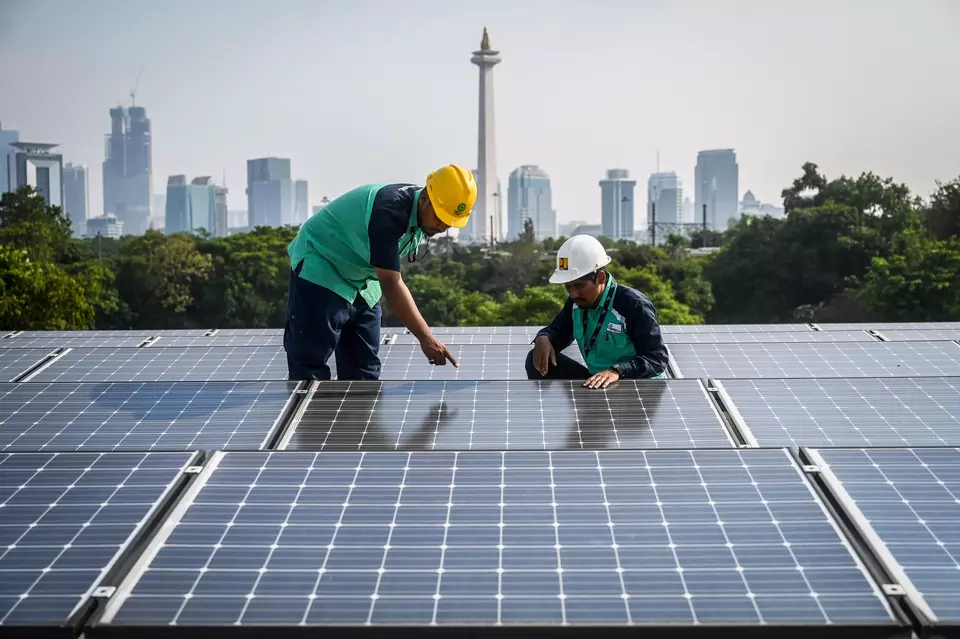
“Aku bahagia, hidup sejahtera di khatulistiwa (I dwell in joy and fortune at the equator)."
So begins Zamrud Khatulistiwa (The Emerald of the Equator), a famous song that celebrates Indonesia’s blessings: a nation gifted with abundant wealth, enabled in no small part by the warmth of the sun. From the lush biodiversity to productive crops such as palm oil, our prosperity has long been nurtured by year-round sunlight.
Nevertheless, we have yet to fully tap into one of our greatest blessings: the boundless energy that our sun has to offer. Solar energy, once dismissed as costly, has now become the world’s most affordable source of power. In just the past five years, global solar energy deployment has tripled. Solar now forms the backbone of renewable energy’s rise, expected to account for 80 percent of the renewable energy growth through 2030.
Developing countries are at the forefront of this revolution. China and India are the world’s first and third largest producers of solar energy. Indonesia, however, bucks this trend, as solar power generation in the country remains far below its full potential. According to one estimate, Indonesia boasts more than 3,000 gigawatts of solar energy potential, enough to power the archipelago many times over. Nonetheless, our installed solar capacity has only recently crossed the 1-GW mark.
Against this backdrop, President Prabowo’s recently announced 100-gigawatt solar energy vision is a critical turning point. The case for solar power is already clear: the economics are on its side, and the technology has matured. What was still missing was leadership, and that is exactly why President Prabowo’s bold vision could not have come at a better time.
India, a fellow developing country with whom Indonesia shares many things in common, offers a powerful lesson. In 2010, when solar energy was still expensive, India launched its National Solar Mission with an ambitious goal of 20 GW of solar power by 2022.
Critics scoffed. Yet by 2022, India had achieved more than three times that target, reaching 67 GW. The growth in India’s solar energy has been so massive that today India already generates more than 100 gigawatts of solar power. Despite the doubts voiced in some quarters, President Prabowo’s solar vision has the potential to be equally, if not more, transformative for Indonesia’s energy and economic landscape.
There are at least five main reasons why President Prabowo’s solar energy vision is such a game-changer.
First, energy independence. Indonesia still relies heavily on imported oil, estimated at around 330 million barrels a year, including for diesel power plants and conventional vehicles. Solar energy can replace these diesel generators as well as power electric vehicles, both of which would reduce our dependence on imported oil. We can learn from countries like China, which is rapidly becoming an “electrostate,” shifting its economy toward electricity and away from oil and gas dependency. Indonesia has the same opportunity to become energy-secure on its own terms.
Second, solar energy could alleviate our fiscal burden. The cost of utility-scale solar has declined so dramatically that it now outcompetes many fossil-fuel-powered plants, including gas- or diesel-fired generators. Solar is also now competitive vis-à-vis new coal power plants, particularly if coal prices are not subsidized. Replacing diesel generation with solar plus batteries lowers subsidy outlays. For example, two recent diesel-to-solar initiatives totaling 0.3 GW are projected to save about $ 2 billion in subsidy expenditure.
Third, solar energy can help deliver social welfare and justice. Many villages still lack reliable electricity; many rely on diesel generators that do not operate around the clock as their diesel supply is often disrupted; and, even worse, some villages still have no power at all. Solar micro-grids can change that. Solar energy with batteries can power cold storage for fishermen, irrigation pumps for farmers, medical devices in rural clinics, and even affordable electric transport in rural areas. Expanding energy access through solar power means expanding opportunity, dignity, and quality of life for all, including in remote regions.
Fourth, solar can do more than just fix our energy problems; it can also help transform our economy. One of the main predicaments of our economy is that job growth in recent years has largely been concentrated in the informal sectors with below-average wages. A nationwide solar buildout, paired with large-scale battery storage, could generate an estimated 2.8 million cumulative jobs in construction over a decade.
But the real long-term value lies in manufacturing panels and batteries domestically, which could support up to 3.1 million cumulative stable industrial jobs over ten years. This builds the technological capabilities Indonesia currently lacks, strengthens downstream industry development, and creates powerful economic multiplier effects.
To fully capture these benefits, however, Indonesia must ensure that the 100-GW solar program prioritizes locally made components rather than relying entirely on imported ones. Promoting domestic manufacturing of solar components will cement Indonesia’s true and lasting energy independence. We already have the sunlight, and once we can manufacture the solar panel ourselves, no one else will hold the switch to our power.
Lastly, solar deployment also makes Indonesia a more attractive destination for global investment. Companies today increasingly require renewable electricity to meet sustainability commitments. If Indonesia wants to reach 8% annual economic growth and become a competitive investment hub, it needs to provide more clean electricity to investors.
The road toward 100 GW of solar energy will undoubtedly be steep. It will require sustained policy reforms, vigorous financing, and stalwart synergy across the board. There will be storms ahead, but even the darkest cloud cannot hide the sun forever. The sun will eventually rise.
---
Dimas Muhamad is an advisor to the Energy and Mineral Resources Minister on Energy Transition, Rifqi Febrian is a member of the secretariat of the downstream industry development and energy security taskforce
The views and opinions expressed in this article are those of the authors.
 as a preferred
Related Articles

The Blind Spot in Indonesia's Clean Energy Story
One of the biggest obstacles to renewable energy development is the lack of adequate transmission and distribution infrastructure.
UK-Indonesia Climate Partnership Brings Solar Irrigation to Lake Toba Farms
Indonesia and the UK launch a solar irrigation project in Samosir to boost rice production and strengthen climate resilience.
Let PLN Rent Out the Grid It Already Owns
Indonesia can unlock billions in solar investment by letting companies lease PLN’s grid to buy renewable power directly.
Indonesia Breaks Ground on $169 Million Bekasi Waste-to-Energy Plant
The facility will be capable of processing up to 1,500 tons of waste per day and converting it into electricity.
Indonesia, Germany Eye Deeper Ties in Green Energy, Semiconductors
Indonesia and Germany are deepening cooperation in renewable energy, semiconductor supply chains and vocational education.
Education as the Engine of Indonesia’s Energy and Technology Transformation
The future of energy requires two things: clean and renewable sources that provide constant and reliable power.
Opportunities for Green Hydrogen in the Present Energy Crisis
In many emerging markets, energy imports represent a significant share of total trade deficits, exposing economies to external shocks.
Kencana Energi Wins $116 Million Hydropower Project From PLN
Kencana Energi secured a $116 million hydropower project that will nearly double its installed generation capacity.
Barito Renewables Posts $53 Million Q1 Profit on Strong Geothermal Output
New projects are expected to lift the company’s total geothermal capacity to more than 1,000 MW by the end of 2026.
Toyota Fortuner, Mitsubishi Pajero Used in Indonesia’s 50% Biodiesel Trial
Indonesia is testing B50 biodiesel in SUVs, trucks, and buses ahead of a planned June mandate.The Latest

Chandra Asri Group Receives Trade Finance Excellence Award, Reinforcing Its Role in Indonesia’s Industrial Development
Chandra Asri Group receives the Trade Finance Excellence Award at CIMB Niaga Business Summit 2026.
AEON MALL Deltamas Brings 11 Sports and Creative Competitions to AEONLYMPIC 2026
AEON MALL Deltamas hosts AEONLYMPIC 2026, featuring 11 sports and creative competitions, with more than 3,100 participants.
Indonesian Stocks Extend Losses for Third Day, Fall 3.64% to 4,996
Indonesian stocks fell 3.64% on Monday, extending losses for a third straight session amid MSCI concerns and tighter trading limits.
Prabowo Calls Meeting on Forest Fires as Haze Reaches Jakarta, Singapore
Prabowo summons senior officials to discuss forest fires as smoke reaches Jakarta and Malaysia pushes for regional action.
Jakarta Outranks Amsterdam in Global Public Transport Survey
Jakarta climbs two places to 15th in Time Out's 2026 public transport survey, with its governor citing better network integration.Most Popular
