



Sneakers to Jeans: Tariffs May Raise Costs for American Families
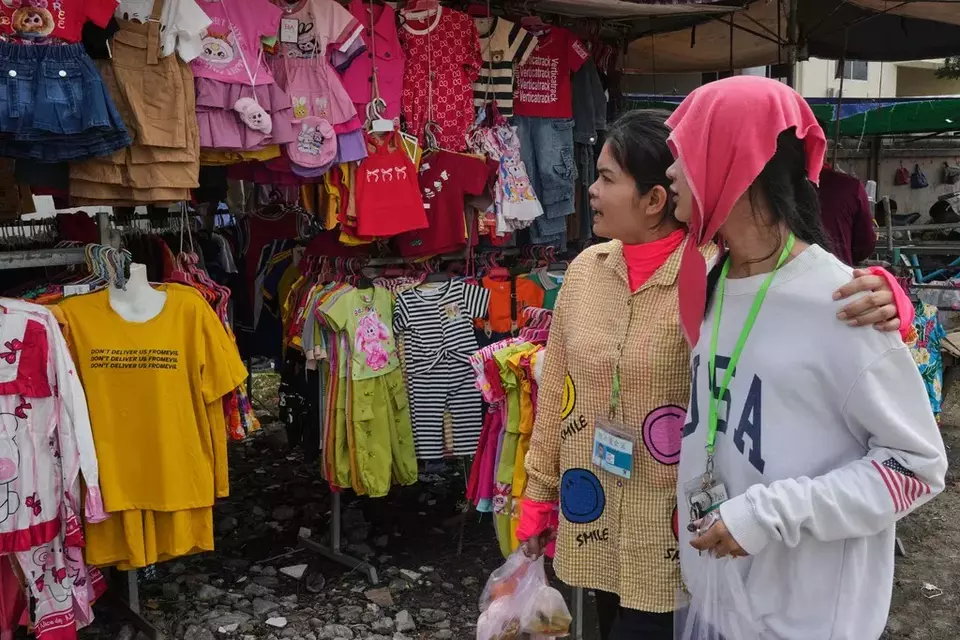
New York. Back-to-school shopping could get pricier for American families this fall, as sweeping new tariffs on clothing and footwear imports threaten to raise prices on sneakers, jeans, and T-shirts, according to major US trade groups.
Roughly 97 percent of clothing and footwear sold in the US is imported, primarily from Asian nations, according to the American Apparel & Footwear Association. That includes major brands such as Walmart, Gap Inc., Lululemon, and Nike, which rely heavily on Asian manufacturing.
But under a new tariff plan from President Donald Trump, those same countries now face steep import duties: 54 percent on Chinese goods, 46 percent on Vietnamese, 49 percent on Cambodian, and 32 percent on Indonesian products. Even other regional producers like India, Pakistan, and Sri Lanka have been hit with high tariffs, leaving retailers with limited sourcing alternatives.
“If these tariffs are allowed to persist, ultimately it’s going to hit consumers,” said Steve Lamar, president and CEO of the American Apparel & Footwear Association.
The Footwear Distributors and Retailers of America (FDRA) projected sharp price hikes. For example, Chinese-made work boots currently retailing at $77 could jump to $115. Running shoes from Vietnam priced at $155 might cost $220. A pair of $26 kids’ shoes from China could increase to $41.
FDRA President Matt Priest warned that lower-income families and discount retailers will feel the brunt of the increases.
Tariffs Hit Sourcing Shifts and Supply Chains
Trump’s new tariff strategy caught much of the fashion industry off guard. Many companies had already begun diversifying away from China during his first term due to earlier tariffs, as well as growing concern over labor and environmental issues. Lululemon, for example, said 40 percent of its apparel was produced in Vietnam last year, with significant shares also from Cambodia, Sri Lanka, Indonesia, and Bangladesh.
Steve Madden announced in November it would cut imports from China by 45 percent due to Trump’s campaign pledge to impose a 60 percent tariff on all Chinese products. The footwear brand has expanded its supplier network to Cambodia, Vietnam, Mexico, and Brazil.
Rebuilding a domestic US garment industry is unlikely in the short term. Apparel manufacturing jobs in the US have dropped from 139,000 in 2015 to just 85,000 in January 2025, according to the Bureau of Labor Statistics. Sri Lanka, with a population one-seventh the size of the US, employs four times as many garment workers.
Additionally, the US lacks domestic sources for many of the 70-plus materials used in making a typical shoe. These include cotton laces, textile uppers, and eyelets, most of which have never been produced in the US, the FDRA noted in written comments to the administration.
Sticker Shock for Consumers
Clothing prices in the US have remained remarkably stable for decades. According to Bureau of Labor Statistics data, apparel cost roughly the same in 2024 as it did in 1994, thanks to free trade, low-cost labor abroad, and aggressive price competition among brands like H&M, Zara, and Forever 21.
But after years of inflation in food and housing, consumers may be especially sensitive to price hikes in apparel. Priest said many families have already started cutting back on shoe purchases since Trump’s return to office.
“They’re nervous,” he said. “They’ve been managing inflation fatigue for years, and they just don’t have the endurance to absorb more price shocks—especially when those shocks are imposed by their own government.”
Winners and Losers in a Trade War
A recent Barclays report suggested that companies with strong supplier relationships, powerful brand names, and minimal sourcing in Asia may fare better. Retailers like Burlington, Ross Stores, and TJX (which owns T.J. Maxx and Marshalls), along with brands like Ralph Lauren and Dick’s Sporting Goods, are seen as relatively resilient.
On the other hand, brands with high exposure to Asian production and limited pricing power—such as Gap Inc., American Eagle, and Urban Outfitters—are expected to struggle.
The resale platform ThredUp praised a separate move by the Trump administration to eliminate a widely used tax exemption that allowed millions of cheap goods—primarily from China—to enter the US duty-free.
“This policy change will increase the cost of disposable clothing imported from China, directly impacting a business model that fuels overproduction and environmental degradation,” ThredUp said.
Still, economists warn that tariffs function like a sales tax on consumers, and may widen the wealth gap by disproportionately affecting low- and middle-income households.
“So where will the US be buying its apparel now that tariff rates on China, Vietnam, and Bangladesh are astronomical?” said Mary Lovely, a senior fellow at the Peterson Institute for International Economics. “Will the new ‘Golden Age’ involve knitting our own knickers?”
Tags: Keywords: as a preferred
Related Articles

Indonesia’s US Trade Surplus Defies Tariffs, but Economists Warn Risks Remain
Indonesia posted a $12.47 billion surplus with the US in January-August 2026, up from $12.26 billion a year earlier.
US Defends Tariffs on ASEAN Amid $327.4 Billion Deficit
US says it wants to "bring reciprocity and balance" to its ASEAN trade ties amid double-digit tariff hikes.
BRICS Indirectly Hits Out at Trump’s Tariffs, WTO Paralysis
BRICS doesn't want to see unilateral tariffs and a paralyzed WTO court system, all of which are linked to the US.
Trump Tariffs Cripple EU Firms’ Confidence in ASEAN
As many as 81% of the surveyed European businesses admit that the US tariffs had weakened their confidence in ASEAN.
'We Don't Export Plastic to US': Indonesia on ‘False’ Transshipment Scam Claims
Indonesia denies enabling Chinese goods, namely plastic packaging, avoid Trump's tariffs.
Indonesia Denies US Accusation of Chinese Transshipment Scam
Senior minister Airlangga Hartarto says "Indonesia has never done transshipment", when asked about the US report.
US Accuses Indonesia of Helping China Dodge Trump Tariffs
The US accuses Indonesia and dozens of other countries of being part of "China's shadow transshipment network".
ASEAN Hopes for Predictability on Trump’s Tariffs
ASEAN says the region's businesspeople wish for a predictability and certainty as Trump launches a fresh round of tariff hikes.
Indonesia in Talks with US for 0% Tariff on Palm Oil
Indonesia is in talks with the US to have its palm oil exempted from the latest tariff measure.
Indonesia Banks On EU as Trump's 10% Tariff Kicks In
Indonesia wants to fast-track its European Union (EU) trade deal as Jakarta tries to find alternatives to the tariff-agressive US.The Latest

Chandra Asri Group Receives Trade Finance Excellence Award, Reinforcing Its Role in Indonesia’s Industrial Development
Chandra Asri Group receives the Trade Finance Excellence Award at CIMB Niaga Business Summit 2026.
AEON MALL Deltamas Brings 11 Sports and Creative Competitions to AEONLYMPIC 2026
AEON MALL Deltamas hosts AEONLYMPIC 2026, featuring 11 sports and creative competitions, with more than 3,100 participants.
Indonesian Stocks Extend Losses for Third Day, Fall 3.64% to 4,996
Indonesian stocks fell 3.64% on Monday, extending losses for a third straight session amid MSCI concerns and tighter trading limits.
Prabowo Calls Meeting on Forest Fires as Haze Reaches Jakarta, Singapore
Prabowo summons senior officials to discuss forest fires as smoke reaches Jakarta and Malaysia pushes for regional action.
Jakarta Outranks Amsterdam in Global Public Transport Survey
Jakarta climbs two places to 15th in Time Out's 2026 public transport survey, with its governor citing better network integration.Most Popular
