



Middle East Conflict Costs Indonesia 60,000 Visitors
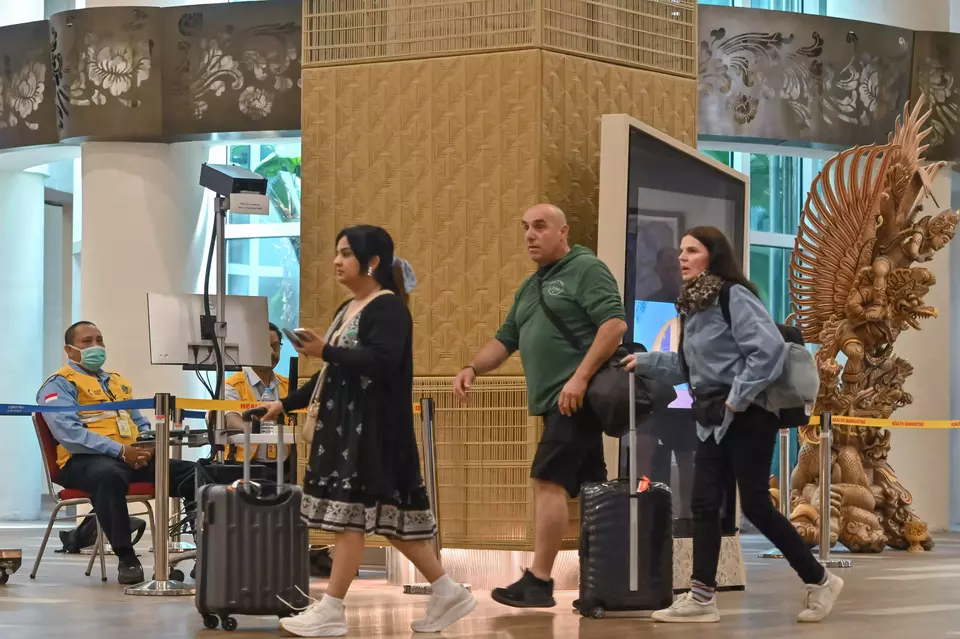
Jakarta. Indonesia has lost an estimated 60,000 foreign tourists due to escalating tensions in the Middle East, which have disrupted air travel, Tourism Minister Widiyanti Putri Wardhana said on Wednesday.
Speaking at a parliamentary hearing with Commission VII in Jakarta, Widiyanti said the geopolitical situation has begun to weigh on Southeast Asia’s largest economy, particularly its tourism sector.
“Global geopolitical dynamics are putting pressure on tourism,” she said.
The disruption stems in part from the closure of Iranian airspace between Feb. 28 and March 28, which affected flight routes from major Middle Eastern hubs including Abu Dhabi, Doha, Dubai, Jeddah, Madinah, and Muscat. The restrictions led to the cancellation of around 770 international flights bound for key Indonesian destinations such as Jakarta, Bali, and Medan.
As a result, tens of thousands of prospective visitors were unable to travel, translating into a potential foreign exchange loss of about Rp2.04 trillion ($118 million), according to government estimates.
Widiyanti also warned that rising global oil prices could further dampen international travel demand. Higher fuel costs are expected to push up airfares, with airlines likely to impose fuel surcharges that could discourage long-haul travel.
To mitigate the impact, the government is shifting its tourism strategy toward closer and more resilient markets. Widiyanti said her ministry is pivoting to Southeast Asia, East Asia, and medium-haul markets, while strengthening partnerships with airlines operating direct routes to Europe and the United States.
“In the face of global pressure, we must move more adaptively,” she said.
Indonesia is targeting between 16 million and 17.6 million foreign tourist arrivals in 2026, supported by efforts to diversify source markets, expand tourism villages, and improve inter-ministerial coordination.
Despite the emerging headwinds, recent data show the sector still maintaining growth momentum. The Central Statistics Agency (BPS) recorded 1.16 million foreign tourist arrivals in February, up 13.37% from a year earlier.
Cumulatively, the country welcomed 2.35 million visitors in the first two months of 2026, a 7.77% increase compared with the same period last year.
By nationality, Malaysian visitors accounted for the largest share in February with 199,220 arrivals, or 17.18% of the total, although that figure marked a 7.17% decline year-on-year. Chinese tourists followed with 150,820 visits, rising sharply by 68.89%, while arrivals from Singapore reached 109,330, up 21.81%.
Tags: Keywords: as a preferred
Related Articles

Foreign Tourist Arrivals Expected to Surpass Pre-Pandemic Levels This Year
Indonesia expects 16.22 million foreign tourist arrivals in 2026, surpassing 2019 levels, while domestic airlines face mounting costs.
ADB to Inject Another $3 Billion to ASEAN Tourism
Between 2015 and 2025, ADB has deployed over $3.7 billion to turn ASEAN into better tourist magnets.
Police Investigate Death of Dutch National at Bali Hotel
A Dutch national was found dead at a Bali hotel after an apparent fifth-floor jump, police said.
Tourism Investment Still Concentrated in Jakarta, Bali: Minister
Indonesia is seeking to spread tourism investment beyond Jakarta and Bali, where 76.5% of investment is concentrated.
Indonesia’s Visa Fee Hike Risks Driving Tourists to Southeast Asian Rivals
Indonesia’s travel industry warns a proposed Visa on Arrival hike to Rp1 million could push tourists toward cheaperdestination.
Israelis Are Running Businesses in Bali Using Other Passports, Immigration Ministry Says
Indonesian immigration says Israeli nationals in Bali may have entered with approved visas or passports from other countries.
Foreign Visitor Spending Rises 7.2% Despite Shorter Indonesia Trips
Foreign tourists spent an average of $1,285 per trip in Q2, up 7.2% from a year earlier despite staying fewer nights in Indonesia.
Boat Carrying 11 Foreign Tourists Reported Missing in Waters off Central Sulawesi
Indonesia has launched a search for a boat carrying 11 foreign tourists and two crew members after it lost contact in the Gulf of Tomini.
Belarus Pushes Direct Flights to Indonesia After Visa-Free Deal
Belarus is pushing for direct flights to Indonesia after a reciprocal visa-free deal, aiming to boost tourism, trade, and investment.
Indonesian Rescuers Save 45 After Tourist Boat Sinks En Route to Komodo
A tourist boat carrying 45 people sank off Bima after high waves hit. All passengers and crew were rescued safely.The Latest

Chandra Asri Group Receives Trade Finance Excellence Award, Reinforcing Its Role in Indonesia’s Industrial Development
Chandra Asri Group receives the Trade Finance Excellence Award at CIMB Niaga Business Summit 2026.
AEON MALL Deltamas Brings 11 Sports and Creative Competitions to AEONLYMPIC 2026
AEON MALL Deltamas hosts AEONLYMPIC 2026, featuring 11 sports and creative competitions, with more than 3,100 participants.
Indonesian Stocks Extend Losses for Third Day, Fall 3.64% to 4,996
Indonesian stocks fell 3.64% on Monday, extending losses for a third straight session amid MSCI concerns and tighter trading limits.
Prabowo Calls Meeting on Forest Fires as Haze Reaches Jakarta, Singapore
Prabowo summons senior officials to discuss forest fires as smoke reaches Jakarta and Malaysia pushes for regional action.
Jakarta Outranks Amsterdam in Global Public Transport Survey
Jakarta climbs two places to 15th in Time Out's 2026 public transport survey, with its governor citing better network integration.Most Popular
