



Gus Ipul Aims to Remove 300,000 Families from Gov’t Aid List Annually
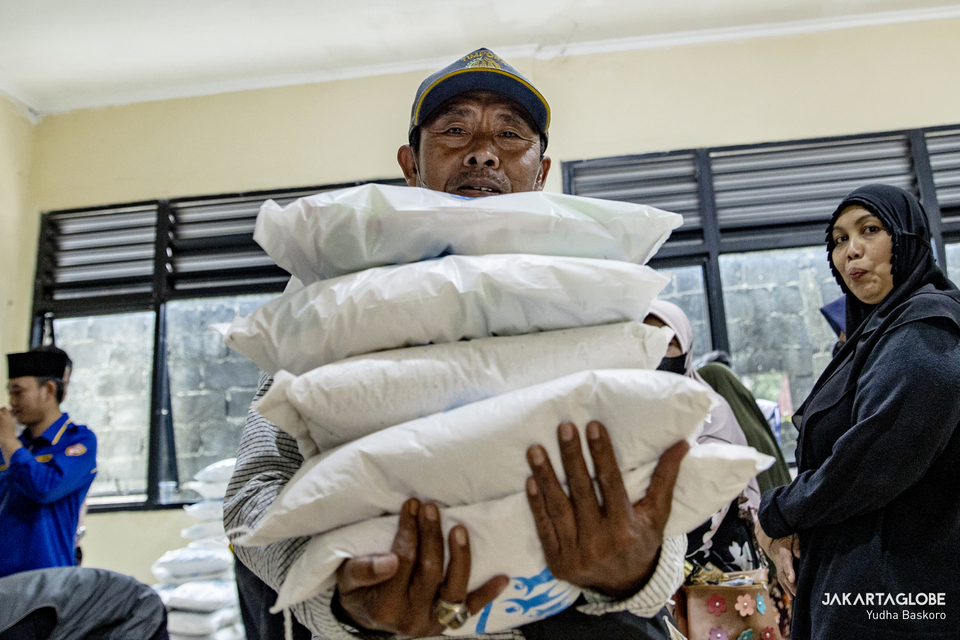
Tangerang. Social Affairs Minister Saifullah Yusuf, commonly known as Gus Ipul, has set an ambitious target to remove more than 300,000 families annually from the government’s social aid beneficiary list as part of a broader poverty alleviation strategy.
In an exclusive interview with BTV on Thursday, Gus Ipul revealed that over 21 million families are currently registered as recipients of government social aid.
“About 80 percent of the Rp 75 trillion [$4.6 billion] social aid budget is allocated for social protection, covering more than 21 million low-income families, while only a small portion is dedicated to economic empowerment programs,” Gus Ipul explained.
“We aim to help more than 300,000 families improve their economic conditions each year so they can transition out of the beneficiary list,” he added.
Indonesia, Southeast Asia’s largest economy, has made significant strides in reducing poverty over the past two decades. According to the Central Statistics Agency (BPS), the national poverty rate dropped to 9.54 percent in March 2023, the lowest level in history. However, challenges persist, particularly in rural areas and among vulnerable groups such as women, children, and people with disabilities.
The Covid-19 pandemic disrupted years of progress, pushing millions of Indonesians into poverty due to job losses and reduced economic activity. Inflation and rising costs of living, exacerbated by global economic uncertainties, continue to threaten low-income households.
Moreover, regional disparities remain stark. While urban centers like Jakarta and Surabaya have seen significant economic growth, remote provinces such as Papua and East Nusa Tenggara report poverty rates exceeding 20 percent, highlighting the uneven distribution of resources and opportunities.
Dual Strategy
The government’s approach to poverty alleviation increasingly emphasizes a dual strategy: providing immediate relief for basic needs while fostering economic empowerment. Programs like conditional cash transfers and support for small businesses aim to create sustainable pathways out of poverty.
According to Gus Ipul, the primary objective of social aid is to ensure access to basic necessities for underprivileged families, including food, healthcare, and education for their children.
“For instance, we provide Rp 200,000 per month for each beneficiary to purchase food. Payments are typically disbursed quarterly through bank transfers or Pos Indonesia. The list of beneficiaries must be continuously updated to account for changes such as deaths, residential moves, or improved economic conditions that render some families ineligible for aid,” he said.
The second goal of the program is to empower families to achieve financial independence through sustainable income sources. It aims to reduce dependency on aid and equip families with tools for long-term self-sufficiency. This involves initiatives such as business capital support, entrepreneurship programs, market access, and manpower training.
“They need assistance to break free from the poverty line and achieve financial independence. The success of these empowerment programs will depend on strong collaboration among various ministries,” Gus Ipul said.
The challenge lies in ensuring that the programs reach those most in need while addressing structural issues like access to quality education, healthcare, and infrastructure, which are crucial for breaking the cycle of poverty.
Tags: Keywords: as a preferred
Related Articles

Govt Suspends Welfare Payments to 1.49 Million Households Over Suspected Online Gambling
Indonesia suspended welfare payments to 1.49 million households suspected of online gambling pending government verification.
AI to Watch Over Indonesia’s Social Aid to Save $15 Billion
The estimated savings from the AI-backed social aid rollout are still subject to change, depending on the quality of the data.The Latest

Chandra Asri Group Receives Trade Finance Excellence Award, Reinforcing Its Role in Indonesia’s Industrial Development
Chandra Asri Group receives the Trade Finance Excellence Award at CIMB Niaga Business Summit 2026.
AEON MALL Deltamas Brings 11 Sports and Creative Competitions to AEONLYMPIC 2026
AEON MALL Deltamas hosts AEONLYMPIC 2026, featuring 11 sports and creative competitions, with more than 3,100 participants.
Indonesian Stocks Extend Losses for Third Day, Fall 3.64% to 4,996
Indonesian stocks fell 3.64% on Monday, extending losses for a third straight session amid MSCI concerns and tighter trading limits.
Prabowo Calls Meeting on Forest Fires as Haze Reaches Jakarta, Singapore
Prabowo summons senior officials to discuss forest fires as smoke reaches Jakarta and Malaysia pushes for regional action.
Jakarta Outranks Amsterdam in Global Public Transport Survey
Jakarta climbs two places to 15th in Time Out's 2026 public transport survey, with its governor citing better network integration.Most Popular
