



Bali Blackout: Time for The Tourist Haven to Embrace Renewable Power?
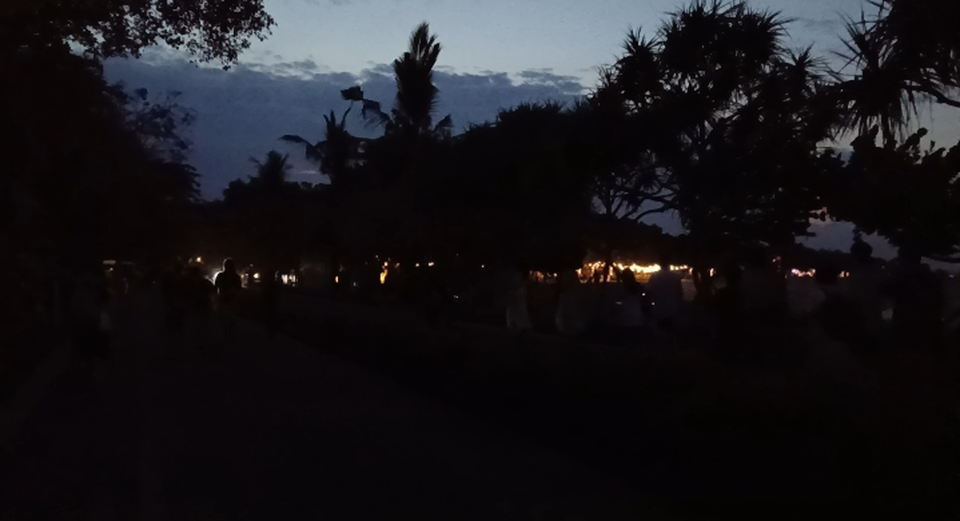
Jakarta. Just last week, the tourist haven Bali made international headlines for its island-wide blackout that disrupted traffic and digital transactions. The incident painted a grim picture of Bali’s energy supply, with some people calling on Bali to end its reliance on Java for power by, among others, taking advantage of the locally available renewable energy.
A senior government official recently floated a plan for Bali to harness Earth’s internal heat to generate electricity. Eniya Listiani Dewi, a director at the Energy Ministry, told reporters that about 50 percent of Bali’s electricity had come from Java, thus making it prone to power outages.
“Geothermal use is something that we need to encourage. This includes boosting Bali’s self-reliance on electricity. We have warned Bali because over half of its power mainly came from here [Java],” Eniya said in Jakarta.
She added: “This is an opportunity for Bali to have its own geothermal power plant. Bali’s geothermal energy currently concentrates in the Bedugul area.”
Eniya was alluding to the project run by contractor Bali Energy Limited and Pertamina Geothermal Energy, a sub-subsidiary of the state-owned oil company. However, the geothermal project had faced decades-long hurdles as local religious leaders said Bedugul was a sacred site. There were also protests over the environmental damage of the geothermal plant. Bali Energy Limited wrote on its official website that it had secured the Energy Ministry’s approval in 2021 to proceed with the construction. The Bedugul geothermal project is set to generate up to 175 megawatts (MW) of electricity.
The Jakarta Globe recently spoke with Marlistya Citraningrum, a senior analyst at the energy think-tank IESR, on the potential for Bali to embrace geothermal power or even other forms of renewables. Citra, as she is usually called, stated that Bali needed to bolster its energy supply as its tourism industry grew. However, Bali should try looking at other sources of renewable energy aside from geothermal due to the aforementioned social concerns, according to Citra.
IESR’s estimates showed that sunny Bali boasted a solar power potential of up to 26 gigawatts (GW). It can also generate 445 MW of electricity from wind and 256 MW of micro-hydro power. Bali holds 15 MW of bioenergy potential. Of all these options, solar power could be an optimum choice.
“Because we can build solar plants fast. They are also quite flexible -- [solar plants] can be mounted on the ground. There are also rooftop solar panels, and we can even install floating solar projects,” Citra told the Globe.
She revealed that rooftop solar panels could act as what she called a “virtual power plant”. The energy that it generates can be transferred to PLN’s network for additional supply. This way, consumers -- be it household or commercial users -- can also act as producers.
The government-run PLN is currently the country’s sole provider of electricity. During the incident, PLN blamed the blackout on the disruptions in the subsea cables that allow the coal-reliant Java to supply power to Bali. The recent major power outage took place last Friday at 4 p.m. local time and lasted for about 12 hours. The blackout affected about 1.8 million PLN customers. Even days after the blackout, Bali still had rolling power disruptions.
The accommodation, food, and beverage sector -- which includes hotels and restaurants -- made up 21.23 percent of Bali’s economy in Q1 2025. The sector also saw 7.47 percent growth year on year, official statistics showed. Bali has attracted almost 1.5 million foreign tourists in January-March.
Tags: Keywords: as a preferred
Related Articles

Bali Senator Says Tipping Makes Locals More Eager to Serve Foreign Tourists
A Bali senator’s claim that foreign tourists tip more than Indonesians sparks a backlash and debate over equal treatment.
The Blind Spot in Indonesia's Clean Energy Story
One of the biggest obstacles to renewable energy development is the lack of adequate transmission and distribution infrastructure.
Indonesia Breaks Ground on $169 Million Bekasi Waste-to-Energy Plant
The facility will be capable of processing up to 1,500 tons of waste per day and converting it into electricity.
British Tourist Dies after Alleged Assault by Four Australians in Bali
A British tourist died after an alleged assault by four Australians in Bali, but police have yet to establish his cause of death.
Indonesia, Germany Eye Deeper Ties in Green Energy, Semiconductors
Indonesia and Germany are deepening cooperation in renewable energy, semiconductor supply chains and vocational education.
Bali’s 5.78% Growth in Q2 Outpaces Nationwide
Indonesia's economy expanded 5.29% in Q2 2026.
Celebrate Your Special Moments with a Luxury Dinner in Ubud
Looking for a luxury dinner restaurant in Ubud for an unforgettable occasion? Apéritif Restaurant offers an exclusive fine-dining experience
All Tourists in Bali Must Use Rupiah
Mandating rupiah use in domestic transactions also aims to support the now-weakening exchange rate.
Education as the Engine of Indonesia’s Energy and Technology Transformation
The future of energy requires two things: clean and renewable sources that provide constant and reliable power.
Opportunities for Green Hydrogen in the Present Energy Crisis
In many emerging markets, energy imports represent a significant share of total trade deficits, exposing economies to external shocks.The Latest

Ye Concert, Other Events to Draw 130,000 to GBK, Here’s What to Know
Around 130,000 visitors are expected at Jakarta’s GBK on Saturday as Ye’s concert and several major events take place.
Indonesia Allocates Rp 722 Billion for Year-End Flight Ticket Tax Relief
Indonesia allocates Rp 722 billion to cover domestic flight ticket VAT during the 2026/2027 Christmas and New Year holidays.
Greece Floats Shipbuilding Partnership with Indonesia
Greece says that it possesses “extensive expertise” as it woos Indonesia in shipbuilding partnership.
Indonesian Stocks Rally 4.9%, but Foreign Investors Keep Selling
Indonesia’s JCI rose 4.9% last week, but foreign selling and MSCI downgrade risks continue to cloud the market outlook.
Ye Concert in Jakarta to Deploy 2,000 Security Personnel
More than 2,000 personnel will secure Ye’s Jakarta concert on Saturday, as organizers urge fans to use public transport.Most Popular
