



72.7 Pct of Indonesian Toll Roads Built during Jokowi’s Era
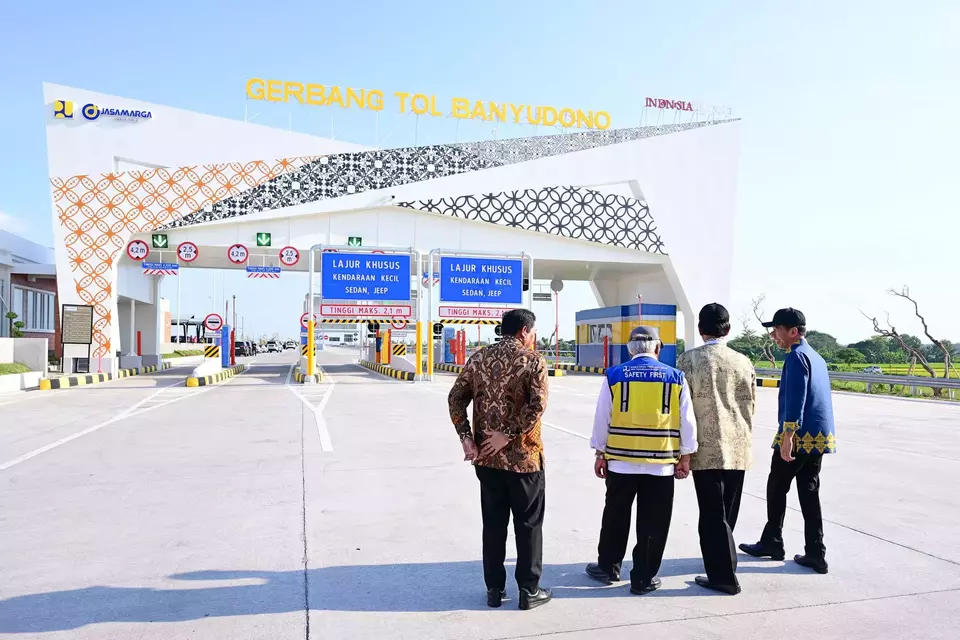
Jakarta. Indonesia has witnessed massive infrastructure development during Joko “Jokowi” Widodo’s 10-year presidency.
Jokowi has ruled the country since 2014, and will soon hand over the job to his successor Prabowo Subianto. As president, one of Jokowi’s strategies to boost economic growth beyond Java Island is to improve connectivity across the archipelago, among others, by building toll roads.
According to the government’s Toll Road Regulatory Agency (BPJT), the first tollway construction took place in 1978. Since then, Indonesia has built around 2,893.02 kilometers of toll roads as of June 2024.
Between 1978-2004, the constructed toll roads spanned 600.62 kilometers, and Indonesia saw new tollways with a total length of 189.2 kilometers in 2005-2014. Toll road expansions soared in the following years. In 2015, Indonesia constructed 132.35 kilometers of toll roads and another 43.69 kilometers in the following year.
In 2017, Indonesia saw 156.5 kilometers-long new tollways and another 442.6 kilometers in 2018. Indonesia even built 522.88 kilometers of tollways in 2019 alone. The toll road expansion in 2021 stood at 122.84 kilometers. Growth jumped to 142.11 kilometers in 2022, and eventually 217.78 kilometers in 2023. Indonesian toll roads have expanded by at least 76.33 kilometers this year.
In other words, Indonesia constructed 2,103 kilometers of new tollways over the past decade. This means 72.7 percent of the toll roads in Indonesia were built during Jokowi’s era. One of Jokowi’s key infrastructure projects is the Trans-Java toll road that connects Merak and Probolinggo, even reaching 1,065.5 kilometers in length. The government is even planning to extend this tollway project to Banyuwangi.
Jokowi recently launched a section of the Solo-Yogyakarta Toll Road Section which connects Kartasura and Klaten. The project is part of the monumental Trans-Java Tollroad which connects the island's eastern and western tips. Jokowi at the time said that the freshly launched tollway would improve the connectivity between Central Java and Yogyakarta.
“We began building this tollway in 2021 and finished the project in 2024 with the total costs reaching Rp 5.6 trillion ($368.8 million). It is set to boost connectivity and accessibility and save travel time,” Jokowi said.
Shorter travel time is pivotal to improve Indonesia’s competitiveness, according to Jokowi. Prior to the tollway project, it would take 3-6 hours to travel from Yogyakarta to Solo or vice versa. The freshly launched section helps cut travel time to just 30-50 minutes. It is also set to reduce traffic congestion as toll roads give people alternative routes to reach their destination.
Tags: Keywords:
 as a preferred
Related Articles

Two Years Into Prabowo Presidency, Infrastructure Takes Back Seat
Prabowo’s social spending push raises concerns over infrastructure delays and uneven growth beyond Java.The Latest

Students Plan Jakarta Protests to Mark Two Years of Prabowo's Presidency
Police have advised the public to avoid areas around the House of Representatives complex, the National Monument and the State Palace.
UN Boss Commends Indonesian Forest Protection Despite Persistent Haze Problem
Outgoing UN boss António Guterres' comment comes at an ironic time amid Indonesia's struggle with forest fires.
Indonesia Must Benefit Most From Its Minerals: UN Chief
Outgoing UN chief António Guterres says that Indonesia must "retain a far greater share of the economic value" from its minerals.
Chandra Asri Group Receives Trade Finance Excellence Award, Reinforcing Its Role in Indonesia’s Industrial Development
Chandra Asri Group receives the Trade Finance Excellence Award at CIMB Niaga Business Summit 2026.
AEON MALL Deltamas Brings 11 Sports and Creative Competitions to AEONLYMPIC 2026
AEON MALL Deltamas hosts AEONLYMPIC 2026, featuring 11 sports and creative competitions, with more than 3,100 participants.Most Popular
