



Rain in Jakarta Found to Contain Toxic Microplastic Particles, BRIN Study Reveals
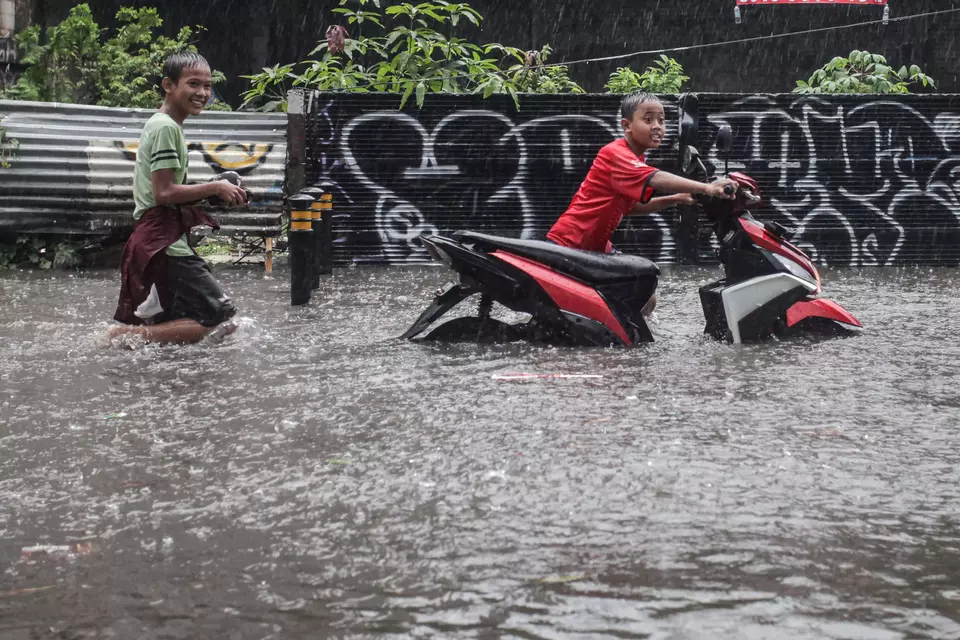
Jakarta. A new study by the National Research and Innovation Agency (BRIN) has found that rainwater in Jakarta contains hazardous microplastic particles, underscoring growing concerns over urban pollution and its environmental and health effects.
Researcher Muhammad Reza Cordova said the study, conducted since 2022, detected microplastics in every rainwater sample collected across the capital. These particles, he explained, are formed from the degradation of airborne plastic waste generated by human activities.
“These microplastics come from synthetic fibers in clothing, vehicle dust and tires, plastic waste burning, and open-air plastic degradation,” Reza said on Thursday.
The particles identified were mostly synthetic fibers and plastic fragments composed of polymers such as polyester, nylon, polyethylene, polypropylene, and polybutadiene from tire wear. On average, researchers found around 15 microplastic particles per square meter per day in samples taken from Jakarta’s coastal areas.
Reza explained that plastic pollution has now entered the atmospheric cycle. Microplastics are lifted into the air through road dust, combustion smoke, and industrial activity, carried by the wind, and eventually fall back to earth through rainfall, a process known as atmospheric microplastic deposition.
“The plastic cycle no longer ends in the ocean,” Reza said. “It rises into the sky, travels with the wind, and returns to us through rain.”
The findings raise health concerns, he noted, as microplastics, which are smaller than typical dust particles, can be inhaled or ingested through food and water.
“It’s not the rainwater that’s toxic, but the microplastic particles within it,” he said. “These contain chemical additives or absorb other pollutants that can be harmful to humans.”
While more research is needed, global studies suggest that microplastic exposure may cause oxidative stress, hormonal disruption, and tissue damage. Environmentally, rain-borne microplastics can contaminate surface and marine waters, entering the food chain.
To address the issue, BRIN is urging coordinated action across sectors, including strengthening air and rainwater quality monitoring, improving plastic waste management and recycling, reducing single-use plastics, and encouraging the textile industry to install washing machine filters to trap synthetic fibers.
Reza also called on the public to cut plastic use, sort their waste, and avoid open burning.
“The Jakarta sky reflects our behavior on the ground,” he said. “The plastic we throw away, the smoke we allow to rise, the trash we burn out of convenience, it all comes back to us in a finer, quieter, but far more dangerous form.”
Tags: Keywords: as a preferred
Related Articles

Prabowo Meets BRIN Chief, Ministers to Boost Textile, Footwear Industries
Prabowo meets BRIN chief and ministers to discuss research-driven efforts to strengthen Indonesia’s textile and footwear industries.
Indonesia Plans N219 ‘Flying Ambulance’ for Remote Medical Evacuations
Indonesia plans to develop its domestically produced N219 aircraft as a flying ambulance for medical evacuations in remote regions.
Indonesia Develops Gas Storage Tech That Could Save $1.5B in LPG Subsidies
BRIN says its new natural gas storage technology could cut LPG subsidies by up to $1.5 billion a year.
Government Research Agency Unveils $4 School Shoes
The national research agency unveiled a prototype school shoe expected to retail for as little as $4.
BRIN Scientists Discover New Fish Species off East Java Coast
Scientists have identified a new shrimpgoby species off Banyuwangi, highlighting Indonesia's rich and largely unexplored marine life.The Latest

Standard Chartered Expands Financing for PT EMI, ALVA Electric Motorcycle Maker
Standard Chartered raises ALVA's financing facility to $20m to support operations, manufacturing and electric motorcycle supply chain.
Jakarta Stocks Gain 5.65% Amid MSCI-Related Reform Efforts
Jakarta stocks climbed 5.65% to 5,278 as regulators pursued market reforms following MSCI's downgrade warning.
Prabowo Summons Economic Team Amid Market Volatility
Prabowo meets senior economic officials as the JCI rebounds 4.16% and the rupiah strengthens to Rp 17,992 per dollar.
Jakarta Seeks to Become Southeast Asian Film Production Hub
Jakarta aims to become a Southeast Asian film hub by attracting foreign productions and expanding global partnerships.
Indonesia’s Value-Added Processing Investment Reaches $26.69 B
Indonesia’s value-added processing investment rose 11.3% year-on-year to $26.69 billion in January-September 2026.Most Popular
