



Fire, Effigies, and Silence: How Hindus in Indonesia Welcome Nyepi
March 29, 2025 | 12:14 pm
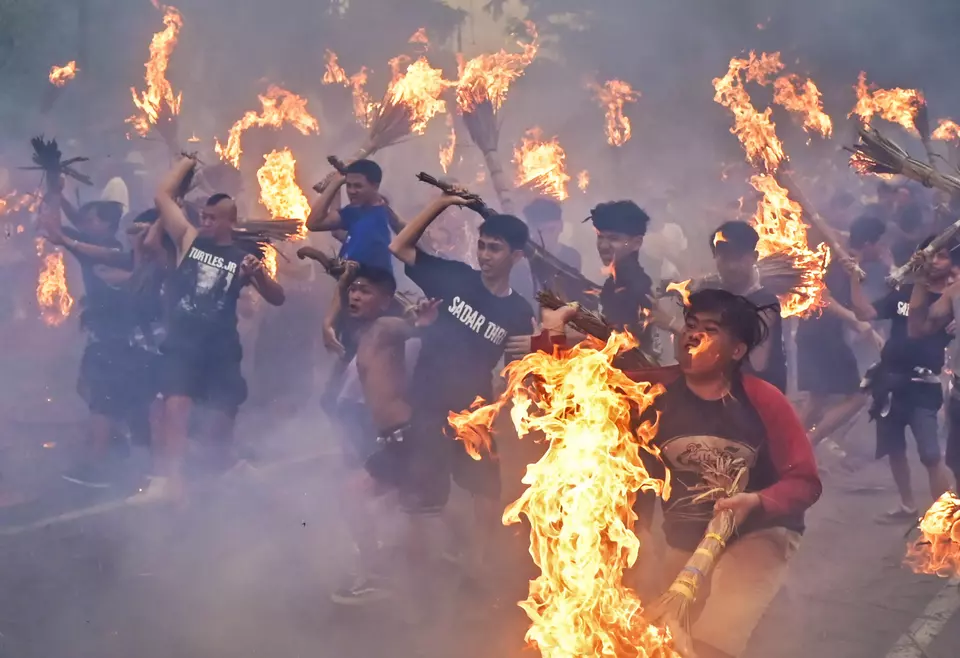
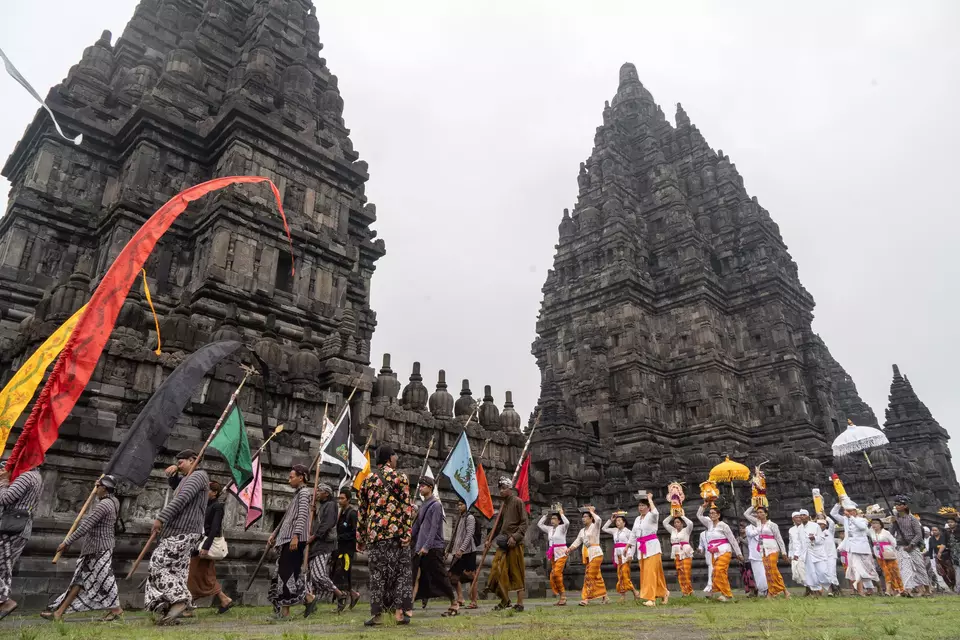
Jakarta. Hindus across Indonesia are observing Nyepi, the Day of Silence, with solemn rituals, effigy parades, and cultural festivities focused on spiritual purification and harmony with nature. One of the largest gatherings took place at Prambanan Temple in Sleman, Yogyakarta, where thousands participated in the Tawur Agung ceremony on Friday.
Organized by the Indonesian Hindu Dharma Council (PHDI), the ceremony drew worshippers from across the Muslim-majority nation. PHDI Chairman Wisnu Bawa Tenaya said this year’s theme, Manawa Sewa Madawa Sewa, reflects the belief that serving others is akin to serving God.
“We aim to balance the elements of earth, water, fire, and air through our prayers,” Wisnu said.
Tawur Agung is a purification ritual meant to restore natural balance and serve as a moment of introspection before Catur Brata Penyepian—the 24-hour period of silence, fasting, and meditation that defines Nyepi.
Many Hindus traveled from Bali, Indonesia’s Hindu-majority province, to celebrate in a different setting. Putu Devi, a participant from Bali, said she wanted to experience the ritual at Prambanan, one of Indonesia’s most revered Hindu sites.
“In Bali, this is a common tradition, but I wanted to feel the spiritual atmosphere at Prambanan,” she said.
The 2025 Tawur Agung ceremony was attended by Vice President Gibran Rakabuming Raka, Religious Affairs Minister Nasaruddin Umar, Yogyakarta Deputy Governor Aryo Paku Alam X, and other officials. The event featured speeches, traditional dance performances, and religious ceremonies.
In honor of Nyepi, Prambanan Temple will be closed for 24 hours on Saturday to allow Hindu worshippers to observe the sacred day in peace.
National Leaders Extend Nyepi Greetings
President Prabowo Subianto and Vice President Gibran extended their greetings to Indonesia’s Hindu community.
“Happy Nyepi Day, Saka New Year 1947,” Prabowo posted on his official X account on Saturday, expressing hope that Sang Hyang Widhi Wasa, the Supreme God in Hinduism, would bless Indonesia with peace and harmony.
Gibran shared a video of his participation in the Tawur Agung Kesanga ceremony at Prambanan, reaffirming the government’s commitment to religious tolerance and national unity.
“In the midst of our rich cultural heritage, I reaffirm our commitment to fostering tolerance and unity in diversity,” he stated on Instagram.

Nyepi in Bali
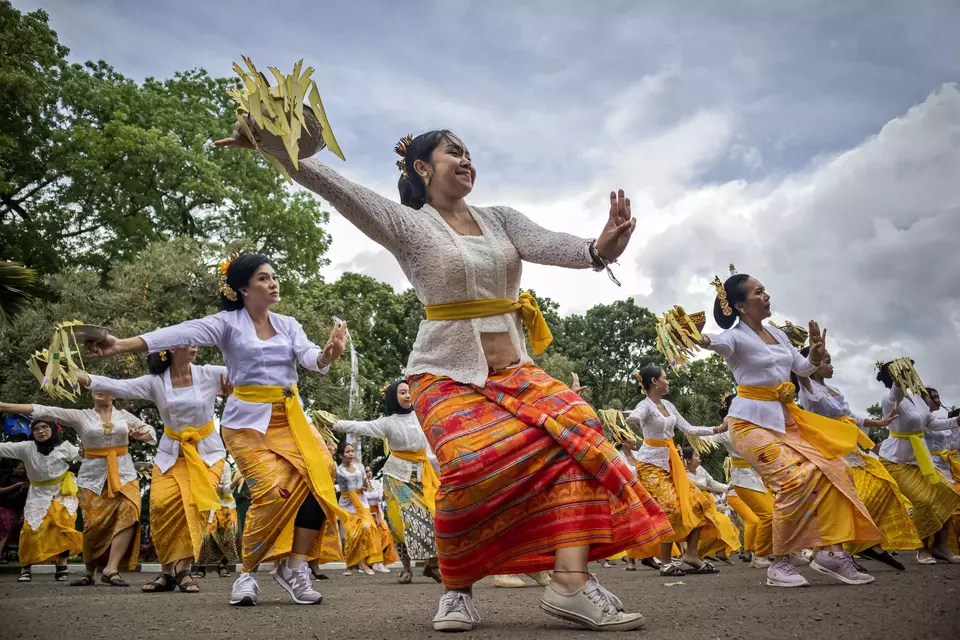
In Bali, Nyepi is observed with complete silence and stillness. Streets are empty, businesses are closed, and no lights are visible as the island embraces a day of self-reflection. Traditional community security personnel, known as pecalang, patrol neighborhoods to ensure adherence to Catur Brata Penyepian, which prohibits fire, work, travel, and entertainment.
“Nyepi is a deeply spiritual moment—not just about physical silence but about purifying the heart and mind,” said Ketut Gede Sucipta, a leader in Wangaya Kaja.
Head of the Wangaya Kaja pecalang, Putu Yuda, explained their role in maintaining order.
“We ensure that no one violates the principles of Nyepi, including refraining from lighting fires, working, traveling, or engaging in entertainment,” he said, adding that pecalang also assist in emergencies, such as transporting sick individuals to hospitals.
Ogoh-Ogoh Parades in Gunungkidul and Lombok
Ahead of Nyepi, Hindus in Gunungkidul, Yogyakarta, and Mataram, Lombok, held traditional ogoh-ogoh parades on Friday evening. In Gunungkidul, four large ogoh-ogoh—demonic effigies symbolizing negative energies—were paraded alongside traditional performances.
“This is an extraordinary moment of religious tolerance. Hindus are observing Catur Brata Penyepian while Muslims are fasting during Ramadan—both seeking spiritual purification,” said Purwanto, Chairman of PHDI Gunungkidul.
In Mataram, more than 100 ogoh-ogoh were paraded, with participation from Hindu banjar communities across Lombok. The event, officiated by West Nusa Tenggara Governor LM Iqbal and Mataram Mayor Mohan Roliskana, highlighted interfaith harmony.
“Despite this event taking place during Ramadan, Hindu participants showed great respect for Muslims fasting along the parade route,” Governor Iqbal said.
PHDI NTB Chairman I Wayan Karioka emphasized the dual role of ogoh-ogoh in cultural expression and spiritual cleansing.
“These effigies symbolize purification before Nyepi. It’s a way for young Hindus to showcase creativity while preserving religious traditions,” he said.
Tags: Keywords: as a preferred
The Latest

'We've Done Everything We Can': OJK Chief as Indonesian Stocks Fall Below 5,000
The OJK launched a broad market reform program in March aimed at bringing Indonesia's capital markets closer to international standards.
Christiane Amanpour to Leave CNN After 43 Years
Her announcement came weeks after media corporation Paramount Skydance formally took over Warner Bros. Discovery, the parent company of CNN.
Indonesia Records Rp 1.54 Quadrillion in Investment Through September
Cumulative investment since President Prabowo Subianto took office on Oct. 20, 2024, had reached approximately Rp 3.92 quadrillion.
UN Boss Wants to Fix Security Council as Indonesia Seeks Seat
Outgoing UN chief Guterres says the current permanent member setup at the Security Council fails to reflect today's realities.
Saudi Flagship Investment Conference Pushed to 2027 after Houthi Attacks
The annual Future Investment Initiative (FII), often dubbed "Davos in the Desert", was originally scheduled to take place from October 26-29Most Popular
