



Trump Pauses Most Tariffs for 90 Days, Hikes China Rate to 125%
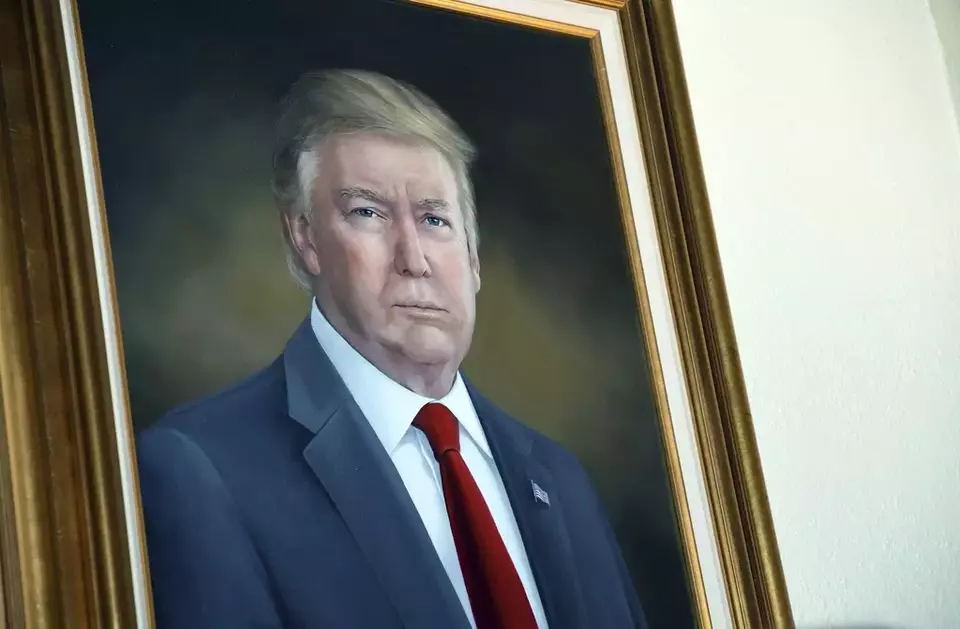
New York. Facing growing global market turmoil, US President Donald Trump on Wednesday announced a 90-day pause on tariffs for most nations, even as he sharply increased tariffs on Chinese imports to 125 percent. The decision marked a significant shift in his trade strategy, narrowing what had been a sweeping global trade war into a more targeted confrontation with China.
The S&P 500 surged 9.5 percent following the announcement, but uncertainty remains as the administration prepares for individual negotiations with countries during the pause. Under the new plan, most nations will face a 10 percent tariff, lower than previous levels but still above historic norms.
The abrupt reversal came amid heavy pressure from volatile financial markets. Stocks and bonds had been selling off, retirement accounts were shrinking, and business leaders warned of falling sales and rising prices-signs that the president’s trade policies were fueling inflationary concerns despite his campaign promises to reduce it.
Trump's tariffs, which took effect early Wednesday, had triggered widespread anxiety among global economies. But by mid-afternoon, Trump posted on Truth Social that more than 75 countries had reached out for talks and had refrained from significant retaliation. “I have authorized a 90 day PAUSE, and a substantially lowered Reciprocal Tariff during this period, of 10 percent, also effective immediately,” he wrote.
Speaking to reporters later, Trump said he scaled back many global tariffs -excluding China- because “people were yippy” and “afraid” due to the market turmoil. He expressed optimism about reaching deals but cautioned, “Nothing’s over yet.”
Trump acknowledged watching bond markets closely, noting that investors appeared “a little queasy” as Treasury prices dropped and yields spiked, signaling a lack of confidence in his earlier approach. “The bond market is very tricky,” he said. “But if you look at it now, it’s beautiful.”
He also said he had considered the tariff pause for several days but finalized the decision early Wednesday morning. When asked why his aides had previously denied the tariffs were negotiable, Trump responded, “A lot of times, it’s not a negotiation until it is.”
The new baseline 10 percent tariff replaces higher proposed rates: 20 percent on European Union goods, 24 percent on Japanese imports, and 25 percent on South Korean products. Canada and Mexico remain subject to tariffs of up to 25 percent due to separate efforts to combat fentanyl smuggling.
Treasury Secretary Scott Bessent said the coming talks would be “bespoke,” stating that the pause resulted from countries seeking negotiations, not market sell-offs -a claim Trump contradicted.
“The only certainty we can provide is that the U.S. will negotiate in good faith,” Bessent said. He added that he and Trump had discussed the strategy on Sunday, saying it was always part of the plan to “goad China into a bad position.”
Commerce Secretary Howard Lutnick offered a different view, insisting the pause was not market-driven but spurred by international outreach.
Before the reversal, warnings from business leaders and market indicators were flashing red. Executives feared a recession, some US trading partners were imposing retaliatory tariffs, and the stock market was reeling.
White House Press Secretary Karoline Leavitt defended the policy shift as a deliberate negotiating tactic. “The entire world is calling the United States of America, not China, because they need our markets,” she said.
Ngozi Okonjo-Iweala, director-general of the World Trade Organization, warned the escalating US-China trade conflict could “severely damage the global economic outlook” and potentially fracture global trade along geopolitical lines.
Investor anxiety had been mounting for weeks. Treasury yields had climbed, with the 10-year US Treasury hitting 4.45 percent before easing after Trump’s announcement. Analysts said markets were desperate for signs of de-escalation.
“Absent any de-escalation, it’s going to be difficult for markets to stabilize,” said Gennadiy Goldberg, head of US rates strategy at TD Securities.
John Canavan of Oxford Economics noted mixed signals from the administration. “Given what's been going on with the markets, [Trump] realized the safest thing to do is negotiate and put things on pause,” he said.
The shift drew praise from Trump supporter and hedge fund billionaire Bill Ackman, who had called for a 90-day pause earlier in the day. After Trump acted, Ackman hailed it as “Textbook, Art of the Deal.”
Despite the pause, many tariffs remain in place, including 25 percent duties on autos, steel, and aluminum. New tariffs on pharmaceuticals and other goods are expected in the weeks ahead.
Delta Air Lines CEO Ed Bastian said the shifting policy was damaging business planning. The company recently walked back its 2025 financial outlook due to growing uncertainty.
“Trying to do it all at the same time has created chaos,” Bastian said.
Economic forecasters warn of compounding risks. Joe Brusuelas of RSM said, “Simultaneous shocks to consumer sentiment, corporate confidence, trade, financial markets, prices, and labor could tip the economy into recession this quarter.”
Still, Bessent struck a hopeful tone, saying the global response had been “overwhelming,” with countries like Japan, South Korea, India, and Vietnam seeking talks. “We’ll be back to firing on all cylinders in the not-too-distant future,” he said.
Tags: Keywords: as a preferred
Related Articles

Indonesia’s US Trade Surplus Defies Tariffs, but Economists Warn Risks Remain
Indonesia posted a $12.47 billion surplus with the US in January-August 2026, up from $12.26 billion a year earlier.
US Defends Tariffs on ASEAN Amid $327.4 Billion Deficit
US says it wants to "bring reciprocity and balance" to its ASEAN trade ties amid double-digit tariff hikes.
BRICS Indirectly Hits Out at Trump’s Tariffs, WTO Paralysis
BRICS doesn't want to see unilateral tariffs and a paralyzed WTO court system, all of which are linked to the US.
Trump Tariffs Cripple EU Firms’ Confidence in ASEAN
As many as 81% of the surveyed European businesses admit that the US tariffs had weakened their confidence in ASEAN.
'We Don't Export Plastic to US': Indonesia on ‘False’ Transshipment Scam Claims
Indonesia denies enabling Chinese goods, namely plastic packaging, avoid Trump's tariffs.
Indonesia Denies US Accusation of Chinese Transshipment Scam
Senior minister Airlangga Hartarto says "Indonesia has never done transshipment", when asked about the US report.
US Accuses Indonesia of Helping China Dodge Trump Tariffs
The US accuses Indonesia and dozens of other countries of being part of "China's shadow transshipment network".
ASEAN Hopes for Predictability on Trump’s Tariffs
ASEAN says the region's businesspeople wish for a predictability and certainty as Trump launches a fresh round of tariff hikes.
Indonesia in Talks with US for 0% Tariff on Palm Oil
Indonesia is in talks with the US to have its palm oil exempted from the latest tariff measure.
Indonesia Banks On EU as Trump's 10% Tariff Kicks In
Indonesia wants to fast-track its European Union (EU) trade deal as Jakarta tries to find alternatives to the tariff-agressive US.The Latest

Chandra Asri Group Receives Trade Finance Excellence Award, Reinforcing Its Role in Indonesia’s Industrial Development
Chandra Asri Group receives the Trade Finance Excellence Award at CIMB Niaga Business Summit 2026.
AEON MALL Deltamas Brings 11 Sports and Creative Competitions to AEONLYMPIC 2026
AEON MALL Deltamas hosts AEONLYMPIC 2026, featuring 11 sports and creative competitions, with more than 3,100 participants.
Indonesian Stocks Extend Losses for Third Day, Fall 3.64% to 4,996
Indonesian stocks fell 3.64% on Monday, extending losses for a third straight session amid MSCI concerns and tighter trading limits.
Prabowo Calls Meeting on Forest Fires as Haze Reaches Jakarta, Singapore
Prabowo summons senior officials to discuss forest fires as smoke reaches Jakarta and Malaysia pushes for regional action.
Jakarta Outranks Amsterdam in Global Public Transport Survey
Jakarta climbs two places to 15th in Time Out's 2026 public transport survey, with its governor citing better network integration.Most Popular
