



Textile Sector Defies ‘Sunset Industry’ Label, Grows 5.39% Under Prabowo Administration: Minister
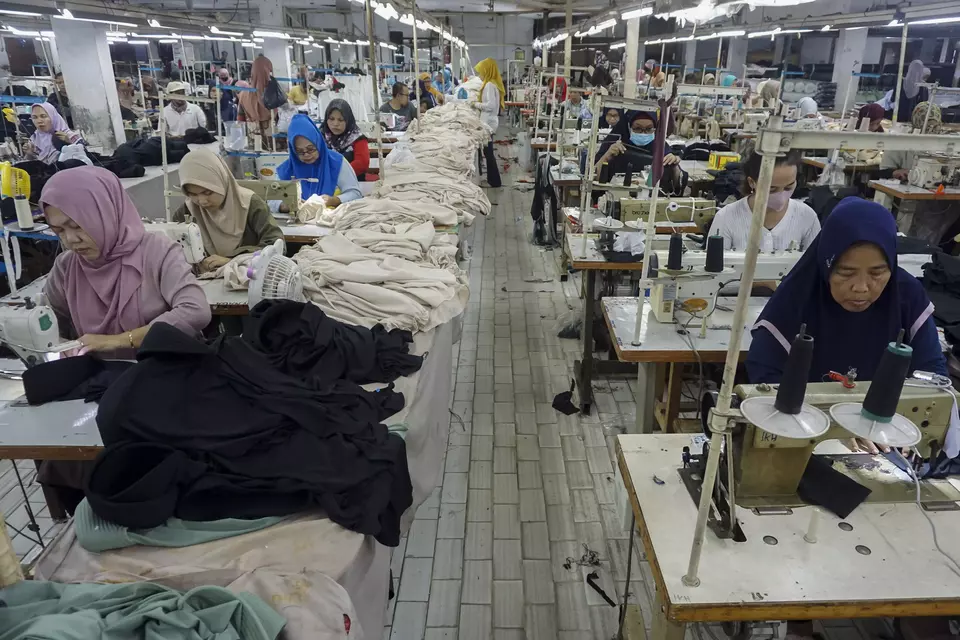
Jakarta. Indonesia’s textile and textile products (TPT) industry remains strong, efficient, and globally competitive -- far from being a “sunset industry,” Industry Minister Agus Gumiwang Kartasasmita said on Sunday.
Since President Prabowo Subianto took office in October last year, the sector has recorded 5.39 percent growth through the third quarter of 2025, contributing nearly 1 percent to the nation’s GDP, Agus said.
He noted that Indonesia now ranks among the world’s top five most efficient textile producers, outperforming several major manufacturing economies.
“In yarn spinning, Indonesia’s production cost is around $2.71 per kilogram -- more efficient than India, China, and Türkiye, and on par with Vietnam and Bangladesh,” he said.
“In weaving, the cost stands at $8.84 per meter, among the lowest globally, while fabric finishing costs just $1.16 per meter, lower than most regional competitors.”
Agus said these figures demonstrate Indonesia’s robust global competitiveness and form a solid foundation for future growth.
He claimed that in an era of climate challenges, geopolitical shifts, digital disruption, and supply chain restructuring, Indonesia’s textile industry still has vast room to expand.
According to him, the combination of abundant resources, adaptive industrial policies, and skilled human capital positions Indonesia as a trusted global textile partner for sustainable and innovative growth.
“Indonesia is ready to become a center of innovation, manufacturing, and sustainable growth for the global textile industry,” Agus emphasized.
The government, he added, continues to introduce reforms to simplify investment procedures and strengthen industrial confidence. These include streamlining the Online Single Submission (OSS) licensing system for faster, more transparent, and predictable approvals.
The Industry Ministry has also launched a machinery and equipment restructuring program to replace outdated production tools with energy-efficient, modern technology.
Other initiatives include easier access to credit for labor-intensive industries, priority access to capital goods imports, and fiscal incentives such as tax reductions for companies investing in research and development, Agus said.
Tags: Keywords: as a preferred
Related Articles

Indonesia Targets Integrated Textile Industry with Rp 100 Trillion Investment
The initiative is part of a broader strategy to consolidate existing manufacturers and strengthen their competitiveness.
Prabowo Unveils Major Cabinet Reshuffle, Moves Bahlil and Sugiono
Prabowo reshuffles his cabinet, moving Bahlil, Sugiono and other senior officials to new roles less than two years into his term.
Indonesia’s Halal Industry Contributes $61.6 Billion to Manufacturing
Indonesia’s halal industry contributed Rp1,102 trillion to non-oil and gas manufacturing in the first half of 2026.
Indonesia’s Textile Sector Employs 4 Million with Room for Further Expansion
Indonesia’s textile industry employs around 4 million people and generates $12 billion in annual exports.
Prabowo Meets BRIN Chief, Ministers to Boost Textile, Footwear Industries
Prabowo meets BRIN chief and ministers to discuss research-driven efforts to strengthen Indonesia’s textile and footwear industries.
Indonesia’s Textile Industry Runs Far Below Capacity Amid Import Pressure
Indonesia’s textile industry eyes export growth and Muslim fashion opportunities despite low utilization and import pressure.
Indonesia Prepares Rp 5 Million Incentive for Electric Motorcycles
Indonesia is preparing a Rp 5 million incentive for electric motorcycles, with the program awaiting a Finance Ministry regulation.
Indonesia's Sportswear Market Projected to Hit $3.3 Billion by 2030
Indonesia's sportswear market is projected to reach Rp 58.6 trillion by 2030, creating new opportunities for local manufacturers.
One in Four New Cars Sold in Indonesia Is Now Electrified
Electrified vehicles now account for more than a quarter of Indonesia's passenger car market, Industry Minister Agus Gumiwang says.
Indonesia Expects Auto Sales to Top 850,000 Units in 2026 as Market Recovers
Indonesia expects auto sales to top 850,000 units in 2026 as production and wholesale deliveries rebound, signaling a recovery in domestic dThe Latest

Chandra Asri Group Receives Trade Finance Excellence Award, Reinforcing Its Role in Indonesia’s Industrial Development
Chandra Asri Group receives the Trade Finance Excellence Award at CIMB Niaga Business Summit 2026.
AEON MALL Deltamas Brings 11 Sports and Creative Competitions to AEONLYMPIC 2026
AEON MALL Deltamas hosts AEONLYMPIC 2026, featuring 11 sports and creative competitions, with more than 3,100 participants.
Indonesian Stocks Extend Losses for Third Day, Fall 3.64% to 4,996
Indonesian stocks fell 3.64% on Monday, extending losses for a third straight session amid MSCI concerns and tighter trading limits.
Prabowo Calls Meeting on Forest Fires as Haze Reaches Jakarta, Singapore
Prabowo summons senior officials to discuss forest fires as smoke reaches Jakarta and Malaysia pushes for regional action.
Jakarta Outranks Amsterdam in Global Public Transport Survey
Jakarta climbs two places to 15th in Time Out's 2026 public transport survey, with its governor citing better network integration.Most Popular
