



Temporary Income Tax Incentives Risk Future Shock for Workers, Economists Warn
Jakarta. Several economists have warned that the government’s decision to temporarily exempt income tax for workers earning up to Rp 10 million ($598) per month could create longer-term problems, as the incentive is not permanent.
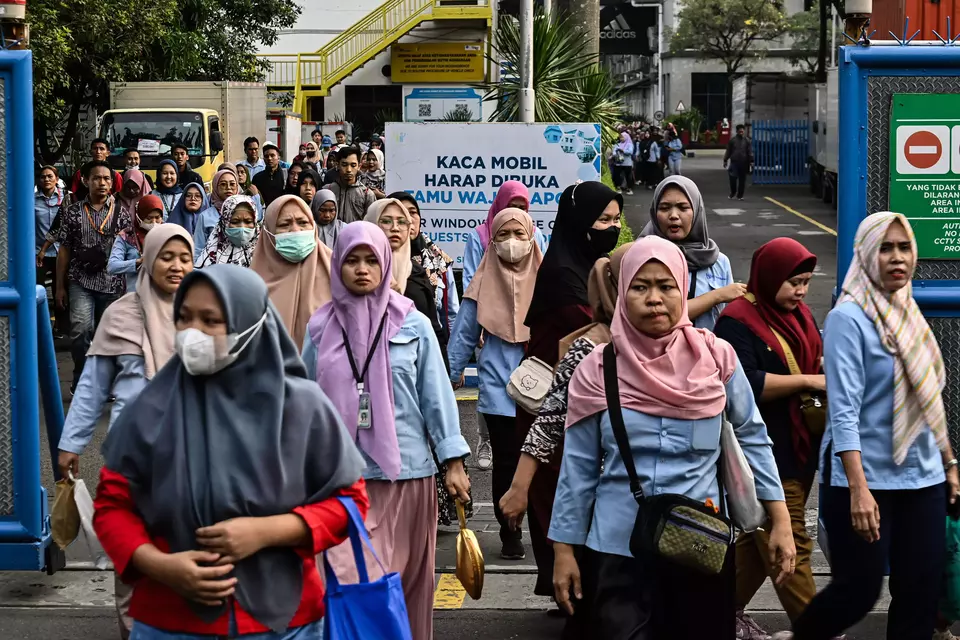
The policy targets employees in labor-intensive sectors such as textiles and footwear, aiming to boost purchasing power and support industries that generate large numbers of jobs.
However, the measure could backfire for workers once the incentive expires, said Syafruddin Karimi, an economist at Andalas University.
Syafruddin said that while workers would enjoy higher take-home pay during the exemption period, they could face a sudden decline in disposable income once the tax relief ends, potentially creating a “shock” effect on household consumption.
He argued that policies with longer-term welfare impacts are needed, such as improving job quality, ensuring greater certainty of working hours, and strengthening industries that generate stable labor demand.
“Without strengthening production and productivity, tax relaxation will function only as a cyclical buffer, not as a driver of sustainable welfare,” Syafruddin said in an interview on Sunday.
He added that limiting the income tax exemption to labor-intensive industries and tourism was intended to reduce the risk of layoffs in sectors most sensitive to demand fluctuations and cost competition, including textiles, footwear, leather goods, furniture, and tourism.
However, many low-income workers in other sectors—such as logistics, retail, food and beverages, care services, and even agriculture—also require support but are excluded from the tax relief scheme, he said. Policies that focus on selected sectors risk creating inter-sector inequality, as workers with similar incomes are subject to different tax treatment.
In the medium term, Syafruddin also warned that the policy could narrow the tax base, as a new norm may emerge in which workers and companies come to view income tax as a burden that should be borne by the state.
Separately, tax analyst Fajry Akbar from the Center for Indonesia Taxation Analysis said similar policies in the past had proven ineffective.
He noted that the benefits primarily accrue to employees rather than companies, while cases of abuse have also occurred, with some firms applying for incentives but failing to pass the benefits on to workers.
“Employees have limited ability to monitor this, as incentive applications are submitted by corporations,” Fajry said. “If such cases are widespread, the policy’s effectiveness in sustaining and stimulating consumption becomes questionable.”
Tags: Keywords: as a preferred
Related Articles

All Workers Paid Under Rp 10 Million Exempt From Income Tax in 2027
The government-borne income tax will apply to workers earning less than Rp 10 million a month regardless of the sector, starting next year.
Marketplace Tax Collection Should Be Fully Automated, Economist Says
An economist says Indonesia’s marketplace tax collection should be automated to prevent new administrative burdens on small businesses.
Indonesia Offers 0% Income Tax for Exporters Keeping Export Proceeds in Domestic Banks
Indonesia will grant a 0% income tax rate to compliant exporters that retain export earnings in domestic banks.The Latest

UN Boss Commends Indonesian Forest Protection Despite Persistent Haze Problem
Outgoing UN boss António Guterres' comment comes at an ironic time amid Indonesia's struggle with forest fires.
Indonesia Must Benefit Most From Its Minerals: UN Chief
Outgoing UN chief António Guterres says that Indonesia must "retain a far greater share of the economic value" from its minerals.
Chandra Asri Group Receives Trade Finance Excellence Award, Reinforcing Its Role in Indonesia’s Industrial Development
Chandra Asri Group receives the Trade Finance Excellence Award at CIMB Niaga Business Summit 2026.
AEON MALL Deltamas Brings 11 Sports and Creative Competitions to AEONLYMPIC 2026
AEON MALL Deltamas hosts AEONLYMPIC 2026, featuring 11 sports and creative competitions, with more than 3,100 participants.
Indonesian Stocks Extend Losses for Third Day, Fall 3.64% to 4,996
Indonesian stocks fell 3.64% on Monday, extending losses for a third straight session amid MSCI concerns and tighter trading limits.Most Popular
