



Purbaya Targets Smuggled Thrift Clothes, Pushes Traders Toward Local Goods
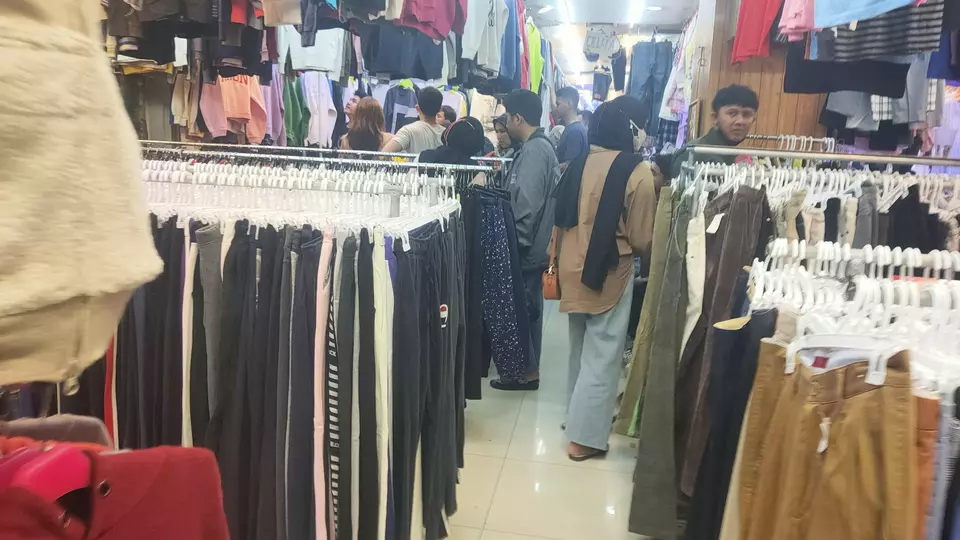
Jakarta. Indonesia is intensifying its crackdown on illegal imports of secondhand clothing, with Finance Minister Purbaya Yudhi Sadewa urging thrift store operators to shift toward locally made textile products to help revive the domestic fashion and garment industry.
Purbaya said the government would tighten oversight at ports and other entry points to stem the inflow of smuggled used apparel, which has flooded local markets in recent years. “We’ll cut the supply. If the supply decreases, the market will automatically shrink,” he told reporters in Jakarta on Monday.
He added that reducing the flow of secondhand imports would gradually push both traders and consumers toward locally made clothing. “Over time, the used clothing will run out,” Purbaya said.
The Finance Ministry has vowed firm measures against illegal importers, including blacklisting individuals and companies involved in smuggling and trade violations. “We know who the players are,” Purbaya said on Oct.22. “Anyone who has ever been involved in used clothes smuggling will be blacklisted and won’t be allowed to import goods again.”
Used clothing smuggled into Indonesia typically ends up in local thrift stores at bargain prices, drawing criticism for undercutting small businesses and damaging the competitiveness of the domestic textile and apparel (TPT) industry.
According to government data compiled by the Trade Ministry’s data center, imports of finished textiles, used clothing, and rags reached $78.19 million between January and July 2025, a 17.3 percent increase from the same period a year earlier. The main sources were China, Vietnam, Bangladesh, Taiwan, and Singapore.
Meanwhile, public opinion remains divided. Some support the crackdown as a way to promote local fashion brands, while others worry it could hurt small traders and limit consumer options.
“If it’s illegal, it should be banned,” said Dido, a Jakarta resident. “Local products are already improving in quality and variety. Many new brands can now compete with thrifted imports.”
But Bayu, a self-described thrift enthusiast, disagreed. “As someone who loves thrifting, I’m really disappointed. If it’s banned, I don’t know where to find affordable clothes anymore,” he said.
The Indonesian Chamber of Commerce and Industry (Kadin) welcomed the crackdown, calling it a vital step to protect local textile producers from unfair competition. “From a business perspective, the government’s plan to curb illegal used clothing imports is very positive, especially for domestic textile manufacturers,” said Saleh Husin, Kadin’s deputy chairman for industry affairs.
Saleh said the influx of cheap secondhand goods had depressed prices, eroded profit margins, and created uncertainty for local producers. He added that the government’s firm stance could restore fair competition and stimulate demand for domestic products.
“This policy could boost production capacity, create jobs, and attract new investment in the textile sector,” he said.
However, Saleh also urged the government to support small thrift retailers affected by the ban through a transition program that includes financial assistance, training, and partnerships with local producers. “Law enforcement should go hand in hand with realistic transition programs so that small traders don’t lose their livelihoods,” he said.
He also called for structural reforms to strengthen Indonesia’s textile ecosystem, such as improving logistics efficiency, ensuring affordable raw materials, and developing skilled labor.
The textile industry has faced a wave of mass layoffs in recent years, particularly in 2024 and 2025, leading to tens of thousands of job losses and dozens of factory closures. According to the Indonesian Filament and Fiber Producers Association (Apsyfi), around 60 factories shut down between 2022 and 2024, resulting in the loss of about 250,000 jobs.
Sritex Group, the country’s largest textile manufacturer, laid off more than 11,000 employees between August 2024 and March 2025 after declaring bankruptcy.
The import of used clothing has been banned under Trade Ministerial Regulation No. 40 of 2022, which amends Regulation No. 18 of 2021 on prohibited export and import goods. The rule aligns with the 2014 Trade Law, which prohibits used imports to protect public health, safety, and the domestic business climate.
Tags: Keywords: as a preferred
Related Articles

Indonesia Seizes Illegal Rice, Salt and Used Clothing Worth Rp27.3 Billion
Indonesia seizes illegal rice, salt and used clothing worth Rp27.3 billion in four customs operations.
Suahasil Inherits Fiscal Credibility Test as Investor Confidence Wavers
Suahasil Nazara faces pressure to restore fiscal credibility as investors seek consistent policies, clearer signals and market confidence.
Indonesia’s Tax Chief Flags Irregularities in Purbaya’s Staff Reshuffle
Indonesia’s tax chief flags irregularities in Purbaya’s staff reshuffle over merit-based appointments.
US Investors Not Worried by Indonesia’s Finance Minister Switch
US-ASEAN Business Council says that American investors are more concerned about the policy changes rather than who is helming the ministry.
Suahasil’s Return Puts Fiscal Discipline at Center of Prabowo’s Economic Policy
Suahasil Nazara takes over as finance minister, with policy consistency and fiscal discipline emerging as key challenges.
Suahasil Told to Avoid Business Cost Hikes, Tax Refund Delays
Businesses have laid out their wishlist for the newly appointed Finance Minister Suahasil Nazara.
Purbaya Admits Sudden Exit ‘Partly’ due to Internal Shuffling
Ex-Finance Minister Purbaya Yudhi Sadewa speaks up on his sudden dismissal.
Indonesian Stocks Gain as Investors Await Suahasil’s Fiscal Policy
Indonesian stocks opened higher as investors weighed Suahasil Nazara’s appointment as finance minister and awaited his fiscal policy.
Suahasil Promises Credible, Trusted Finance Ministry after Purbaya Exit
The new Finance Minister pledged credibility and economic stability as experts urged him to go beyond maintaining the fiscal status quo.
No Major Change Expected Under New Finance Minister Suahasil
Economists say major shifts will only happen if new Finance Minister Suahasil Nazara is brave enough to make changes.The Latest

Prabowo Calls Meeting on Forest Fires as Haze Reaches Jakarta, Singapore
Prabowo summons senior officials to discuss forest fires as smoke reaches Jakarta and Malaysia pushes for regional action.
Jakarta Outranks Amsterdam in Global Public Transport Survey
Jakarta climbs two places to 15th in Time Out's 2026 public transport survey, with its governor citing better network integration.
MSCI Concerns, Tighter IDX Trading Rules Send Indonesian Stocks Down 5% by Midday
Indonesian stocks plunge 5% by midday as MSCI concerns weigh on sentiment and the IDX tightens its daily downside limit to 7%.
Jakarta Prepares 367 Health Facilities as Haze Reaches the Capital
Jakarta prepares 367 health facilities to treat potential haze-related illnesses after smoke from Sumatra and Kalimantan crosses the region.
Jakarta Expands Flood Prevention With New Water Storage Ponds
Jakarta opens two East Jakarta water storage ponds as it expands flood prevention efforts through reservoirs and river normalization.Most Popular
