



Mari Pangestu: ASEAN’s Swift Response Shows Regional Strength Against US Trade Shocks
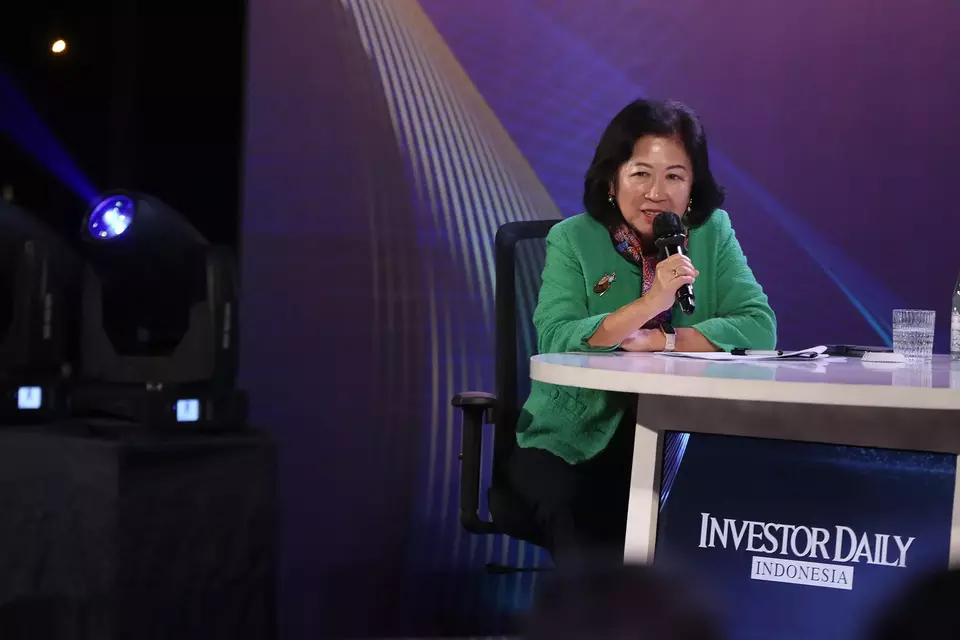
Jakarta. Southeast Asian nations have responded swiftly to the United States’ latest import tariff policy, which is seen as a potential disruptor of global supply chains and a trigger for broader economic slowdown -- especially amid escalating trade tensions between the US and China, a renowned economist said on Wednesday.
Mari Elka Pangestu, Vice Chair of the National Economic Council, said ASEAN’s coordinated response reflects the region’s unity and readiness in facing global challenges.
“The trade war between the US and China has already caused turmoil in global supply chains. This could lead to a global recession, and ASEAN countries must be prepared,” Mari said during the Investor Daily Round Table (IDRT), hosted by B-Universe Media Holdings Executive Chairman Enggartiasto Lukita at the Westin Hotel in Jakarta.
She highlighted ASEAN’s and Indonesia’s prompt action following the tariff announcement by US President Donald Trump on April 2. A day later, Coordinating Minister for Economic Affairs Airlangga Hartarto met with Malaysian Prime Minister and ASEAN Chair Anwar Ibrahim. This was followed by President Prabowo Subianto’s visit to Malaysia on April 6 and a meeting of ASEAN economic ministers on April 10, which culminated in a joint statement.
Mari outlined three key messages in the ASEAN Economic Ministers’ statement. First, a commitment to constructive dialogue and restraint. ASEAN agreed to engage in constructive discussions with the US rather than pursue retaliatory measures -- an effort aimed at addressing US concerns over trade deficits.
Second, strengthening ASEAN itself. Amid global uncertainties, ASEAN is pushing for deeper regional economic integration, including the accelerated implementation of the Regional Comprehensive Economic Partnership (RCEP) and expanding cooperation with new trading partners.
“When uncertainty rises, we must increase certainty -- starting with ourselves, with ASEAN. That means enhancing intra-ASEAN trade and cooperation. We must strengthen ASEAN unity. Then, ASEAN-plus-one frameworks with dialogue partners. Although RCEP isn’t explicitly mentioned in the ministerial statement, that’s clearly the intent. Its implementation must be accelerated and reinforced,” Mari emphasized.
Third, ASEAN reaffirms its commitment to a rules-based multilateral trading system and supports the World Trade Organization’s role in maintaining global trade stability.
Boosting Domestic Resilience
Mari also stressed the importance of strengthening Indonesia’s domestic resilience as a precautionary measure. She urged continued progress on deregulation and structural reforms, initiatives launched by President Prabowo prior to the new US tariff announcement, to boost the country’s competitiveness.
She noted that several sectors could be directly impacted by the new tariffs, including garments, footwear, furniture, and shrimp -- industries where 50 to 60 percent of exports are destined for the US market.
To diversify trade and reduce reliance on the US, Mari advocated for the accelerated completion of the Indonesia-EU Comprehensive Economic Partnership Agreement (EU-CEPA), allowing access to new European markets as a buffer against potential losses from the new tariffs.
Tags: Keywords: as a preferred
Related Articles

ASEAN is No Arena for US-China Rivalry
Indonesia says that ASEAN has made it clear that it "must never become an arena for great power rivalry", alluding to the US-China rifts.
Indonesia Eyes Waste-to-Energy Boom With Hundreds of Projects Still Untapped
Indonesia says hundreds of cities remain untapped for waste-to-energy projects, creating major investment opportunities.
DEN Says Policy Coordination Crucial Amid Rupiah Weakness, Global Volatility
DEN says coordinated fiscal and monetary policies are crucial to safeguard macroeconomic stability and investor confidence.
Danantara Manages Around $12 Billion in Investments, CIO Says
Indonesia’s sovereign wealth fund Danantara currently manages about $12 billion in investments amid ongoing state-enterprise reforms.
Indonesia Prepares Financial SEZ to Rival Singapore, Dubai
Indonesia readies financial SEZ to capture global capital and attract family offices as geopolitical risks shift investment flows.
Indonesia Forms Special Task Force to Remove Economic Bottlenecks
Indonesia formed a special task force to cut red tape, boost growth, and respond quickly to global economic shocks.The Latest

Chandra Asri Group Receives Trade Finance Excellence Award, Reinforcing Its Role in Indonesia’s Industrial Development
Chandra Asri Group receives the Trade Finance Excellence Award at CIMB Niaga Business Summit 2026.
AEON MALL Deltamas Brings 11 Sports and Creative Competitions to AEONLYMPIC 2026
AEON MALL Deltamas hosts AEONLYMPIC 2026, featuring 11 sports and creative competitions, with more than 3,100 participants.
Indonesian Stocks Extend Losses for Third Day, Fall 3.64% to 4,996
Indonesian stocks fell 3.64% on Monday, extending losses for a third straight session amid MSCI concerns and tighter trading limits.
Prabowo Calls Meeting on Forest Fires as Haze Reaches Jakarta, Singapore
Prabowo summons senior officials to discuss forest fires as smoke reaches Jakarta and Malaysia pushes for regional action.
Jakarta Outranks Amsterdam in Global Public Transport Survey
Jakarta climbs two places to 15th in Time Out's 2026 public transport survey, with its governor citing better network integration.Most Popular
