



Lunar New Year Holiday Seen Generating $500 Million in Indonesia
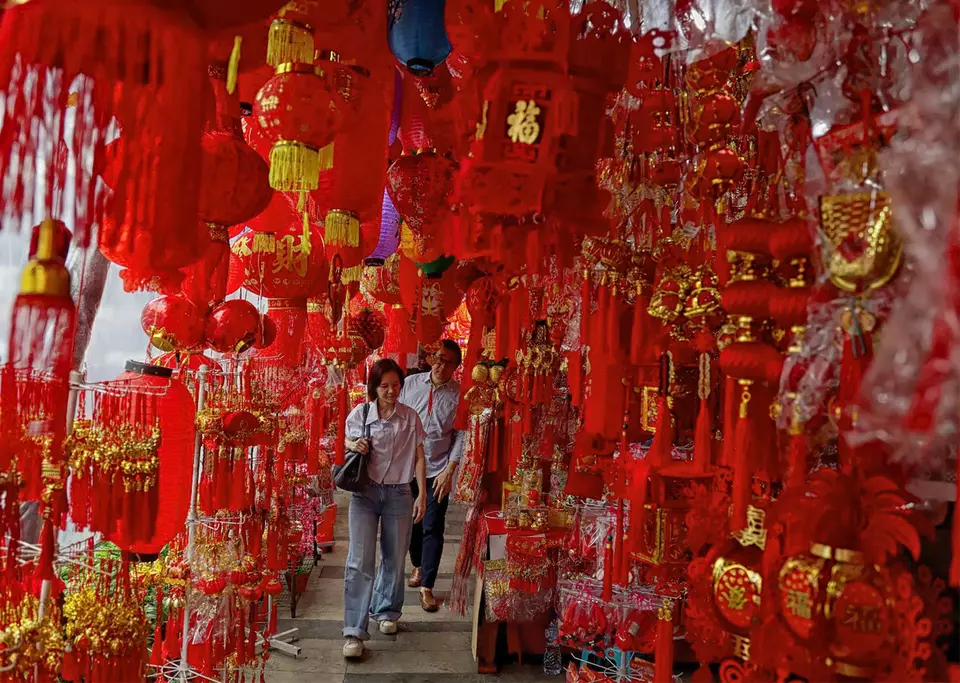
Jakarta. Indonesia’s Lunar New Year holiday is expected to generate more than Rp 9 trillion ($513 million) in economic activity, driven by travel, retail and household spending during the two-day national break, a senior business leader said.
Sarman Simanjorang, deputy chair for regional autonomy at the Indonesian Chamber of Commerce and Industry (Kadin), estimated that cash circulation during the Chinese New Year celebrations on Feb. 16–17 could reach Rp 9.06 trillion.
The government has designated Monday, Feb. 16, as a collective leave day and Tuesday, Feb. 17, as a national holiday to mark the Lunar New Year, known locally as Imlek.
While the holiday is a major celebration for Indonesia’s ethnic Chinese community, it is also widely used by the broader public for travel, tourism, culinary outings and family gatherings ahead of the Muslim fasting month of Ramadan.
Travel Surge Lifts Transport Sector
The holiday has significantly boosted passenger traffic across transportation modes.
Passenger numbers at Soekarno-Hatta International Airport are projected to reach 1.74 million during the holiday period. Demand for flights to cities such as Medan, Semarang, Surabaya, Banjarmasin, Pontianak, Bali and Palembang has risen sharply.
Rail travel has also climbed, with nearly 1 million passengers traveling to destinations across Java, including Bandung, Yogyakarta, Semarang and Surabaya.
Indonesia’s high-speed rail service Whoosh, which connects Jakarta to Bandung, has recorded a 25% increase in passengers to around 25,000 during the holiday stretch.
State toll road operator Jasa Marga estimates that about 1.6 million vehicles will pass through major toll gates, including around 831,000 leaving the greater Jakarta area. Assuming an average of four passengers per car, total land mobility could reach 6.4 million people.
Retail and Tourism See Uptick
Increased mobility has spilled over into tourism, retail and hospitality.
Sales of Lunar New Year decorations and traditional fruits — including mandarin oranges, apples, pomegranates, pineapples and red dragon fruit — are projected to rise by as much as 30%. Seasonal food items such as milkfish and sticky rice cake have also seen higher demand.
The Indonesian Retail Entrepreneurs Association (Hippindo) has projected transactions of Rp 53.38 trillion during the broader period from Lunar New Year through Ramadan and Eid al-Fitr. If 5% of that target materializes during the Lunar New Year break alone, retail transactions would reach roughly Rp 2.66 trillion.
Hotels in major tourist cities have reported strong occupancy rates. In Bandung, èL Hotel recorded occupancy above 90% during the long weekend, dominated by visitors from the greater Jakarta metropolitan area. In Malang, East Java, the local chapter of the Indonesian Hotel and Restaurant Association reported average occupancy of 60% to 70%, with bookings rising since early February due to city events, Valentine’s Day and the Lunar New Year.
Breakdown of Spending
Sarman said the Rp 9.06 trillion estimate was calculated from several components.
Indonesia’s ethnic Chinese population is estimated at 11.25 million people, or around 2.8 million households assuming four people per family. If each household spends an average of Rp 1 million on Lunar New Year needs — including family meals and red-envelope gifts — potential spending would reach Rp 2.8 trillion.
An estimated 3.3 million people are expected to travel for tourism or ancestral visits. With average spending of Rp 500,000 per person, that would generate Rp 1.68 trillion.
Airline ticket sales alone could total Rp 1.74 trillion, assuming an average fare of Rp 1 million per passenger. Regular train tickets are projected to contribute Rp 150 billion, while Whoosh high-speed rail tickets could add Rp 6.25 billion.
The estimate excludes toll road fees, private vehicle fuel purchases, and sea transport.
Growth Implications
Sarman said the holiday spending would help bolster household consumption, which accounts for more than half of Indonesia’s gross domestic product, and support economic growth in the first quarter of 2026.
He expressed optimism that first-quarter growth could reach 5.5%, providing momentum toward the government’s full-year 2026 growth target of 5.4% to 5.6%.
The Lunar New Year will be followed by Ramadan and Eid al-Fitr, traditionally Indonesia’s peak consumption period, potentially adding further stimulus to Southeast Asia’s largest economy
Tags: Keywords: as a preferred
The Latest

Prabowo Calls Meeting on Forest Fires as Haze Reaches Jakarta, Singapore
Prabowo summons senior officials to discuss forest fires as smoke reaches Jakarta and Malaysia pushes for regional action.
Jakarta Outranks Amsterdam in Global Public Transport Survey
Jakarta climbs two places to 15th in Time Out's 2026 public transport survey, with its governor citing better network integration.
MSCI Concerns, Tighter IDX Trading Rules Send Indonesian Stocks Down 5% by Midday
Indonesian stocks plunge 5% by midday as MSCI concerns weigh on sentiment and the IDX tightens its daily downside limit to 7%.
Jakarta Prepares 367 Health Facilities as Haze Reaches the Capital
Jakarta prepares 367 health facilities to treat potential haze-related illnesses after smoke from Sumatra and Kalimantan crosses the region.
Jakarta Expands Flood Prevention With New Water Storage Ponds
Jakarta opens two East Jakarta water storage ponds as it expands flood prevention efforts through reservoirs and river normalization.Most Popular
