



Industry Backs Indonesia’s Electric Motorcycle Transition Plan
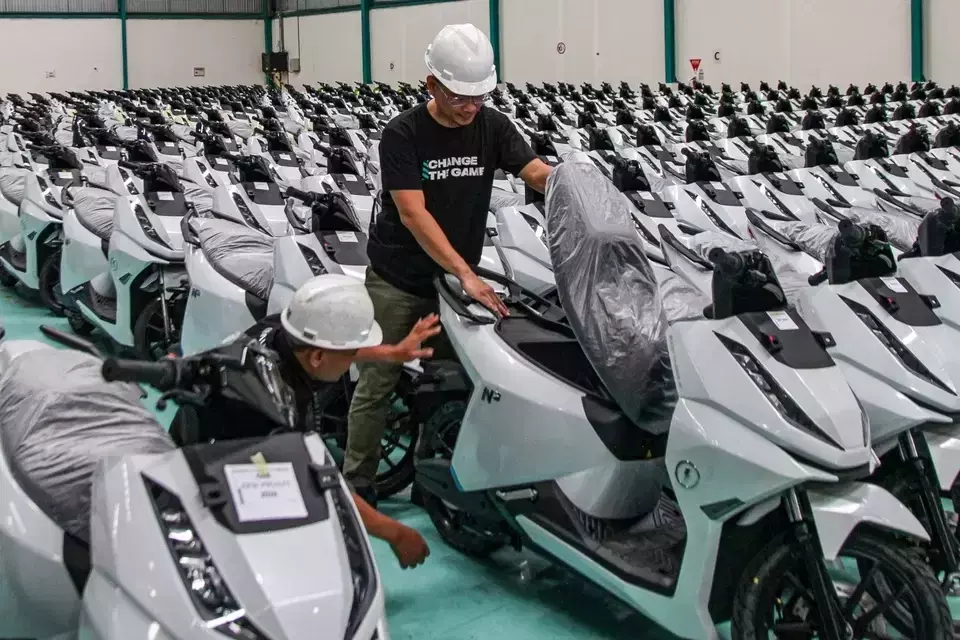
Jakarta. Indonesia’s plan to gradually phase out gasoline-powered motorcycles is drawing support from industry players, though challenges around infrastructure, investment, and consumer readiness remain.
The proposal, announced last week by Industry Minister Agus Gumiwang Kartasasmita, prioritizes electric motorcycles for the domestic market while allowing conventional models to serve exports. The approach aims to accelerate electrification without disrupting Indonesia’s role as a major global motorcycle producer.
ALVA, one of the country’s leading electric motorcycle makers, welcomed the policy direction, calling it a strategic step toward building a sustainable electric vehicle ecosystem.
“We see this as part of a broader effort to strengthen domestic adoption and accelerate the transition to sustainable mobility,” CEO Purbaja Pantja told The Jakarta Globe.
As one of the world’s largest motorcycle markets, Indonesia offers significant domestic potential. At the same time, ALVA said export opportunities remain open, with its CERVO model already securing European homologation certification.
From a production standpoint, ALVA said it is ready to scale. Its smart manufacturing facility in Cikarang, certified under the Industry 4.0 (INDI 4.0) program, has a capacity of up to 100,000 units per year.
Still, executives say infrastructure will be decisive in driving adoption. ALVA has built more than 220 charging connectors across 110 locations in Java, Bali and Kalimantan, alongside over 130 after-sales service points in 39 cities.
"Consumers today are increasingly rational. They consider charging convenience, after-sales service, and total cost of ownership, as well as safety and comfort,” Purbaja said.
Industry-wide investment needs remain difficult to quantify, as they depend on how quickly adoption targets are set and supporting infrastructure is built.
“Consistent incentives and regulatory certainty will be key catalysts to unlocking larger investments across the industry,” Purbaja said.
Demand for electric motorcycles is rising but remains far below that of conventional models. To close the gap, ALVA pointed to three key pillars: competitive and affordable products, reliable infrastructure, and sustained public education.
The company offers flexible ownership schemes, including battery leasing, with entry-level prices starting at around Rp 15.5 million.
“With strong policy momentum and improving industry readiness, we believe the transition toward electric vehicle dominance is only a matter of time,” Purbaja said.
Data from the Transportation Ministry’s vehicle type approval system show sales fell 28.6% in 2025 to 55,059 units, down from 77,078 units in 2024. The decline has been partly attributed to uncertainty surrounding government subsidies.
Chairman of the Indonesian Electric Motorcycle Industry Association (AISMOLI), Budi Setiyadi, said the group backs government efforts to boost domestic electric vehicle (EV) adoption and increase local absorption of production.
“In principle, we strongly support the government’s push to reinforce the domestic EV market. A strong local market is essential to building a sustainable industry—from scaling up production and advancing technology to creating jobs,” Budi told The Jakarta Globe.
However, he cautioned that industry dynamics require a more flexible approach. Sales strategies, whether for domestic or export markets, will depend on factors such as consumer demand, purchasing power, infrastructure readiness, and the global competitiveness of Indonesian products.
“A balanced approach would be more optimal, where the domestic market is strengthened while export opportunities remain open as part of long-term industry growth,” he concluded.
Tags: Keywords: as a preferred
Related Articles

Inside BYD’s Electric Vehicle Empire
Founded in 1994, BYD has grown into a Fortune 500 company with a presence in more than 120 countries.
Indonesia’s $169 E-Motorcycle Subsidy Risks Fueling Imports, Expert Warns
Indonesia’s n electric motorcycle incentive could boost EV adoption, but experts warn it must strengthen local production and supply chains.
Indonesia Cuts Planned Electric Motorcycle Subsidy to Rp 3 Million per Unit
Indonesia plans a Rp 3 million subsidy per electric motorcycle, targeting 1 million units despite limited domestic production capacity.
Indonesia Prepares Rp 5 Million Incentive for Electric Motorcycles
Indonesia is preparing a Rp 5 million incentive for electric motorcycles, with the program awaiting a Finance Ministry regulation.
Molinas Launch Targets Indonesia’s 140 Million-Motorcycle Market
Indonesia launched its Molinas electric motorcycle initiative with low-interest financing and zero down payments to accelerate EV adoption.
One in Four New Cars Sold in Indonesia Is Now Electrified
Electrified vehicles now account for more than a quarter of Indonesia's passenger car market, Industry Minister Agus Gumiwang says.
Indonesia Allocates $84.6 Million for Electric Stoves and E-Motorcycle Conversion Program
Indonesia will spend Rp 1.5 trillion on electric stoves and e-motorcycles to cut fuel imports and boost clean energy use.
Jakarta Keeps Full EV Tax Breaks as Indonesia’s Electric Car Sales Surge
Jakarta keeps full EV tax breaks as Indonesia’s electric car sales jump 141% in 2025 to over 100,000 units, driven by rising demand.The Latest

Chandra Asri Group Receives Trade Finance Excellence Award, Reinforcing Its Role in Indonesia’s Industrial Development
Chandra Asri Group receives the Trade Finance Excellence Award at CIMB Niaga Business Summit 2026.
AEON MALL Deltamas Brings 11 Sports and Creative Competitions to AEONLYMPIC 2026
AEON MALL Deltamas hosts AEONLYMPIC 2026, featuring 11 sports and creative competitions, with more than 3,100 participants.
Indonesian Stocks Extend Losses for Third Day, Fall 3.64% to 4,996
Indonesian stocks fell 3.64% on Monday, extending losses for a third straight session amid MSCI concerns and tighter trading limits.
Prabowo Calls Meeting on Forest Fires as Haze Reaches Jakarta, Singapore
Prabowo summons senior officials to discuss forest fires as smoke reaches Jakarta and Malaysia pushes for regional action.
Jakarta Outranks Amsterdam in Global Public Transport Survey
Jakarta climbs two places to 15th in Time Out's 2026 public transport survey, with its governor citing better network integration.Most Popular
