



Indonesia’s Workforce Grows Faster Than Jobs, 1.5 Million Left Behind
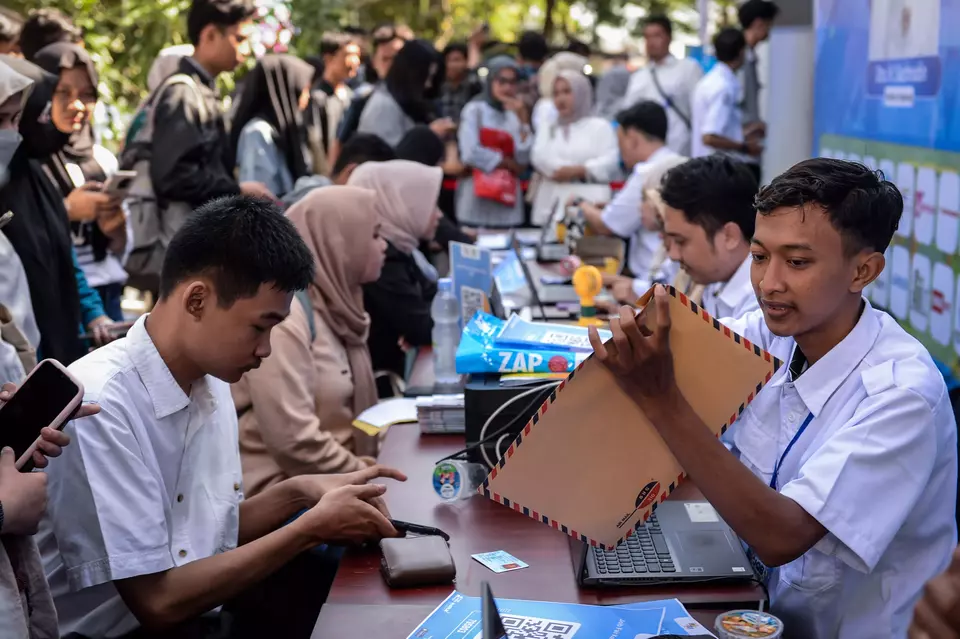
Jakarta. Indonesia is facing a growing labor market imbalance, with around 1.5 million workers left unabsorbed each year as job creation lags behind incoming job seekers, the Indonesian Employers Association (Apindo) warned on Tuesday.
According to Bob Azam, head of labor affairs at Apindo, about 3.5 million people enter the workforce annually, while the economy is only able to absorb roughly 2 million.
“Our labor conditions are showing warning signs,” Bob said during a hearing with House Commission IX at the parliamentary complex.
Despite Indonesia’s steady economic growth of around 5%, job creation remains limited. The imbalance risks pushing more workers into the informal sector, where job security and income stability are typically lower.
Apindo estimates that around 60% of Indonesia’s workforce is now employed in the informal sector, compared to 40% in the formal economy. Data from the Central Statistics Agency (BPS) supports this trend, showing that as of November 2025, about 85.35 million people, or 57.7% of workers, were in informal employment, while 62.57 million, or 42.3%, were in formal jobs.
Beyond job availability, workforce quality remains a key challenge. A significant portion of Indonesia’s labor force has relatively low educational attainment, limiting productivity and competitiveness.
BPS data shows that 34.6% of employed workers have only elementary education or lower, while university graduates account for just 10.8% of the workforce.
Indonesia’s total labor force reached 155.27 million in November 2025, with a labor force participation rate of 70.95%. The number of employed people stood at 147.91 million, while the open unemployment rate was recorded at 4.74%.
Bob said greater investment in training is urgently needed to help workers transition into more productive and higher-paying jobs, but funding for such programs remains limited.
“Training needs are very high to enable workers to shift into more productive jobs with better income,” he said.
Apindo also flagged regulatory uncertainty as a concern for businesses, adding that wage regulations have been revised multiple times over the past decade. The group called for more flexible labor policies, balanced with stronger industrial relations at the company level.
Tags: Keywords: as a preferred
Related Articles

Apindo Warns Labor Bill Could Stall Investment, Job Creation
Apindo warns Indonesia’s proposed labor bill could deter investment and business expansion, slowing formal job creation.
Businesses Back Mandatory Halal Rules, Warn of Rising Compliance Costs
Businesses support Indonesia’s mandatory halal rules but urge simpler certification and lower compliance costs to protect MSMEs and consumer
Suahasil Told to Avoid Business Cost Hikes, Tax Refund Delays
Businesses have laid out their wishlist for the newly appointed Finance Minister Suahasil Nazara.
Businesses Seek Predictable Rupiah as Prabowo Sets 2027 Economic Targets
Indonesian businesses urge the government to keep the rupiah stable in 2027 to support investment, costs and business expansion.
Indonesia’s Economy Grows 5.29%, But Businesses Still Feel the Squeeze
Indonesia’s economy grew 5.29% in Q2, but employers warn high costs and weak demand are keeping businesses on the defensive.
Business Group Calls for Deregulation to Stem Job Cuts
Apindo says deregulation and lower business costs are needed to address the root causes of layoffs and support economic recovery.
Data Leak Fears Plague Indonesian Firm Annual Reporting Rule
Limited liability companies must submit their annual reports to a ministry-run system, sparking fears over data leaks.
Exporters Endorse State Export Agency DSI, Seek Gradual Rollout
Indonesia’s leading business groups backed Prabowo’s export reform plan while calling for a gradual and transparent rollout.
Rupiah Slide Pushes Indonesian Firms Into Cost-Cutting Mode
Companies boost hedging, cut spending, and seek local suppliers as rupiah weakness hits operations.
Weakening Rupiah Forces Indonesian Businesses to Delay Expansion Plans
Around 70% of manufacturing raw materials in Indonesia are still imported, while raw materials account for roughly 55% of production costs.The Latest

UN Boss Commends Indonesian Forest Protection Despite Persistent Haze Problem
Outgoing UN boss António Guterres' comment comes at an ironic time amid Indonesia's struggle with forest fires.
Indonesia Must Benefit Most From Its Minerals: UN Chief
Outgoing UN chief António Guterres says that Indonesia must "retain a far greater share of the economic value" from its minerals.
Chandra Asri Group Receives Trade Finance Excellence Award, Reinforcing Its Role in Indonesia’s Industrial Development
Chandra Asri Group receives the Trade Finance Excellence Award at CIMB Niaga Business Summit 2026.
AEON MALL Deltamas Brings 11 Sports and Creative Competitions to AEONLYMPIC 2026
AEON MALL Deltamas hosts AEONLYMPIC 2026, featuring 11 sports and creative competitions, with more than 3,100 participants.
Indonesian Stocks Extend Losses for Third Day, Fall 3.64% to 4,996
Indonesian stocks fell 3.64% on Monday, extending losses for a third straight session amid MSCI concerns and tighter trading limits.Most Popular
