



Indonesia Targets H1 2026 Groundbreaking for Titan Battery Project Led by Huayou, EVE
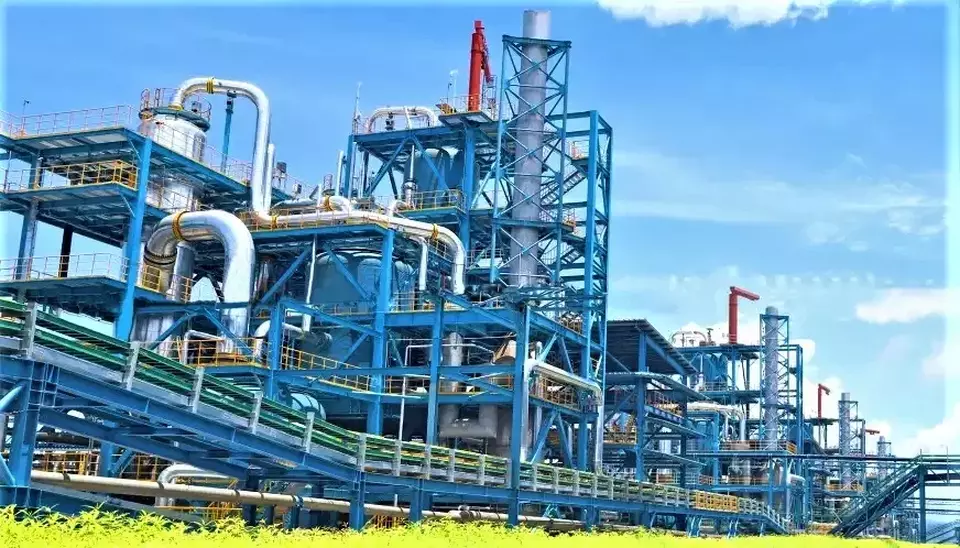
Jakarta. Indonesia plans to break ground on a major integrated battery manufacturing project led by China’s Zhejiang Huayou Cobalt and EVE Energy in the first half of 2026, the government said, underscoring its determination to build a domestic electric vehicle (EV) and energy storage supply chain after setbacks to earlier plans.
Energy and Mineral Resources Minister Bahlil Lahadalia said the project would proceed following the signing of a framework agreement between Huayou and EVE Energy and Indonesian partners Aneka Tambang (Antam), Indonesia Battery Corporation (IBC), and Daaz Bara Lestari.
“God willing, we will carry out the groundbreaking this year. In line with President Prabowo Subianto’s direction, we are aiming for the first semester,” Bahlil said on Friday, according to Antara.
The Huayou–EVE project is part of Indonesia’s so-called “Grand Package” battery initiative, initially developed with South Korea’s LG Energy Solution. LG completed the first 10 gigawatt-hours (GWh) of capacity before exiting the project in early 2025. Under the revised plan, Huayou will develop the remaining 20 GWh, bringing total planned capacity to 30 GWh.
The project will be split across multiple locations in line with the battery value chain. Upstream facilities — including nickel smelting, high-pressure acid leaching (HPAL), and the production of precursor and cathode materials — will be located in East Halmahera, North Maluku, close to nickel mining sites. Battery cell manufacturing will be developed separately in West Java.
Read More:
Indonesia Begins Construction of $5.9 Billion Mega EV Battery Hub With China’s CATL ConsortiumBahlil said the batteries would not be produced solely for electric vehicles. Part of the output is designed for battery energy storage systems to support Indonesia’s planned 100-gigawatt solar power program, a flagship initiative under President Prabowo.
“These batteries will be made in Indonesia, not only for vehicles but also for solar power storage,” Bahlil said. “This is a direct response to the 100-gigawatt solar program, including rural electrification.”
Dragon and Titan Projects
Indonesia’s battery strategy is structured around two large-scale projects designed to cover the entire value chain — from nickel mining and high-pressure acid leaching (HPAL) smelters to precursor and cathode plants, battery cells, and recycling.
The first, known as the Dragon project, is being developed by a consortium led by China’s Contemporary Amperex Technology Co. Ltd. (CATL) in partnership with Antam and IBC. That project centers on a $6 billion EV battery manufacturing plant in Karawang, West Java, where President Prabowo Subianto officiated the groundbreaking in June 2025. The facility is designed to have a capacity of about 15 gigawatt-hours (GWh) and is expected to begin operations by 2028, with commissioning targeted for the first half of 2026.
The second is the $9.8 billion Titan project, now led by Zhejiang Huayou Cobalt and EVE Energy. Titan is a continuation of the earlier Omega project, an integrated battery initiative in Karawang developed by Hyundai LG Industry, a joint venture between Hyundai Motor Group and LG Energy Solution. LG had invested about $1.2 billion in the project, but the Indonesian government later opted not to include the company in the expanded Titan phase, citing slow progress during a multi-year feasibility study. Huayou subsequently stepped in to take over the remaining scope of work, estimated at roughly $8 billion.
Huayou’s investments in Indonesia are more concentrated on the upstream and midstream segments of the battery supply chain. In addition to its partnership with EVE Energy, Huayou operates nickel processing and refining facilities, including HPAL projects in Morowali, Central Sulawesi, through its Indonesian unit, Huayou Nickel Cobalt. The company is also partnering with Antam and IBC under a separate consortium, with a standalone groundbreaking schedule.
Huayou's Karawang project boasts an annual production capacity of 10 gigawatt/hour (GWh) battery cells -- enough to power 150,000 EVs. However, there are plans for a second-phase development to double its production capacity to 20 GWh. The next phase of development is expected to take up $2 billion in investment.
Huayou’s investments in Indonesia are largely concentrated in the upstream and midstream segments of the battery supply chain. In addition to its partnership with EVE Energy, the company operates nickel processing and refining facilities — including high-pressure acid leaching (HPAL) projects in Morowali, Central Sulawesi — through its Indonesian unit, Huayou Nickel Cobalt.
Tags: Keywords: as a preferred
Related Articles

Indonesia Says Subsidized Fuel Stocks Cover 16–18 Days
Indonesia says fuel reserves remain adequate, with Pertalite stocks covering 16–18 days as Pertamina boosts deliveries.
Indonesia Opens New LPG Plant in West Java to Reduce Import Dependence
Bahlil said the plant was expected to supply around 15% of LPG demand in Jakarta and West Java.
Indonesia Aims $45 Billion Nickel Exports in 2026
Indonesia's nickel exports neared $34 billion in 2024, government data showed.
Bahlil Says B50 Program Shields Indonesia from Diesel Import Disruptions
Indonesia says its B50 biodiesel program has ended diesel imports, even as Middle East tensions threaten global oil supplies.
‘It’s Trump Who Sets Oil Price’: Prabowo’s Brother
Neither the Indonesian government nor OPEC sets the oil price, Hashim Djojohadikusumo says.
Indonesia Rewrites Its Economic Model to Power Faster Growth
Indonesia bets on investment, downstream industries and clean energy to achieve 8% economic growth.
Indonesia Insists on Deciding Singapore Power Export Price
Senior minister Bahlil Lahadalia says that Indonesia doesn't want to sell its electricity cheaply.
Indonesia’s 1M-Bpd Oil Import Gap Is ‘Miserable’, Bahlil Says
Indonesia’s oil lifting meets the 2025 target, but Bahlil calls the 1M-bpd import gap “miserable” as demand hits 1.6M bpd.
Bahlil Signals More Ministries May Join New Downstream Coordination
Bahlil signals one or two more ministries could join the new downstream coordination, with the Industry Ministry among those considered.
Bahlil: Coal Quotas Needed to Protect Indonesia’s Pricing Power
Bahlil says tighter coal quotas are needed to control supply, prevent oversupply and strengthen Indonesia’s influence over coal prices.The Latest

Indonesia Lags Behind Vietnam in Tariff-Hit US Furniture Export
Furniture producers association says that Indonesia needs to improve its logistics if it wants to catch up to Vietnam in US exports.
Astra, MSMEs Generate Rp 104.9B in Potential Transactions at Trade Expo Indonesia 2026
Astra-supported MSMEs secured export deals across six countries, alongside domestic retail partnerships for local products.
Jakarta Governor Urges Peaceful Protests on Prabowo’s Second Anniversary
Jakarta deploys 9,505 personnel for Prabowo anniversary protests as Governor Pramono calls for peaceful demonstrations and public order.
Jakarta Deploys 9,505 Personnel to Secure Prabowo Anniversary Protests
Jakarta deploys 9,505 personnel and prepares traffic diversions as protesters challenge Prabowo Subianto’s record after two years in office.
Greenpeace Activists Climb Jakarta Landmark to Protest Climate Crisis, Living Costs
Greenpeace activists climbed Jakarta’s Welcome Monument on Prabowo’s second anniversary, demanding climate action and lower living costs.Most Popular
