



Indonesia Appoints Pindad to Lead New National Car Project
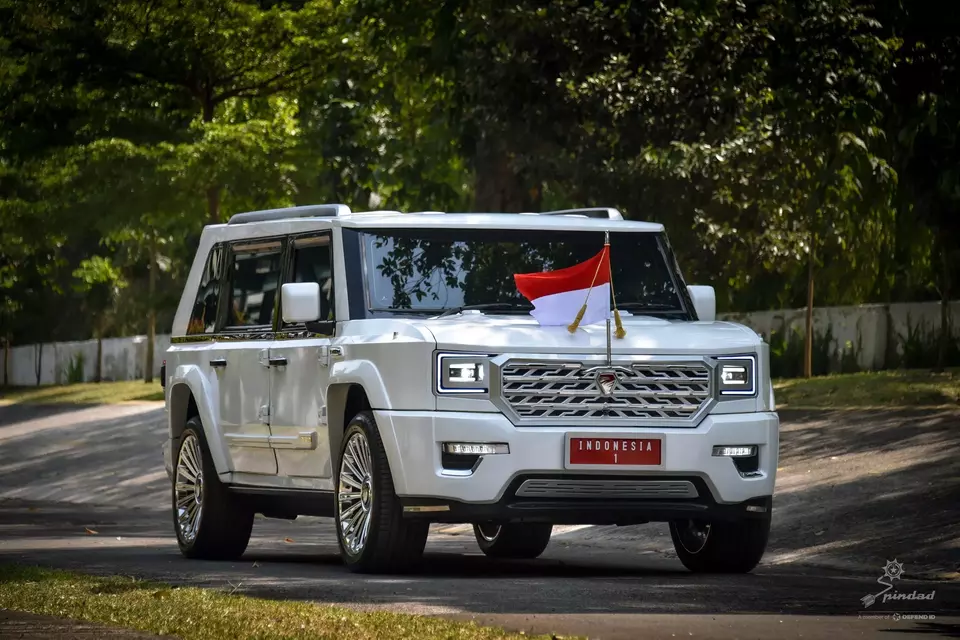
Jakarta. The Indonesian government has appointed state-owned defense manufacturer Pindad to lead the country’s long-sought National Car Project, Industry Minister Agus Gumiwang Kartasasmita said on Wednesday, describing the initiative as a Strategic National Project under President Prabowo Subianto’s direction.
Based in Bandung, West Java, Pindad is known for producing assault rifles, armored personnel carriers (APCs), and tactical military vehicles. The move marks the company’s first major step into the civilian automotive industry.
“I have received instructions from the President, who decided that the development of the national car will be carried out by PT Pindad,” Agus told reporters after a coordination meeting in Jakarta.
He said the first meeting between the Industry Ministry and Pindad had been held to align understanding and set the foundation for the project.
“In our initial discussions, we presented Indonesia’s aspiration to have a national car. Both the ministry and Pindad now share the same vision on how to achieve this directive,” Agus said.
While details such as production location, capacity, and timeline have yet to be finalized, the minister said the project will aim to enhance domestic manufacturing capabilities and reduce reliance on imported technologies.
President Prabowo, who took office in October 2024, has repeatedly showcased Pindad-made vehicles at public events and encouraged ministers to use locally built official cars, signaling his broader agenda for industrial self-reliance.
The new initiative revives a long-standing ambition to create a truly homegrown Indonesian car, a goal that has faced repeated setbacks over the past three decades.
The first major attempt came in 1996 under President Soeharto, when the government backed Timor Putra Nasional, owned by his son Tommy Soeharto. The “Timor” car was marketed as Indonesia’s national vehicle but relied heavily on imported Kia components from South Korea. The project collapsed during the 1997–1998 Asian Financial Crisis amid allegations of cronyism and trade violations.
The dream resurfaced in the 2010s when the Esemka brand, supported by then–Solo mayor Joko Widodo, was promoted as a grassroots national car project. Despite strong public enthusiasm, production never reached mass scale due to limited local component manufacturing and regulatory hurdles, and the brand now operates on a small commercial scale.
Pindad’s appointment signals a shift toward state-led industrial development using an established manufacturer with proven engineering capacity and government backing -- things that were absent in previous ventures.
Tags: Keywords: as a preferred
Related Articles

Indonesia Pursues Diplomacy to Grow Defense Industry
Foreign Minister Arrmanatha Nasir says that the defense industry is a yardstick of Indonesia's diplomatic success.
Ministers Start Switching to Locally Made Maung Official Cars
Indonesia has begun rolling out locally made Maung Garuda Limousines for ministers and agency chiefs, with the first 18 vehicles delivered.
Prabowo Unveils Major Cabinet Reshuffle, Moves Bahlil and Sugiono
Prabowo reshuffles his cabinet, moving Bahlil, Sugiono and other senior officials to new roles less than two years into his term.
Indonesia’s Halal Industry Contributes $61.6 Billion to Manufacturing
Indonesia’s halal industry contributed Rp1,102 trillion to non-oil and gas manufacturing in the first half of 2026.
Indonesia Prepares Rp 5 Million Incentive for Electric Motorcycles
Indonesia is preparing a Rp 5 million incentive for electric motorcycles, with the program awaiting a Finance Ministry regulation.
One in Four New Cars Sold in Indonesia Is Now Electrified
Electrified vehicles now account for more than a quarter of Indonesia's passenger car market, Industry Minister Agus Gumiwang says.
Indonesia Expects Auto Sales to Top 850,000 Units in 2026 as Market Recovers
Indonesia expects auto sales to top 850,000 units in 2026 as production and wholesale deliveries rebound, signaling a recovery in domestic d
Indonesia Urges Automakers to Accelerate Investment Commitments
Indonesia urged global automakers to accelerate investment and make the country a regional production and export hub.
Indonesia Wants to Turn Its Underused Airport Into a Defense Industry Hub
Kertajati Airport could become Indonesia's defense aviation hub under a new government plan as Husein Airport resumes commercial services.
Indonesia Almost Sold Its Defense Firms to Foreign Parties: Prabowo
Indonesia's defense firms like Pindad have now turned things around by becoming suppliers for foreign militaries, Prabowo says.The Latest

Prabowo Calls Meeting on Forest Fires as Haze Reaches Jakarta, Singapore
Prabowo summons senior officials to discuss forest fires as smoke reaches Jakarta and Malaysia pushes for regional action.
Jakarta Outranks Amsterdam in Global Public Transport Survey
Jakarta climbs two places to 15th in Time Out's 2026 public transport survey, with its governor citing better network integration.
MSCI Concerns, Tighter IDX Trading Rules Send Indonesian Stocks Down 5% by Midday
Indonesian stocks plunge 5% by midday as MSCI concerns weigh on sentiment and the IDX tightens its daily downside limit to 7%.
Jakarta Prepares 367 Health Facilities as Haze Reaches the Capital
Jakarta prepares 367 health facilities to treat potential haze-related illnesses after smoke from Sumatra and Kalimantan crosses the region.
Jakarta Expands Flood Prevention With New Water Storage Ponds
Jakarta opens two East Jakarta water storage ponds as it expands flood prevention efforts through reservoirs and river normalization.Most Popular
