



Economy Falters as Expert Urges Government to Move Beyond Rhetoric
Jakarta. Indonesia’s economy is showing signs of distress amid slowing growth, rising layoffs, and deflation, prompting calls for the government to prioritize real policy responses over reassuring rhetoric.
University of Indonesia economist Telisa Aulia Falianty said the signs of economic fatigue became more evident in early 2025, with weak consumer purchasing power, widespread layoffs, and a decline in overall demand.
“The government must stop insisting that the economy is doing just fine. Optimism is important, but it must be grounded in reality and matched with serious policy action,” Telisa said on Tuesday.
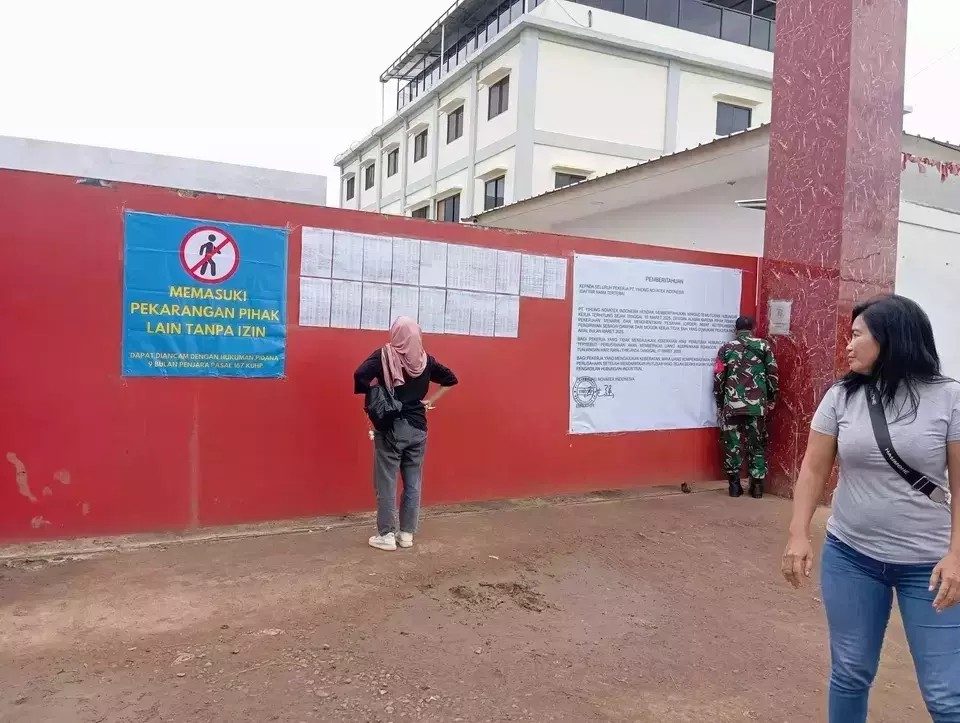
Indonesia’s gross domestic product (GDP) expanded by 4.87 percent in the first quarter of 2025 -- down from 5.04 percent in Q4-2024 and 5.02 percent in Q1-2024. The slowdown has been accompanied by a wave of layoffs, especially in key sectors such as textiles and e-commerce. In one high-profile case, textile giant Sritex went bankrupt, leaving over 10,000 workers unemployed.
Adding to the concerns, Indonesia recorded deflation of 0.37 percent in May 2025, reflecting further weakness in consumer spending.
“Deflation under these conditions is a red flag. It confirms that purchasing power is under pressure, and this comes while mass layoffs are still ongoing,” Telisa noted. “Without swift and meaningful policy measures, this could spiral further.”
Stimulus Measures Insufficient
To address the slowdown, the government has introduced a package of five stimulus programs for the June-July 2025 period: discounts on transport tickets and toll fees, food aid, wage subsidies, and cuts to workers' accident insurance premiums. These initiatives aim to boost household spending during the school holiday season.
While welcoming the effort, Telisa argued that the measures fall short of what is needed to reinvigorate growth and protect jobs.
“We need more labor-intensive programs financed by the state budget that can quickly absorb workers,” she said. “Public spending should also prioritize domestic industries and support micro, small, and medium enterprises (MSMEs).”
Call for Monetary Stimulus
Beyond fiscal stimulus, Telisa also called for stronger monetary interventions, particularly lower interest rates, to stimulate lending and business activity.
“Monetary stimulus -- especially in the form of lower loan interest rates -- is essential. Banks must transmit these policies more effectively so that business credit can grow,” she added.
Without coordinated and sustained efforts on both fiscal and monetary fronts, Telisa warned, Indonesia risks entering a cycle of slowing growth, eroding purchasing power, and further job losses.
Tags: Keywords: as a preferred
Related Articles

‘Only Time Will Tell’: Indonesia on World Bank’s 5.2% Forecast
Indonesia aims to grow 5.4% in 2026 and expand further by 6% the following year, topping the World Bank's 5.2% forecasts.
Jakarta Stocks Extend Gains as Investors Await Forex Reserves Data
Indonesian stocks rose for a third day as investors awaited September forex reserves data and assessed economic growth prospects.
Two Years into Prabowo Presidency, Economists Question Quality of Economic Growth
Growth has accelerated under Prabowo, but economists say it has yet to generate enough quality jobs and stronger purchasing power.
East Asia’s Next Growth Model: How to Grow Better, Not Just Faster
While East Asia still outpaces the global average, slower growth is exposing persistent vulnerabilities.
Indonesia's Q2 GDP Expands 5.29% on Strong Consumption
Indonesia's GDP grew 5.29% in Q2 as household spending and investment strengthened, while mining remained the only sector to contract.
Indonesia Layoffs Top 23,000 in 2026 as Economists Warn of Economic Slowdown
Economists warn persistent layoffs could weaken household spending, deepen jobless growth, and threaten Indonesia's economy.
Indonesian Economists Question Validity of Reported 5.61% Q1 Growth
The group said its own research identified discrepancies within the official data, raising concerns over the integrity of the measurement.
Indonesia’s Growth Paradox: Higher Growth, Poorer People
Indonesia’s middle class is shrinking despite strong economic growth, raising fears over jobs and inequality.
Economy Isn’t Just Numbers, But Also Perception and Trust
On paper, several indicators still appear reasonably solid. Indonesia’s economy reportedly grew by 5.61% yoy in the first quarter of 2026.
LPEM FEB UI Questions Indonesia’s Reported 5.61% Economic Growth
LPEM FEB UI questioned Indonesia’s 5.61% Q1 growth, citing inconsistencies in manufacturing and electricity data.The Latest

Prabowo Calls Meeting on Forest Fires as Haze Reaches Jakarta, Singapore
Prabowo summons senior officials to discuss forest fires as smoke reaches Jakarta and Malaysia pushes for regional action.
Jakarta Outranks Amsterdam in Global Public Transport Survey
Jakarta climbs two places to 15th in Time Out's 2026 public transport survey, with its governor citing better network integration.
MSCI Concerns, Tighter IDX Trading Rules Send Indonesian Stocks Down 5% by Midday
Indonesian stocks plunge 5% by midday as MSCI concerns weigh on sentiment and the IDX tightens its daily downside limit to 7%.
Jakarta Prepares 367 Health Facilities as Haze Reaches the Capital
Jakarta prepares 367 health facilities to treat potential haze-related illnesses after smoke from Sumatra and Kalimantan crosses the region.
Jakarta Expands Flood Prevention With New Water Storage Ponds
Jakarta opens two East Jakarta water storage ponds as it expands flood prevention efforts through reservoirs and river normalization.Most Popular
