



AEI Economists: Middle Class Holds Key to Indonesia’s 2026 Growth
Jakarta. Indonesia enters 2026 with bolder economic growth ambitions and what policymakers see as ample room to expand. But behind the optimism, economists are issuing a clear warning: future growth will hinge less on how fast the economy expands and more on who actually benefits from that expansion, particularly whether the middle class can reclaim its role as the economy’s main engine.
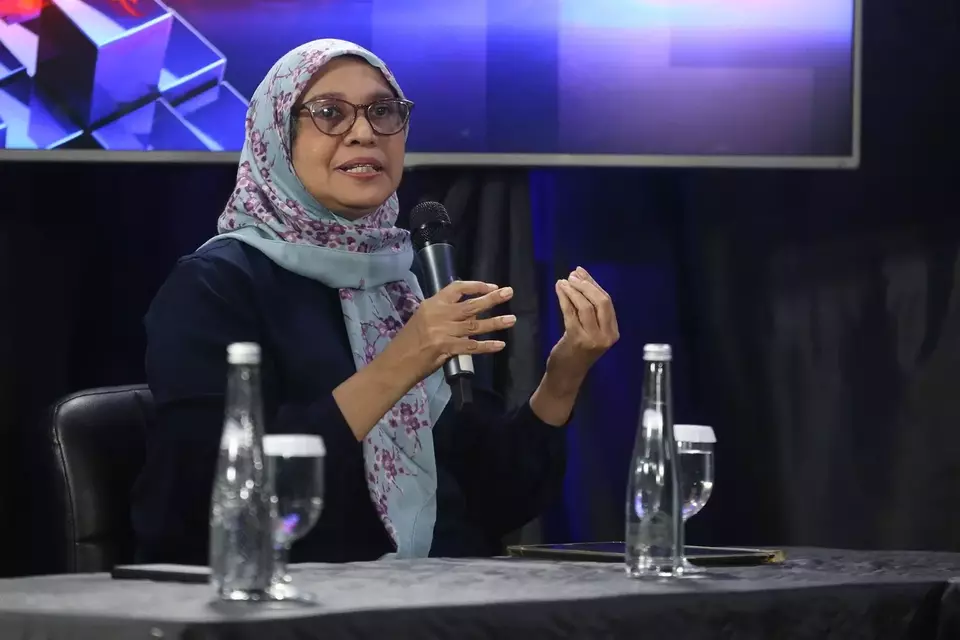
Speaking at B-Universe’s Outlook 2026 discussion, economists agreed that Indonesia’s core challenge is no longer just about achieving higher growth, but about ensuring that growth translates into broad-based welfare gains.
International Economic Association Secretary General Lili Yan Ing stressed that macroeconomic indicators should not be treated as political or sectoral scorecards.
“Growth, inflation, and the exchange rate are national figures, not ministry targets, not the president’s personal targets,” Lili said. “What matters more is how the government translates growth into tangible welfare improvements for all Indonesians.”
She pointed to signs of widening gaps in the real economy. In 2025, car sales rose 6.8%, while motorcycle sales increased by just 1.3%. To Lili, the divergence signals growth that is not inclusive. “This suggests the growth we’re seeing is creating gaps between the rich and the poor,” she said.
Vivi Alatas, former lead economist for the World Bank's Poverty program in Indonesia, described the middle class as Indonesia’s traditional engine of growth, one that is now under strain.
Although the middle class now accounts for only about 11-17% of the population, its economic contribution remains dominant. The pressure on the middle class is also evident in official data. Figures from the Central Statistics Agency show that Indonesia’s middle class has been shrinking steadily in recent years.
In 2019, the middle class still numbered 57.33 million people, accounting for 21.45% of the total population. By 2024, that figure had fallen to 47.85 million, or just 17.13%, underscoring concerns that a growing share of Indonesians are slipping out of the income bracket that has traditionally driven consumption and economic resilience.
“Around 40% of consumption comes from the middle class. About 58% of GDP also comes from the middle class,” Vivi said. “They are also the ones investing in their children and breaking intergenerational poverty.”
Yet since 2018, the number of quality middle-class jobs has declined. Vivi argued the problem is not job creation per se, but job quality. Between 2018 and 2024, Indonesia added 18 million new jobs. However, around 75% of them were informal, including household work and so-called hustle enterprises, often low-paid, unpaid, or lacking benefits and BPJS coverage.
The result has been weakening purchasing power, stalled social mobility, and a shrinking buffer for the middle class to absorb economic shocks.
Why Decent Jobs Matter More Than Safety Nets for Growth
Several speakers warned that Indonesia may be entering a phase where people work out of necessity rather than opportunity. Jobs exist, but they do not guarantee decent incomes, social protection, or long-term productivity.
“People are forced to work. But whether those jobs are decent or not, that’s the real question,” one economist said during the discussion.
In this context, the government’s 6% growth target is not seen as a cure-all. Without structural improvements, higher growth risks widening inequality, especially for the middle class, a group considered the most vulnerable because it is often excluded from social assistance but lacks sufficient resilience against economic shocks.
The forum also questioned policy approaches that rely too heavily on social assistance. Vivi said safety nets remain important but should not replace opportunity creation.
“Safety nets matter. But what matters more is having the capacity to move up,” she said. “Our core problem is the creation of decent jobs.”
She also highlighted shortcomings in education quality, particularly compared with regional peers such as Vietnam. Without major improvements in education and continuous skills training, economists warned, the middle class will continue to erode, leaving growth targets as optimistic figures that fail to resonate in everyday life.
The Outlook 2026 discussion delivered a stark message: the gap between economic growth and middle-class welfare is becoming increasingly visible.
Bridging that divide will require more than ambitious targets. Economists called for consistent policymaking, bold structural reforms, and a clear focus on creating high-quality jobs.
Tags: Keywords: as a preferred
Related Articles

Big Spending, Limited Revenue: Economists Question Prabowo’s Economic Strategy
Prabowo’s flagship programs face scrutiny as rising spending, weak job creation and deindustrialization threaten Indonesia’s growth.
'Indonesia Isn't That Rich': Economists Question Universal Free Meal Program
Economists are urging Indonesia to target free meals at those most in need, arguing a narrower program could cost less than Rp 8 trillion.
Indonesia’s Manufacturing Stagnation Raises Deindustrialization Risk: Economist
Indonesia risks deindustrialization as manufacturing stagnates and commodity dependence continues 81 years after independence.
Indonesia’s Economy Grows 5.29%, But Businesses Still Feel the Squeeze
Indonesia’s economy grew 5.29% in Q2, but employers warn high costs and weak demand are keeping businesses on the defensive.
Indonesia Q2 Growth Seen Below 5% as Weak Rupiah Hits Economy
Indonesia’s economy is forecast to grow 4.8% in Q2, weighed by a weaker rupiah, higher energy prices and a high base effect.
Indonesia Layoffs Top 23,000 in 2026 as Economists Warn of Economic Slowdown
Economists warn persistent layoffs could weaken household spending, deepen jobless growth, and threaten Indonesia's economy.
Weak Institutions Keep Asia Stuck in Middle-Income Trap: ADBI Dean
Weak institutions and fragmented policymaking may be a bigger barrier to high-income status than growth itself, ADBI says.
Economic Buffer Under Pressure as Middle Class Continues to Shrink
BI’s surprise rate hike and a 32% fuel price increase are squeezing Indonesia’s middle class, raising risks of economic decline.
Economist Calls for Investment Reform as Indonesia's FDI Ratio Falls to 1.61%
Indonesia must shift from resource extraction to value creation as FDI falls behind regional peers, economist Lili Yan Ing says.
ASEAN’s $4 Trillion Economy Held Back by Weak Regional Integration
ASEAN faces growing fragmentation as member states prioritize national interests over regional integration.The Latest

Ye Concert, Other Events to Draw 130,000 to GBK, Here’s What to Know
Around 130,000 visitors are expected at Jakarta’s GBK on Saturday as Ye’s concert and several major events take place.
Indonesia Allocates Rp 722 Billion for Year-End Flight Ticket Tax Relief
Indonesia allocates Rp 722 billion to cover domestic flight ticket VAT during the 2026/2027 Christmas and New Year holidays.
Greece Floats Shipbuilding Partnership with Indonesia
Greece says that it possesses “extensive expertise” as it woos Indonesia in shipbuilding partnership.
Indonesian Stocks Rally 4.9%, but Foreign Investors Keep Selling
Indonesia’s JCI rose 4.9% last week, but foreign selling and MSCI downgrade risks continue to cloud the market outlook.
Ye Concert in Jakarta to Deploy 2,000 Security Personnel
More than 2,000 personnel will secure Ye’s Jakarta concert on Saturday, as organizers urge fans to use public transport.Most Popular
